




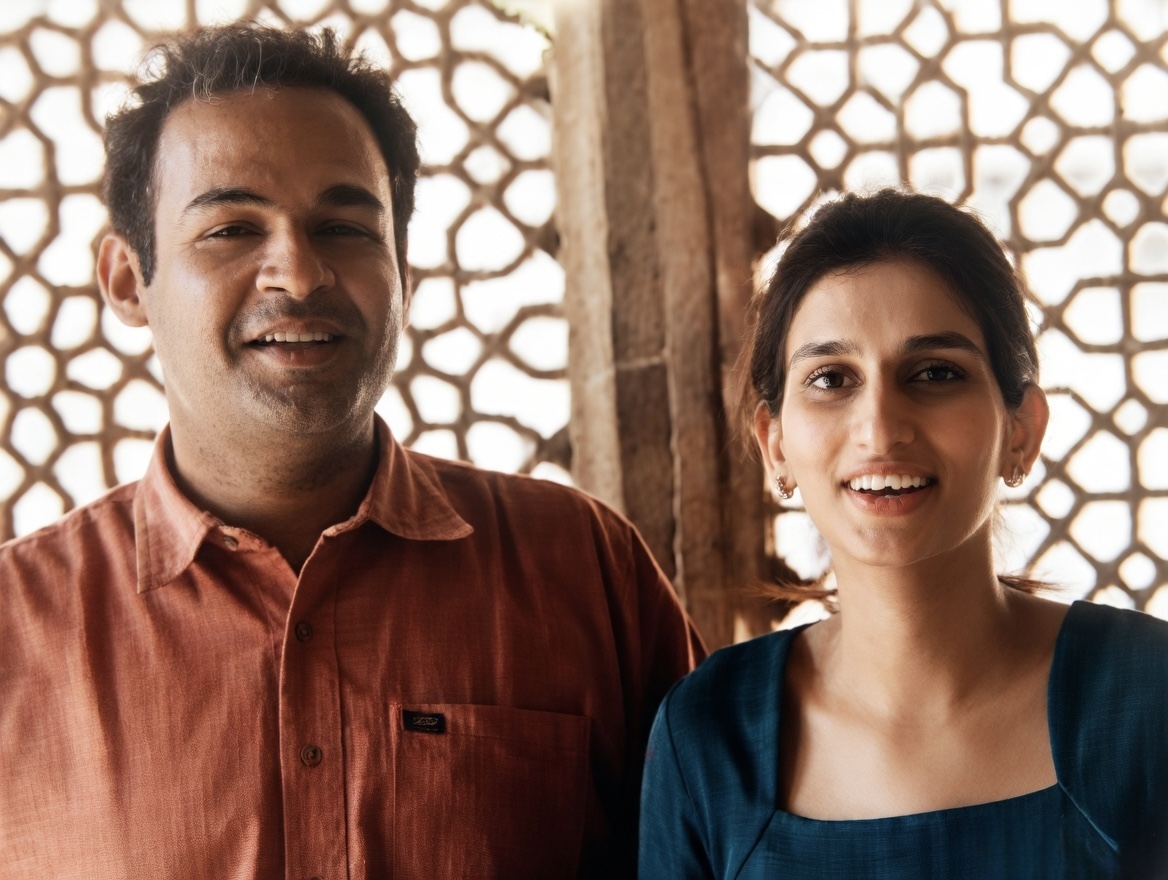


In 2002, Nitish Katara looked like any ambitious young man in Delhi—smart, modern, and quietly hopeful. A 25‑year‑old MBA from IMT Ghaziabad, employed with Reliance General Insurance, he was slowly building a life in India’s capital when the story took a violent turn. The relationship that should have been a private matter of the heart became a public nightmare of power, politics, and murder. The mother who refused to back down is still fighting.
Love, power, and the wedding that never ended
Nitish fell in love with Bharti Yadav while studying at college. Her father, D.P. Yadav, was a sitting Member of Parliament and one of the most powerful political figures in Uttar Pradesh. Their four‑year relationship was known within the family. Bharti’s brother Vikas Yadav knew about it. So did her cousin Vishal Yadav. The bond, though intimate, moved in a world where influence and intimidation walked side by side.
On the night of February 16, 2002, Nitish drove to Ghaziabad for a friend’s wedding. Bharti was there. Vikas and Vishal were there. The hall was loud with music, laughter, and the usual chatter of a celebratory night. Guests took photographs, shared jokes, and moved through the evening as if it were ordinary.
At midnight, security guards at the hotel told investigators later that they had seen Nitish get into a Tata Safari with Vikas, Vishal, and one more man. The car left the venue and disappeared into the night. The others went home, the lights dimmed, and the music stopped. Nitish Katara never returned.
The body on the roadside and the family’s last certainty
The next morning, nearly 80 km away, near the town of Khurja, a burnt body was found on the roadside. The body had been battered with a hammer, doused in diesel, and set on fire. The face was no longer recognizable. The police began treating the case as a possible murder, but the challenge remained: identifying the victim.
It was Nitish’s mother, Nilam Katara, who provided the final proof. Small, unusually small hands were a trait she had noticed in her son since childhood. When the police lined up what remained of the body, she did not need to see the face. She reached for the hands and knew. The quiet, confident young man who had left for a wedding the previous night was now a charred figure on the edge of a highway.
Investigators soon identified the Tata Safari linked to the Yadav family. The vehicle, the night, and the sequence of movements created a map that led to the most powerful family in the case. The legal process had begun. What followed, however, was less about a straightforward trial and more about a war of influence.
The system turns hostile, the witness stands firm
As the case moved through the courts, the narrative shifted under pressure. The Yadav family’s political clout and influence began to show. Over time, three out of four key witnesses changed their statements. The accounts that had once supported the prosecution weakened, disappeared, or were rewritten.
Even Bharti Yadav appeared in court and stated that there was no romantic relationship between her and Nitish, only a “friendship.” Her testimony, instead of simplifying the case, deepened the trauma for the Katara family and raised questions about the role of memory, fear, and pressure in high‑profile trials.
In this environment of shifting loyalties, one man refused to change: Ajay Katara, who had seen Nitish get into the car that night and was willing to say so in court. His testimony formed the backbone of the prosecution’s case.
In the courtroom, Vikas Yadav once hammered the table and told Ajay he would be “buried 100 feet underground.” The threat was neither subtle nor empty. For the next 20 years, Ajay lived under 24‑hour armed protection, facing 37 cases and threats that ranged from bullets to poison. The reward for his honesty was a life of constant vigilance—his career, his peace, and his normalcy all sacrificed at the altar of truth.
Convictions, sentences, and the uneven taste of justice
In 2008, the trial court delivered a verdict that many had been waiting for: Vikas Yadav, Vishal Yadav, and Sukhdev Pehalwan were found guilty of Nitish Katara’s abduction, murder, and the destruction of his body. The conviction sent a message across the country that even the politically powerful could be held accountable.
The Supreme Court later confirmed a 25‑year sentence for Vikas and Vishal, without the possibility of remission, marking the case as one of the most significant judgments in the evolving narrative of India’s battle against “power‑plus‑crime.” The killers had been found, and the law had, in its own way, spoken.
Today, 23 years after the crime, Vikas Yadav has spent most of his life behind bars. Earlier this year, he was granted furlough after marrying a new partner, a decision approved by the Supreme Court for Holi. The move has reignited anger and disbelief among those who followed the case, especially Nitish’s family. The men who killed the young MBA stand at the edge of freedom. The victim’s mother, by contrast, still feels the weight of the unfinished.
The witness who bore the real cost
The verdict may read the words of accountability, but the deeper story is written in the life of Ajay Katara. The courts punished the killers, but the system left the witness with little more than armoured security cars, police guards, and a list of fresh cases filed against him. The promise of “witness protection” remains more of a theory than a practice, leaving the people who tell the truth vulnerable long after the clapping in the courtroom ends.
For Ajay, the cost of truth was not just the risk of death; it was the loss of a normal life, the erosion of privacy, and the constant awareness that his honesty had made him a target. His story is a stark reminder that in India, the real burden of justice often falls not on the guilty, but on the ones who refuse to look away.
A mother’s unfinished battle
Nilam Katara, with no political network and no access to the kind of money and power that the Yadav family wields, has had only one weapon left: her voice. For over two decades, she has returned to courtrooms, media interviews, and public forums to demand that her son’s case never be forgotten. Every headline, every anniversary, every social‑media post that resurrects Nitish’s name is a reminder of why she continues to fight.
The men who killed her son may be counting the last days of their prison terms, but for Nilam Katara, the battle is not over. The bending of the justice system under pressure, the witnesses who turned hostile, and the public that has begun to forget these are the questions that still drive her. The law may call it “closure,” but the moral reckoning—what kind of country this is, and what it is willing to tolerate in the name of power—remains open.
What Nitish Katara’s case says about India today
The Nitish Katara murder case is not just a crime from 2002. It is a case study in how power, politics, and privilege can collide with the legal system in India. It stands as a warning that the machinery of the state can convict the guilty, but the protection of the truth‑tellers and the victim’s family is often fragile and incomplete.
Years from now, as the killers step out of jail, there will be others like Ajay Katara and Nilam Katara who will keep the story alive. The body found on the road near Khurja may belong to the past, but the questions it raises about justice, power, and truth are still very much in the present.
For the nation, the story of Nitish Katara remains a mirror: a reflection of what happens when influence tries to silence a life—and what happens when a mother refuses to let that silence win.