




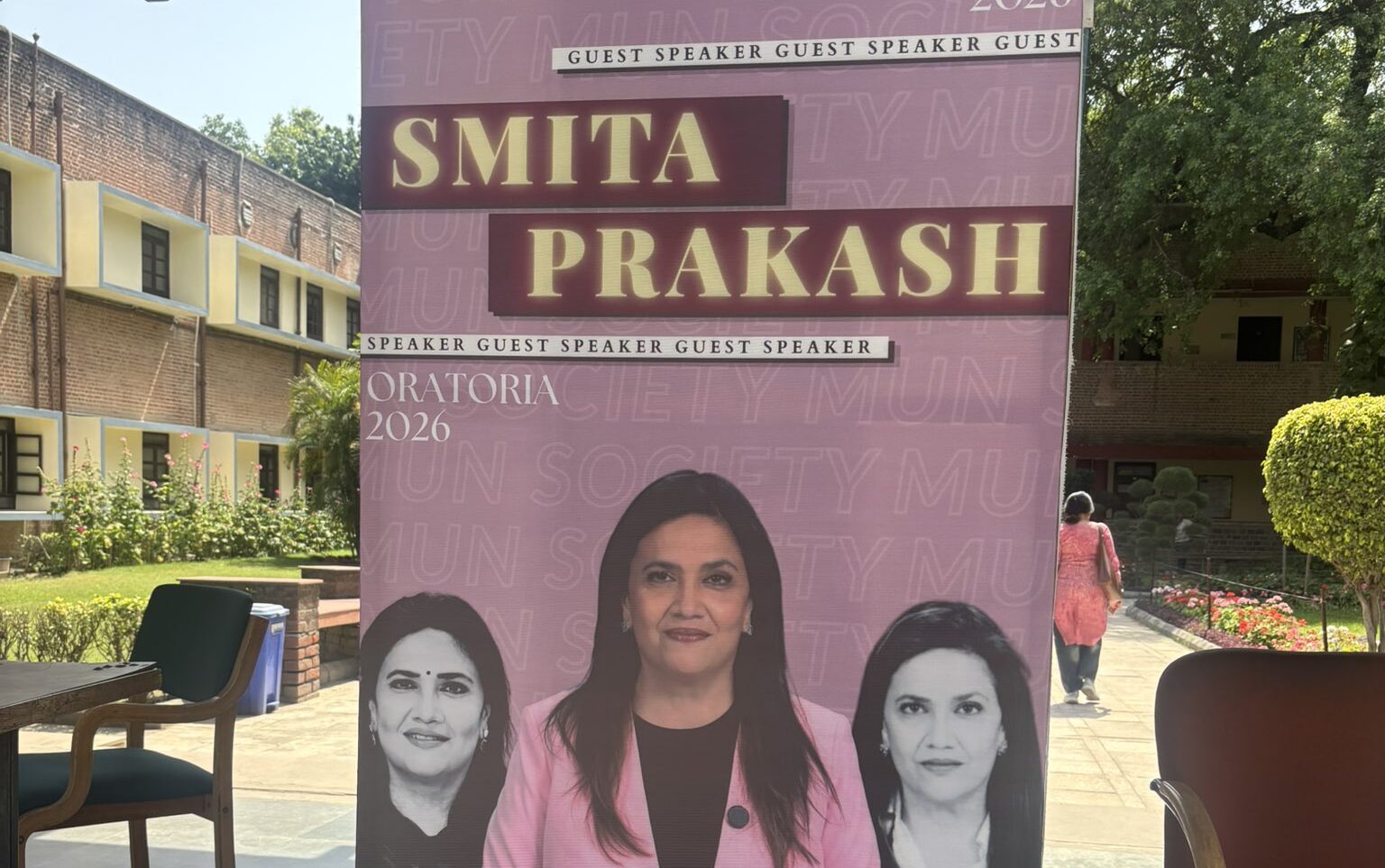


A much‑publisized talk by Smita Prakash at Miranda House, a reputed Delhi University college, turned into an awkward moment for institutional image‑building when the audience turnout fell far short of expectations. The event, widely promoted on social media and within student circles, saw large numbers of empty seats, raising questions about the difference between media power and real public interest.
The mismatch between hype and turnout
Smita Prakash, editor‑in‑chief of ANI, India’s largest news agency, has long been associated with high‑profile political coverage and interviews with top leaders, including Prime Minister Narendra Modi. Her presence at a premier college was billed as a “rare opportunity” for students to hear from one of India’s most visible media figures.
Yet, on the day, the hall failed to fill. Sources inside the college said turnout was thin, with many students either unaware of the event or uninterested in attending. The contrast between the aggressive promotion and the sparse audience created an image that social media users quickly described as: “Even if the media can control the news, it cannot force students to show up.”
What the empty seats really signal
The incident is being read by many as a quiet but sharp rebuke of the idea that access‑heavy media power automatically translates into cultural influence. Critics argue that ANI’s brand has been built less around independent journalism and more around privileged access to government events and ruling‑party narratives.
In that context, the low turnout at Miranda House can be interpreted as a subtle statement: students, particularly in a politically aware environment like Delhi University, are increasingly wary of platforms perceived as echoing the establishment rather than challenging it. What was meant to be a showcase of media authority instead became a visual metaphor for the limits of institutional media clout on the ground.
A broader shift in media‑student relations
The Miranda House episode also reflects a wider generational shift. Young people are more likely to consume news through independent platforms, YouTube channels, and alternative news aggregators than through traditional wire‑driven coverage.
For a news agency that relies on rapid‑fire clips, pre‑packaged soundbites, and government‑centric storytelling, the empty chairs at a college talk may be an uncomfortable reminder: power in the newsroom does not always mean relevance in the classroom.