


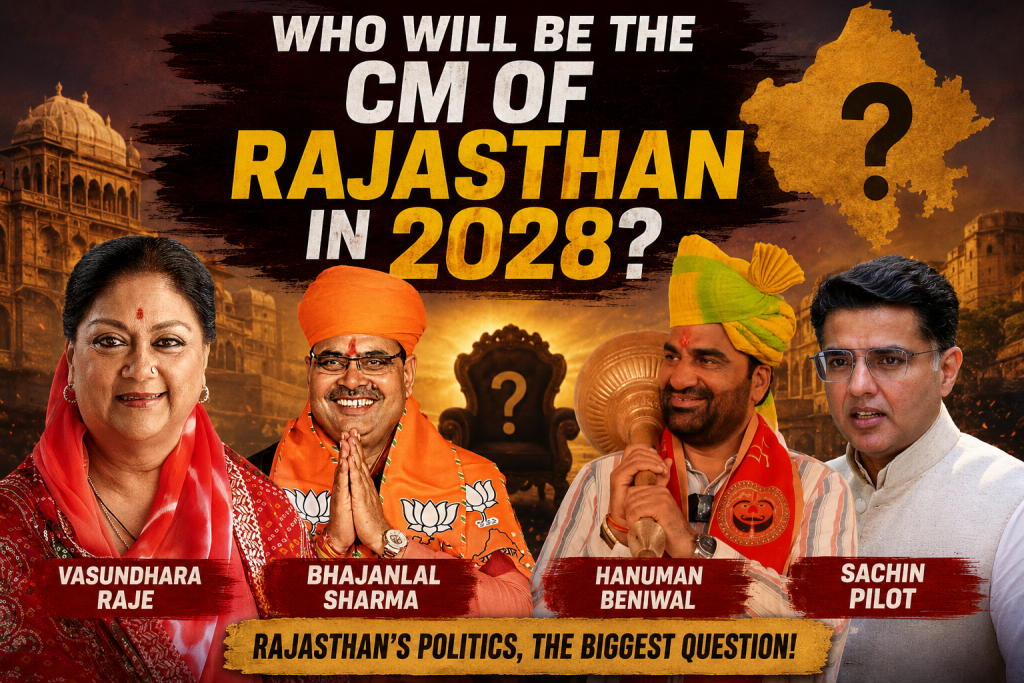
Hanuman Beniwal is increasingly expected to be one of the most important political characters to watch in the run-up to the elections for the Rajasthan Assembly in 2028. With his hardline politics, sharp public message and capacity to organise supporters throughout rural regions, the Rashtriya Loktantrik Party chairman has supported the idea that he may turn into a key contender for the chief minister’s chair in the next poll fight. This perspective has been enhanced by his ability to mobilise followers in the rural regions.
Throughout his rise to prominence, Beniwal has maintained a consistent narrative of hitting out at both the Bharatiya Janata Party (BJP) and the Congress party, especially on issues such as unemployment, plight of farmers, recruitment transparency and neglect of rural areas. He has managed to build a momentum in politically sensitive western Rajasthan where caste equations and ground-level mobilisation typically determine poll outcomes. His rallies have been drawing massive crowds and gathering steam. He is a leader for many of his supporters because he speaks directly to the frustrations of ordinary people and refuses to moderate his onslaught on the establishment.
The BJP’s success in Rajasthan is likely to be a key determinant of the result of the next election. The likelihood of anti-incumbency may open the way for a more competitive regional challenge if the incumbent party is seen as failing to meet public expectations on governance, employment, law and order and the distribution of benefits. It is probable that in such circumstances Beniwal’s importance may expand even more, especially if he succeeds in converting the rage of the people into a bigger political coalition. But the route to the chief minister’s office will not be simple.
In the whole history of Rajasthan, electoral politics has always been predicated on the fine balance between caste support, coalitions at the district level and legitimacy of leadership. If Beniwal wants to establish himself as an alternative to the present system of running the state, he will have to extend his popularity beyond his base and become an appeal to a much bigger section of people. Rallies may gain media attention but the election will be won on organisation, relationships and performance at the seat level.
But the political debate surrounding Rajasthan is already changing in the year 2028. Hanuman Beniwal is becoming seen as more than simply a protest leader by more people. Currently he is being touted as a possible kingmaker and in some quarters even being regarded as a prospective future chief minister. If the current trends of public discontent and regional assertion continue, Beniwal might be one of the political faces that will define the future phase of Rajasthan.