


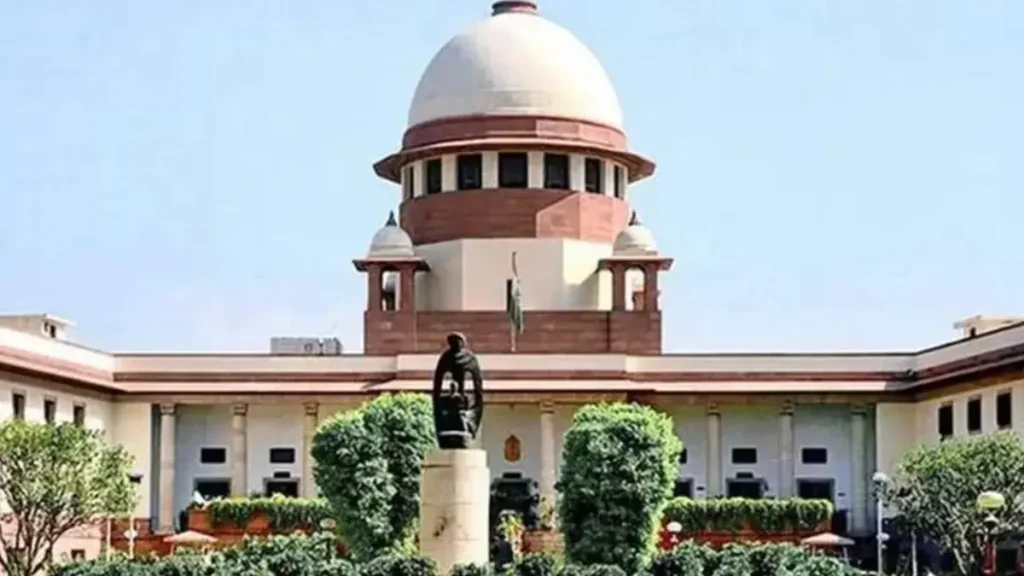
New Delhi: The Lawyers’ Association for Constitution (LAFC) has constituted an independent five-member commission of former Supreme Court and High Court judges to examine the constitutional validity, methodology and impact of the Election Commission of India’s Special Intensive Revision (SIR) of electoral rolls.
The panel will be chaired by former Supreme Court judge Justice Madan B. Lokur. According to LAFC, the commission will examine how the SIR exercise has been designed and implemented and assess its reported consequences for voters and the electoral process.
The other members of the panel are former Supreme Court judge Justice A.K. Patnaik, former Chief Justice of the Jammu and Kashmir High Court Justice Badar Durrez Ahmad, former Delhi High Court judge Justice Rekha Sharma and former Patna High Court judge Justice Anjana Prakash.
Panel to Examine SIR Methodology and Impact
LAFC said the commission was established following concerns raised by citizens regarding the design, implementation and consequences of the electoral-roll revision exercise.
Its stated mandate includes examining the constitutional aspects, methodology and impact of the SIR process. The panel is expected to consider questions surrounding voter verification, documentation requirements, the revision methodology and the safeguards available to eligible voters.
However, the commission is an initiative of LAFC and is not a body constituted by either the Supreme Court or the Election Commission of India. Any findings or recommendations issued by the panel would therefore represent an independent legal assessment and would not constitute an official judicial or constitutional determination.
SIR Remains Subject of Legal and Public Debate
The development comes at a time when the SIR exercise remains the subject of legal proceedings and public debate in several states.
The Election Commission has maintained that revision and updating of electoral rolls fall within its constitutional and statutory responsibilities. At the same time, various organisations and opposition parties have raised concerns regarding documentation requirements, possible exclusion of eligible voters and the procedures followed during the revision process.
West Bengal has emerged as one of the key areas of attention, with electoral-roll revision becoming the subject of multiple legal proceedings and public discussions. Legal experts and former judges have also raised questions concerning mechanisms for appeals and safeguards for voters whose names may be affected during the process.
The Supreme Court has separately dealt with challenges concerning electoral-roll revision and has provided mechanisms for addressing disputed exclusions. Those proceedings remain separate from the initiative announced by LAFC.
Focus on Voter Protection
The newly constituted panel could provide another legal assessment of the SIR framework, particularly at a time when questions surrounding voter verification, documentation and electoral-roll accuracy remain prominent.
For the Election Commission, the revision process forms part of its broader responsibility to maintain accurate and updated electoral rolls. For voters, a key concern is ensuring that eligible electors remain on the rolls and that those whose names are affected have accessible mechanisms to submit documents and challenge decisions.
The commission’s next steps will depend on how it conducts its review and whether it eventually publishes findings or recommendations concerning the constitutional framework, methodology or implementation of the SIR exercise. Any such assessment could contribute to the continuing legal and public discussion over electoral-roll revision in India.