


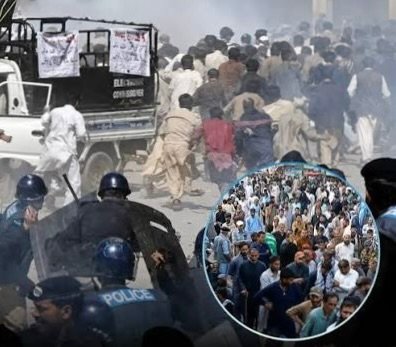
Pakistan-occupied Jammu and Kashmir (PoJK) is witnessing one of its most serious humanitarian and political crises in recent years, with anti-government protests entering their third week amid allegations of a de facto blockade on essential supplies. Protest leaders claim that food, fuel, and medicines are being deliberately prevented from reaching the region, pushing thousands of residents into severe hardship.
The unrest, led by the Joint Awami Action Committee (JAAC), has escalated despite heavy security crackdowns, internet restrictions, and mass arrests. While Pakistani authorities deny intentionally disrupting supplies, reports from international media outlets and local sources suggest shortages have intensified across several districts.
Protest Leaders Allege Supply Blockade
The JAAC, which was recently banned by the Pakistani government under anti-terrorism laws, has accused Islamabad of using “collective punishment” to weaken the ongoing movement. According to protest leaders, trucks carrying wheat flour, fresh vegetables, fuel, and life-saving medicines are being stopped at military and police checkpoints before entering PoJK. Local reports also claim that several drivers attempting to transport supplies into affected areas have been detained by security forces.
Residents from Neelum Valley, Bagh, Rawalakot, and parts of Poonch say government ration depots have exhausted their food stocks. Many families reportedly paid for their monthly wheat allocations weeks ago but are still waiting for deliveries as supply chains remain disrupted.
Food, Fuel and Medicines in Short Supply
The blockade allegations have coincided with widespread shortages across the region. Markets in several towns have reportedly run out of basic grocery items, forcing many families to rely on locally grown vegetables while staples such as wheat flour have disappeared from store shelves. The healthcare system is also under pressure. Pharmacies and major medical stores in Muzaffarabad are said to be operating with almost no inventory, leaving elderly residents and patients with chronic illnesses unable to obtain routine prescription medicines.
Fuel shortages have added to the crisis. Petrol pumps in Muzaffarabad, Rawalakot, and surrounding areas have reportedly run dry, forcing motorists to purchase fuel on the black market at significantly higher prices to keep vehicles and emergency services operational.
Massive Demonstrations Continue Despite Crackdown
Instead of slowing down, the protest movement has gathered momentum.
One of the largest demonstrations in recent years reportedly took place at Rawalakot’s Eidgah Ground, where organisers claimed that more than 50,000 people participated.
Clashes between protesters and security forces have turned violent. Various reports estimate that between 22 and 58 people have been killed, although an exact figure remains difficult to verify because of media restrictions and conflicting official accounts. Hundreds more have reportedly been injured, while over 400 JAAC activists have been arrested during the crackdown.
What Sparked the Uprising?
The protests were initially driven by long-standing economic grievances. Activists argue that although PoJK contributes nearly 3,500 megawatts of hydroelectric power to Pakistan’s national grid through projects including the Mangla Dam, local residents continue to pay electricity tariffs far higher than the production cost. Protesters claim electricity generated at roughly ₹2 per unit is billed to consumers at over ₹30 per unit, creating widespread resentment.
The situation worsened after reductions in government subsidies reportedly pushed the price of a 40-kilogram bag of wheat flour above ₹3,100, making essential food items increasingly unaffordable for ordinary families.
Political Tensions Deepen
The political atmosphere has become even more charged following remarks by Pakistan’s Defence Minister Khawaja Asif, who reportedly stated during a parliamentary address that residents of Rawalakot and Mirpur “are not proper Kashmiris.” The comments drew strong criticism from protest leaders, who described them as discriminatory and further evidence of Islamabad’s neglect of the region. JAAC leaders have vowed to continue demonstrations until their economic demands and broader constitutional concerns are addressed.
As tensions continue to rise, the humanitarian situation in Pakistan-occupied Kashmir remains under close watch, with growing concerns that prolonged shortages of food, medicine, and fuel could deepen the crisis if a negotiated solution is not reached.