


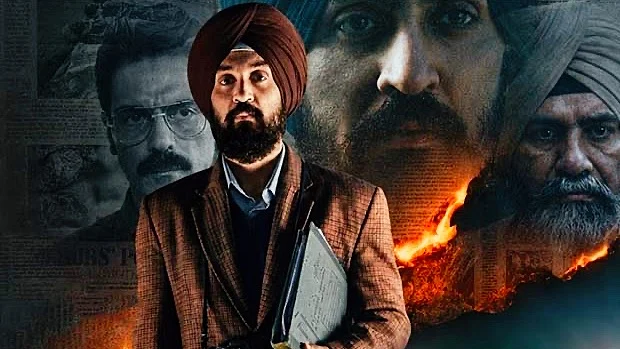
Veteran actor Annu Kapoor has weighed in on the controversy surrounding the removal of Diljit Dosanjh’s film Satluj, backing the government’s decision and arguing that national peace and public order should take precedence over a film’s release. His remarks come as the debate over censorship, artistic freedom, and national security continues to divide the entertainment industry.
The film, originally titled Punjab ’95, has been at the centre of a prolonged censorship dispute for years. While several filmmakers and actors have criticised the government’s decision to remove it from streaming platforms, Kapoor has taken the opposite stand, urging the makers to seek legal remedies instead of appealing for public support.
A Film Caught in a Long Censorship Battle
Satluj, originally developed as Punjab ’95, stars Diljit Dosanjh as Jaswant Singh Khalra, a human rights activist known for investigating alleged illegal killings and mass cremations during Punjab’s insurgency period in the 1980s and 1990s.
Given the politically sensitive subject matter, the film reportedly faced significant objections from the Central Board of Film Certification (CBFC), which is said to have suggested over 125 cuts. The filmmakers declined to implement the changes, resulting in a prolonged impasse that delayed the film’s release for several years.
OTT Release Followed by Government Action
After waiting years for clearance, the makers opted to release the film directly on ZEE5 under the new title Satluj on July 3, 2026, bypassing a theatrical release.
However, within two days, the government directed the platform to remove the film, citing concerns related to national security, sovereignty, and public order. The move sparked widespread criticism from sections of the film industry, with many arguing that it amounted to censorship and curtailed artistic freedom.
Annu Kapoor Defends the Ban
Speaking about the controversy, Annu Kapoor said the filmmakers should pursue their case through legal channels if they believe the ban is unjustified. According to Kapoor, expressing disappointment on social media or seeking public sympathy is not the appropriate response. Instead, he argued that the filmmakers should approach the courts and challenge the decision through the judicial process.
The actor also responded to Diljit Dosanjh’s earlier comments about separating art from politics. Kapoor suggested that anyone choosing to make a film on a deeply sensitive chapter of India’s history should be prepared for scrutiny and controversy.
‘Social Harmony Comes First’
Kapoor’s strongest remarks focused on the importance of maintaining peace. He questioned whether releasing a film should take priority over the possibility of unrest, arguing that preventing violence and protecting public order are more important than ensuring a movie reaches audiences.
While acknowledging his own identity as an actor, Kapoor maintained that cinema should never outweigh the larger interests of society if authorities genuinely believe a film could trigger law-and-order issues.
His comments have resonated with those supporting the government’s decision while drawing criticism from advocates of creative freedom, who argue that artistic expression should not be curtailed without transparent legal justification.
A Wider Debate Over OTT Regulation
The controversy surrounding Satluj has also revived discussions about regulating films released directly on streaming platforms.
Since OTT releases currently operate under a different regulatory framework than theatrical films, the film’s brief availability before its removal has reportedly prompted the government to consider changes to the existing rules.
According to reports, authorities are examining whether films released on streaming services should also require mandatory CBFC certification before being made available to viewers. If implemented, such a move would significantly reshape India’s digital entertainment landscape and bring OTT film releases under the same certification process as theatrical releases.
As the legal and political debate continues, the Satluj controversy has become much more than a dispute over one film. It has evolved into a broader discussion about the balance between artistic freedom, government oversight, and national security in India’s rapidly expanding digital media ecosystem.