




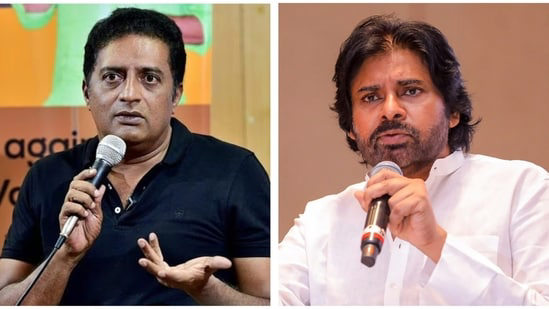


Veteran actor Prakash Raj has once again blurred the line between cinema and politics, launching sharp broadsides at Pawan Kalyan, Vijay, and the NDA’s framing of the Women’s Reservation Bill in a series of public remarks that have sparked intense debate. The exchanges come amid a polarised political climate, with the actor positioning himself as a vocal critic of what he sees as the misuse of women’s reservation for electoral advantage and the uncritical embrace of film stars in governance.
The immediate flashpoint was a social media joust between Raj and Andhra Pradesh Deputy Chief Minister Pawan Kalyan. After the Constitution (131st Amendment) Bill—linked to women’s reservation and delimitation—failed to secure a two‑thirds majority in the Lok Sabha, Kalyan took to X to defend the government’s package. He called the bill a “historic opportunity” to strengthen women’s representation and accused the Opposition of “blocking transformative reforms” and placing “political calculations above national progress.” In his post, Kalyan insisted that the Opposition’s stance showed a lack of intent to advance gender‑inclusive governance.
A historic opportunity to strengthen women’s representation in India’s legislatures has been deliberately blocked by the opposition.
The opposition’s stance makes it clear that they lack the intent to support transformative reforms that strengthen Bharat’s democracy and empower…
— Pawan Kalyan (@PawanKalyan) April 18, 2026
Prakash Raj hit back with a pointed, four‑sentence reply that quickly went viral. Quoting Kalyan’s post, Raj wrote: “Please stop lying to citizens just to please Modi. Women reservation bill was approved in 2023 itself. It can be passed even now. But your gang wanted to pass Delimitation Bill which would weaken the representation of South Indian states including Andhra Pradesh.” He went on to urge Pawan Kalyan not to “sell the self‑respect and the state rights of Andhra People who have made you DCM” and challenged him to an open debate, asking, “Are you ready #justasking.”
Please stop lying to citizens just to please Modi. Women reservation bill was approved in 2023 itself. It can be passed even now . But your gang wanted to pass Delimitation bill which would weaken the representation of South Indian states including Andhra Pradesh. Requesting you… https://t.co/LyQGy2Fh8E
— Prakash Raj (@prakashraaj) April 18, 2026
Beyond the verbal duel, Raj’s broader critique hinges on the perception that the 2026 package tried to piggyback delimitation and seat‑reallocation on the women’s reservation narrative. The 2023 Women’s Reservation Act already approved the 33% quota to be implemented after the next Census and delimitation, but the 2026 bill sought to fast‑track both while expanding Lok Sabha seats from 543 to 850. Raj and many southern critics argue that this opened the door to regional imbalances, with the potential to dilute the political weight of southern states in favour of faster‑growing, northern‑skewed constituencies.
At the same time, Prakash Raj has also turned his fire on actor‑turned‑politician Vijay, whom he targeted during a campaign speech for CPI(M) candidate N Pandi in Palani, Tamil Nadu. In a speech that quickly became a national talking point, Raj contrasted three political models: the “Dravidian model”, a “slave model” (veiled at pro‑BJP alignments), and the “cinema model”, which he described as a reliance on star power and fan sentiment rather than grassroots political engagement.
Addressing the crowd, Raj asked why an actor who can play a doctor, engineer, or even a Chief Minister on screen should be treated as fit for real‑world office without a similar track record. “Have you spoken about politics like me?” he asked, implicitly referring to Vijay, “Have you stood for the people and Tamil Nadu when they were facing issues, or for the language or its self‑respect?” Raj underlined that the love people shower on actors belongs to the theatres, not the ballot box. He said, “People stood in queues in the heat, put up cut‑outs, bought tickets, and ignored their homes and work to show you love, and now you are using that for your political entry?”.
He went on to distinguish cinema from governance, telling the audience, “I can whistle for you until my throat goes hoarse. But I cannot give them the country. Politics is different; cinema is different. That love is different; this responsibility is different. One must get on the ground and speak.” That line—“you cannot give the country to an actor”—has become the moral centre of his argument against the “cinema model” of politics, and was widely read as a direct warning to Tamil fans tempted by Vijay’s entry through Tamilaga Vettri Kazhagam.
Raj’s comments are striking because of his own rich history with the two stars. He has worked with Pawan Kalyan in films like Jalsa and Vakeel Saab*, and shares a long‑running professional relationship with Vijay, having appeared alongside him in Ghilli, Sivakasi, Villu, and Aathi*. This familiarity adds emotional weight to his criticism, making it feel less like a detached political jab and more like a mentor cautioning protégés.
Raj’s latest salvos illustrate a broader unease in Indian cinema: that as more film stars enter politics, they are expected not just to entertain but to ground themselves in the grind of public life. Raj appears to be asking voters a simple question: Will you elect someone because of how they perform on screen, or because of how they stand on the ground when it matters?