




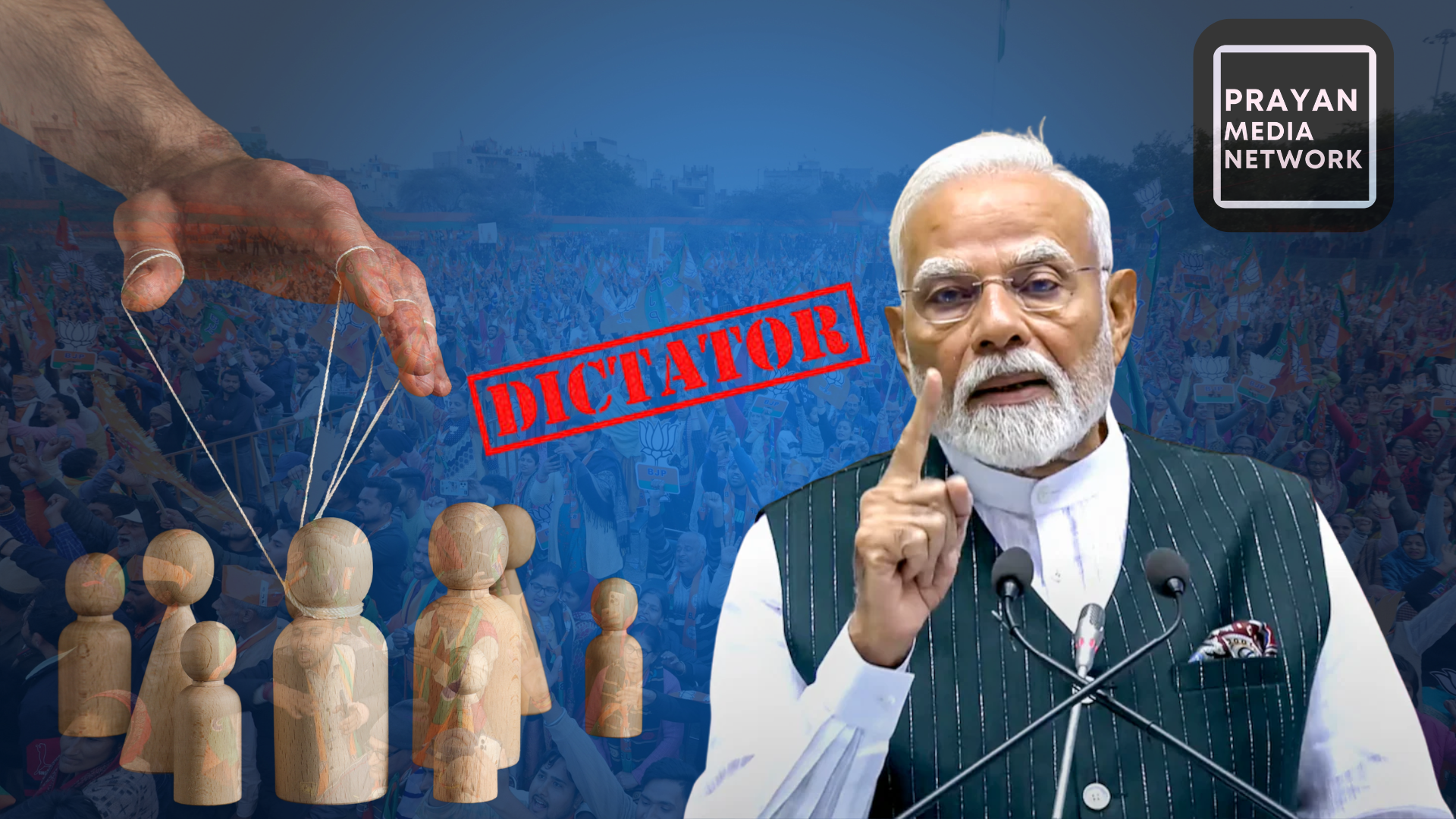


India, often celebrated as the world’s largest democracy, is undergoing a significant political transformation under the Bharatiya Janata Party (BJP) and Prime Minister Narendra Modi. While supporters describe this phase as decisive governance and national consolidation, critics argue it reflects a steady erosion of institutional checks and federal balance. The 2026 Assembly elections in West Bengal and Assam have intensified this debate, raising concerns about opposition space, economic concentration, and democratic resilience.
Opposition Under Pressure: Selective Enforcement or Anti-Corruption Drive?
One of the most persistent allegations against the current central government is the selective use of investigative agencies such as the Enforcement Directorate (ED), Central Bureau of Investigation (CBI), and Income Tax Department. Opposition leaders across parties—Congress, Trinamool Congress (TMC), Aam Aadmi Party (AAP), and regional outfits—have frequently faced raids, arrests, or prolonged investigations, often coinciding with election cycles or crucial political developments.
While the BJP maintains that these actions are part of a broader anti-corruption framework, critics highlight a pattern: political figures joining or aligning with the BJP often see legal pressures ease. This raises concerns about whether enforcement mechanisms are being used as political tools rather than impartial institutions. In a functioning democracy, accountability must be consistent and non-partisan—any perceived deviation undermines public trust.
Centralization of Power and Institutional Concerns
India’s federal structure has historically relied on a balance between the Centre and states. However, recent years have seen increasing accusations of power concentration in New Delhi. Issues such as delayed fund disbursement to opposition-ruled states, growing influence of centrally controlled agencies, and contentious gubernatorial interventions have added to this perception.
Concerns have also been raised about institutional independence. Critics point to delays in judicial appointments, selective case prioritization, and alleged pressure on media organizations. Reports from global indices have noted a decline in press freedom and civil liberties, although these assessments remain politically contested within India.
The broader concern is whether India’s democratic framework is gradually shifting from competitive pluralism toward a more centralized political order.
Crony Capitalism Debate: Adani, Ambani, and Economic Concentration
Economic policy under the Modi government has delivered notable infrastructure growth, expansion of digital public goods, and improvements in ease of doing business. However, it has also sparked intense debate حول wealth concentration and corporate favoritism.
The rapid rise of conglomerates like the Adani Group and Reliance Industries has drawn scrutiny. Gautam Adani’s expansion into ports, airports, energy, and logistics sectors—often aligned with strategic national infrastructure—has coincided with BJP’s political ascent. The Hindenburg Research report and subsequent global attention brought issues like debt structure, stock valuation, and governance practices into the spotlight.
Similarly, Reliance’s dominance across telecom (Jio), retail, and digital services has raised questions about market competition and regulatory fairness. Critics argue that policy decisions, spectrum pricing, and sectoral shifts may have disproportionately benefited large players, potentially sidelining MSMEs and smaller competitors.
Data from organizations like the World Inequality Database indicates rising wealth concentration in India, with the top 1% capturing a significant share of economic gains. Whether this reflects efficient capitalism or structural imbalance remains a central question in policy discourse.
West Bengal Election 2026: Political Shift or Structural Advantage?
The 2026 West Bengal Assembly election marked a dramatic political shift. The BJP secured a decisive victory with 207 seats, ending over a decade of TMC rule under Mamata Banerjee. Suvendu Adhikari’s emergence as Chief Minister signals BJP’s consolidation in eastern India.
Supporters view this as a democratic correction against alleged corruption, political violence, and identity-based governance under TMC. However, opposition voices have raised concerns about voter list revisions, allegations of disenfranchisement—particularly among minority communities—and the role of central resources in campaign mobilization.
While no definitive evidence has invalidated the election outcome, the scale of victory and preceding political climate have fueled debate about whether the playing field remained fully level. The result significantly alters India’s federal dynamics, as BJP expands into regions historically resistant to its influence.
Assam Election 2026: Reinforcing Regional Strongholds
In Assam, the BJP-led National Democratic Alliance (NDA) retained power with a strong mandate, crossing 100 seats. Chief Minister Himanta Biswa Sarma’s leadership, combined with development narratives and a firm stance on illegal immigration, played a key role in this victory.
The implementation of policies linked to the National Register of Citizens (NRC) and Citizenship Amendment Act (CAA) continues to shape the state’s political discourse. While these measures have consolidated support among certain voter groups, they have also deepened concerns among minority communities.
Assam reflects a different dimension of BJP’s strategy—strong regional leadership backed by central coordination. However, questions around social cohesion, identity politics, and equitable development remain relevant.
Federalism, Economy, and Social Cohesion
Beyond elections, several structural issues continue to define the national conversation:
-
Federal relations: Allegations of fiscal imbalance, GST-related constraints, and central overreach remain contentious.
-
Employment: Despite strong GDP growth projections, concerns over job creation and youth unemployment persist.
-
Rural distress: Farmers and informal sector workers continue to face economic uncertainty.
-
Social polarization: Debates around religious identity, legislative interventions, and communal incidents contribute to a divided public discourse.
-
Media landscape: Accusations of editorial bias and self-censorship have raised concerns about the independence of the fourth estate.
Electoral Strength vs Democratic Balance
The BJP’s continued electoral success is rooted in multiple factors: welfare delivery (such as PM-KISAN and housing schemes), strong leadership projection, nationalism, and organizational strength. At the same time, the opposition’s fragmentation, leadership vacuum, and credibility issues have further tilted the balance.
However, democracy extends beyond electoral victories. It requires robust opposition, independent institutions, and a level playing field for political competition. Concentration of power—political or economic—can weaken these foundations over time if not addressed through transparent mechanisms.
The Road Ahead
The outcomes in West Bengal and Assam underscore BJP’s growing dominance, particularly in eastern India. Whether this represents political maturity or institutional imbalance depends on how governance evolves in the coming years.
Key steps that could strengthen democratic confidence include:
-
Ensuring transparency in investigative actions.
-
Maintaining institutional independence.
-
Promoting competitive economic policies.
-
Upholding federal principles in fiscal and administrative matters.
India’s लोकतंत्र has historically demonstrated resilience. The current phase presents both an opportunity for governance reform and a test of democratic safeguards. The direction it takes will shape not just political outcomes, but the credibility of institutions that sustain the republic.