



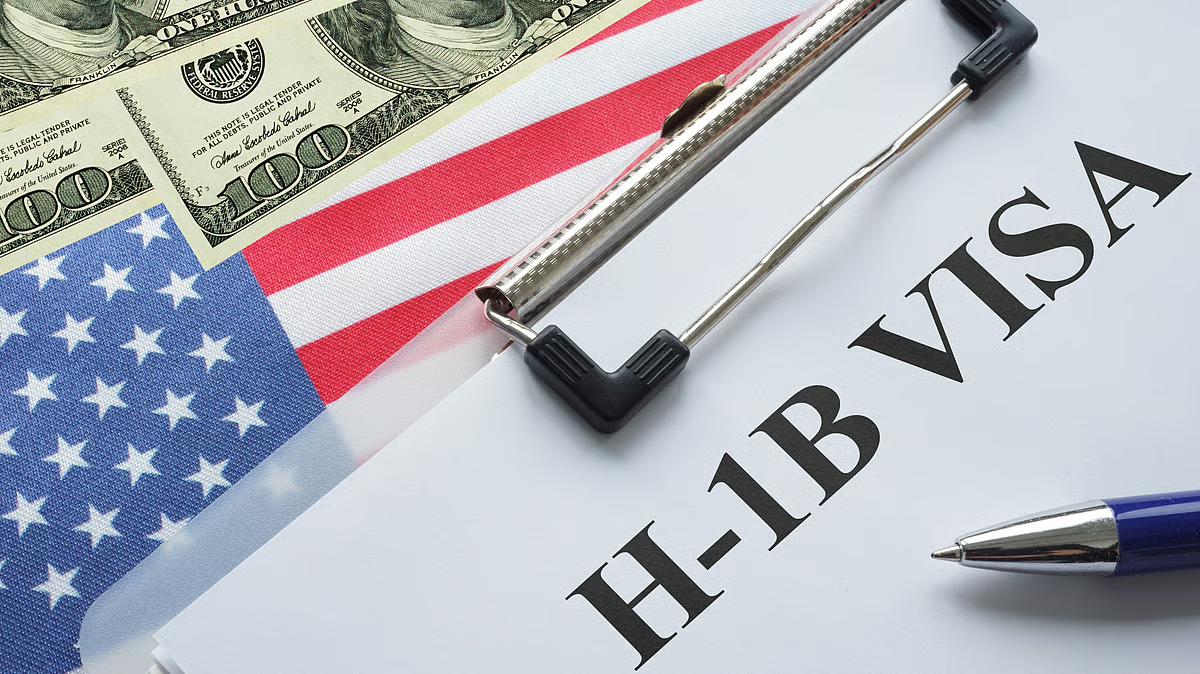


The United States issued a proposal to increase the minimum wages paid to hire an employee under the H1B visa program by 30 per cent over the prevailing fixed levels. The Trump administration argued the move would help prevent foreigners from undercutting wages of U.S citizens.
The new rule was proposed by the U.S Department of Labour on March 27. It sought to increase the minimum wages for four categories from the entry-level to the most-experienced. It justified the move by stating that the current wage levels were fixed 20 years ago and failed to give sufficient protection to American workers. The Labour Department said the existing policy allowed employers to hire foreign nationals at wages significantly below the wages offered to citizens.
The new rule will increase the wages for entry-level workers to $97,746 (Level I, 33.39 per cent hike), $1,23,212 (Level II, 24.47 per cent), $1,47,333 (Level III, 20.79 per cent), and $175,464 (Level IV, 21.68 per cent). The current wages vary from city to city.
The proposal is set to be enforced on the wage levels used in the H1B, H1B1, E-3, and PERM labour certification programs.
The new rule is open to public comments till May 26 and has currently received polarising responses. While many welcomed the move, others argued that smaller companies may no longer be able to hire freshers for entry-level jobs. The Department of Labour will assess the responses and issue the final rule after the window for public comments closes.
The Trump administration had attempted to bring changes to the current wage levels in 2020 during its first term but ran into legal challenges. The administration also imposed a $100,000 fee for H1B candidates outside the United States through a presidential order on September 19, 2025. The presidential order also commanded the Secretary of Labour to initiate the process of revising the prevailing page levels under the H1B program.