



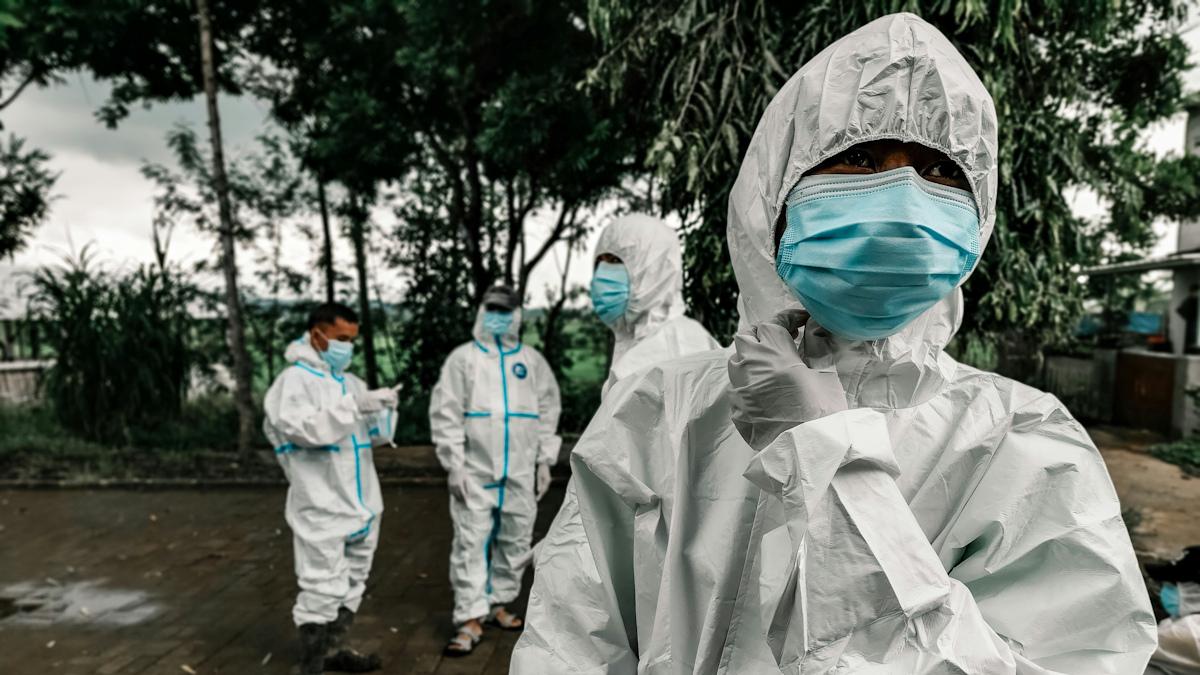


The World Health Organisation (WHO) reported on Sunday that four nurses, who were being treated for Ebola caused by the Bundibugyo strain, were discharged from a hospital in the Democratic Republic of Congo (DRC) after recovering from the disease.
Due to quick response measures, people have been getting diagnosed early and are able to access care, leading to more expected recoveries.
WHO counted the total number of recoveries to five, with a laboratory worker recovering earlier this week.
The number of confirmed Ebola cases in the DRC has increased to 282, with 42 deaths. The Communications Ministry showcased data, revealing 19 new positive test results.
While the outbreak currently does not meet the criteria of a pandemic, WHO declared the spread of the deadly virus in DRC and Uganda a “public health emergency of international concern”.
WHO Director-General Tedro Adhanom Ghebreyesus had arrived in Ituri, the epicentre of the virus, last week and appealed to the several armed groups operating within the DRC for a temporary ceasefire to ensure health workers could reach patients.
Tedro said on Saturday that although there was currently no licensed vaccine or treatment for the Bundibugyo strain, “it is not without hope” as one can survive with good medical attention.
Suspected cases in Italy and Brazil
Authorities suspected a case of Ebola in Sardinia’s capital, Cagliari, when a man, who had returned from Congo on Saturday, showed symptoms. The Italian Health Ministry reported early Monday that he tested negative for the virus.
“We confirm that the risk (of Ebola) in Italy remains very low,” said the Ministry.
Brazil saw suspected cases in Sao Paulo and Rido De Jeneira.
In Sao Paulo, a man from the DRC showed signs of a fever after visiting the country. He later tested positive for meningitis. In Rio, the patient tested positive for malaria after a recent trip to Uganda.
Local health authorities, however, warned that the possibility of Ebola cannot be ruled out in either cases.