




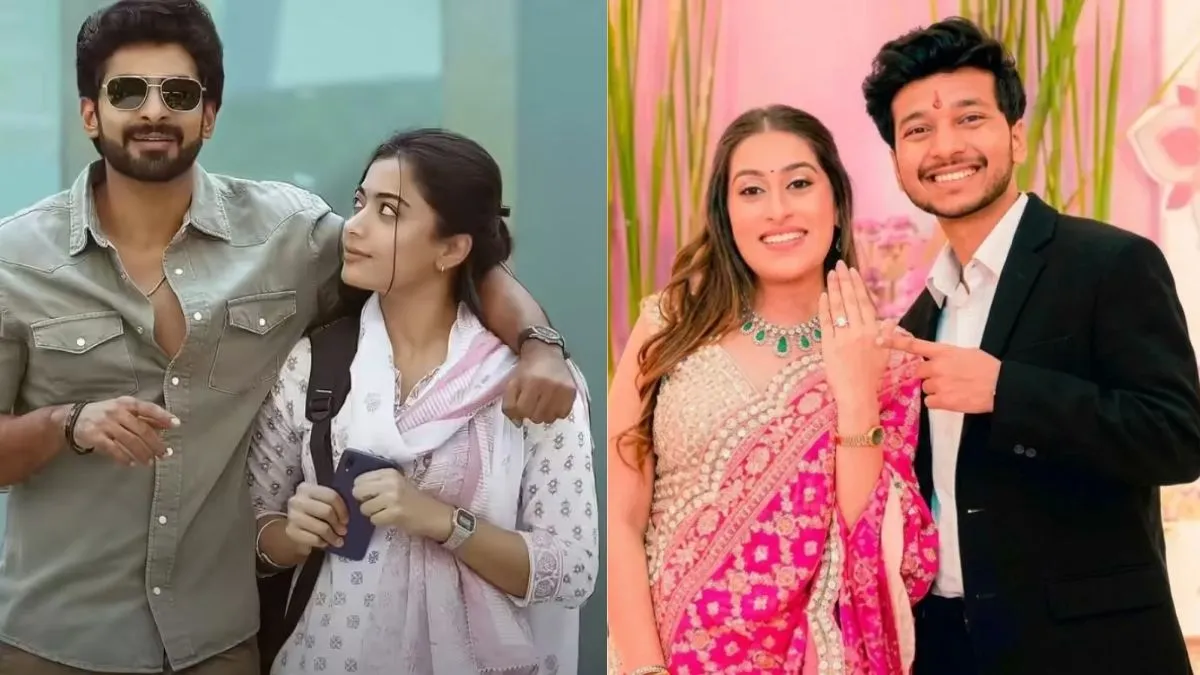


Director Rahul Ravindran has found himself at the center of a heated social media storm after his upcoming film The Girlfriend, starring Rashmika Mandanna, was dragged into discussions surrounding the shocking Ketan Agarwal murder case. What began as an online comparison between a real-life crime and a fictional film quickly escalated into a wider debate on gender, patriarchy, and how cinema portrays men and women.
The Murder Case That Sparked the Debate
The controversy traces back to the tragic death of 25-year-old Ketan Agarwal, son of a well-known Pune builder. Ketan died after falling into a 400-foot gorge at Lohagad Fort in June 2026. Initially believed to be a trekking accident, the case took a dramatic turn when police uncovered evidence suggesting it was a planned murder.
Investigators arrested Ketan’s fiancée, Siya Goyal, along with her alleged lover, Chetan Chaudhary. According to the police investigation, the two allegedly conspired to kill Ketan because Siya did not want to go ahead with the arranged marriage but feared the social consequences of cancelling the wedding or eloping. CCTV footage, digital evidence, and other findings reportedly strengthened the prosecution’s case.
Why The Girlfriend Became Part of the Conversation
As details of the murder spread online, an X user posted a still from The Girlfriend alongside an AI-generated image representing the Lohagad Fort incident. The post claimed that filmmakers often highlight women’s suffering while ignoring crimes committed by women against men. Tagging Rahul Ravindran, the user urged him to make a film focusing on “atrocities of women on men.”
The comparison quickly gained traction, bringing Ravindran’s upcoming psychological drama into an entirely different conversation than its intended subject.
The Girlfriend revolves around a postgraduate student, played by Rashmika Mandanna, who becomes trapped in a psychologically manipulative relationship with a charismatic college student portrayed by Dheekshith Shetty. The film explores emotional abuse, gaslighting, and toxic relationships rather than physical violence.
Rahul Ravindran Draws a Clear Line
Responding to the criticism, Rahul Ravindran issued a detailed statement explaining why he believes individual crimes should not be confused with broader social issues.
He argued that cases like the Ketan Agarwal murder involve individuals committing horrific acts and should be viewed as crimes committed by specific people rather than evidence of systematic oppression by women against men. In contrast, he said his film addresses long-standing societal structures that continue to shape women’s experiences through everyday discrimination and emotional suppression.
Ravindran also explained that The Girlfriend was written to examine psychological manipulation and gaslighting, adding that the male character in the film is neither a murderer nor a physically abusive partner. According to him, the story is about exposing emotional control rather than making a statement against men.
Interestingly, the filmmaker said he would not rule out making a film inspired by the Ketan Agarwal case if he found the story compelling. However, he stressed that such a project would depict the actions of one individual, not present them as crimes committed by women as a group.
Sarcasm Fuels the Online Fire
The debate intensified after Ravindran’s wife, singer and activist Chinmayi Sripaada, publicly supported his views. As trolls began targeting both of them, the director responded with a sarcastic post mocking the arguments being directed at him.
Through irony, he suggested that if critics wanted sweeping generalisations, he could simply claim patriarchy never existed and portray all Indian women negatively before making it clear that such thinking was precisely what he was challenging.
He also defended Chinmayi, saying she has consistently spoken out against abuse regardless of the perpetrator’s gender. According to Ravindran, critics were selectively ignoring that record to fit their own online narrative.
The controversy has since evolved beyond a single film, becoming another example of how social media debates can rapidly transform real-life tragedies into broader ideological battles.