




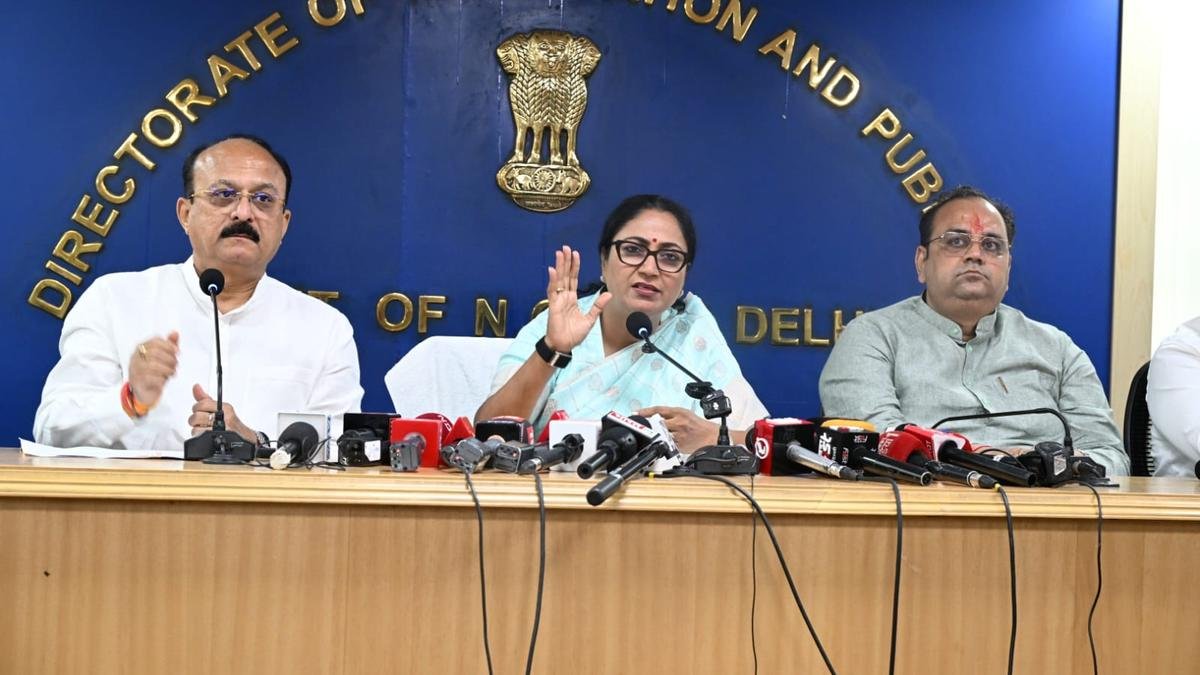


With the Delhi Cabinet clearing its Electric Vehicle Policy 2026, chief minister Rekha Gupta on Monday unveiled measures designed to do more than push buyers toward zero-emission cars. Beyond incentives and free registration, the policy subtly repurposes an environmental tool — the scrappage incentive for BS-IV vehicles — as a potential poverty-to-progress economic lever for low-income households and informal workers, a dimension largely absent from early coverage.
Under the policy, owners who scrap BS-IV cars and buy a new electric car can receive up to Rs 1 lakh. On the surface this is an emissions-focused measure; in practice it could create a fast channel for asset upgradation among drivers and families who rely on used petrol vehicles for livelihood. Delhi’s finance-free EV purchase window (100 percent waiver of road tax and registration fees) further reduces upfront cost — potentially enabling older-vehicle owners to trade in worn, fuel-hungry cars for quieter, cheaper-to-run electric models.
Two features matter here. First, the scrappage incentive targets a specific cohort: BS-IV owners, many of whom purchased cars in the 2010s and now face rising maintenance and fuel costs. Second, Delhi’s policy scaffolds infrastructure expansion — charging networks, battery facilities, and service centres — promising a localized support ecosystem that could lower operating costs and build job opportunities in neighborhoods outside central business districts.
If implemented with microcredit support, buyback transparency and targeted outreach, this policy could function as a de facto social mobility program: informal drivers, janitorial or delivery workers who depend on vehicles could convert depreciating assets into low-running-cost EVs, increasing disposable income through lower fuel and maintenance bills. Clustered deployment of charging stations in peri-urban wards and mobility hubs would be key to this outcome.
The policy also sets firm phase-out dates: from January 1, 2027 only electric autos will be registered, and registrations of new petrol two-wheelers will stop from April 1, 2028. These deadlines signal both environmental urgency and an economic reframing — winners will be those who can access conversion pathways, finance and charging.
Delhi expects roughly Rs 15,000 crore in investment over four years. If a share of that capital is intentionally directed to microfinance, vocational training for EV servicing, and targeted subsidies for informal vehicle owners, the policy can do double duty — cutting pollution while accelerating small-scale economic uplift. The risk is that without deliberate inclusion measures, benefits could cluster with better-off buyers. The novel question now: will Delhi treat EV transition as merely an emissions program, or as a calibrated tool for grassroots economic mobility?