




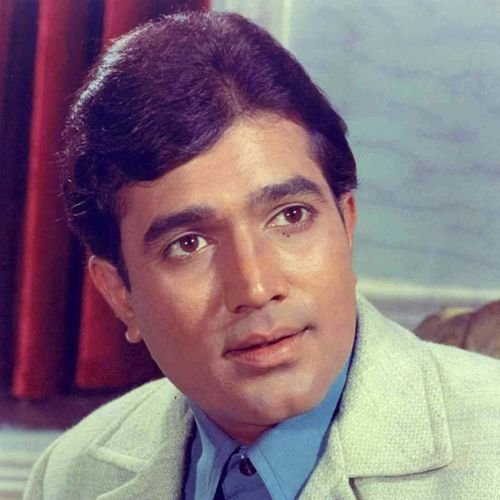


Every year on July 18, fans across the country remember Rajesh Khanna—not just as India’s first superstar, but as an actor whose unmatched stardom changed the face of Hindi cinema. Fourteen years after his passing, fresh revelations from Anita Advani have once again brought attention to the deeply emotional final chapter of his life, offering a glimpse into the man behind the legendary screen persona.
Speaking about Rajesh Khanna’s last year, Anita described a heartbreaking transformation. According to her, the actor’s health declined rapidly, and he seemed to lose both physical strength and emotional resilience within a short span. She recalled watching him “melt away in one year,” adding that he would often spend entire days crying.
What made those memories even more painful, she said, was Rajesh Khanna’s growing belief that his life was coming to an end. Anita claimed that he had emotionally accepted death long before it arrived and frequently spoke about it. She admitted that she often argued with him, urging him to stop thinking negatively and not lose hope despite his deteriorating condition. Her recollections paint the picture of a man who had once ruled the silver screen with unmatched charisma but was quietly battling loneliness and failing health away from the public eye.
One of the most emotional parts of Anita’s account revolves around Aashirvaad, Rajesh Khanna’s iconic bungalow in Mumbai. More than just a luxurious home, Aashirvaad symbolized the peak of his extraordinary career. Thousands of admirers once gathered outside its gates hoping for a glimpse of the superstar, making it one of Bollywood’s most famous addresses.
According to Anita, even during his illness, Rajesh Khanna refused an offer reportedly worth ₹150 crore for the bungalow. She said his dream was to preserve the property as a museum where future generations could remember his contribution to Indian cinema. In his vision, Aashirvaad would continue telling his story for the next hundred years. That dream, however, never became reality.
Following his death on July 18, 2012, the bungalow was eventually sold and later demolished to make way for a residential project. Anita spoke candidly about the emotional impact of that decision, saying she felt as though a part of her also disappeared when the house was torn down. For countless admirers of Rajesh Khanna, Aashirvaad represented more than bricks and walls—it was a landmark tied to an unforgettable era of Bollywood.
Anita also recalled the family dynamics during Rajesh Khanna’s final months. She shared that his estranged wife, Dimple Kapadia, along with daughters Twinkle Khanna and Rinke Khanna, began visiting him regularly as his health worsened. Despite public assumptions of tension, Anita said she maintained a cordial relationship with Dimple and helped the family understand his medical condition as he struggled with weakness and hallucinations. She also mentioned that Rajesh Khanna’s former partner, Anju Mahendroo, would occasionally visit and spend time with him.
While these recollections present an image of cooperation during his illness, the years following Rajesh Khanna’s death told a different story. Anita later initiated legal proceedings against Dimple Kapadia, Twinkle Khanna and Akshay Kumar, claiming rights connected to her relationship with the late actor and alleging wrongful eviction from Aashirvaad. The legal dispute eventually ended with the Bombay High Court dismissing her claims, ruling that she could not establish a relationship in the nature of marriage because Rajesh Khanna remained legally married to Dimple Kapadia.
The renewed discussion surrounding Rajesh Khanna’s final days reflects the lasting fascination with a man whose fame once reached unimaginable heights. While the legal battles and conflicting narratives remain part of his legacy, Anita Advani’s latest remarks have once again shifted public attention to his emotional struggles, his unrealised dream of preserving Aashirvaad, and the quiet loneliness that accompanied one of Indian cinema’s greatest stars in his final days.
More than a decade later, Rajesh Khanna continues to be remembered not only for his timeless films and unforgettable performances but also for the deeply human story behind the superstar—a reminder that even the brightest icons can face their darkest moments away from the spotlight.