




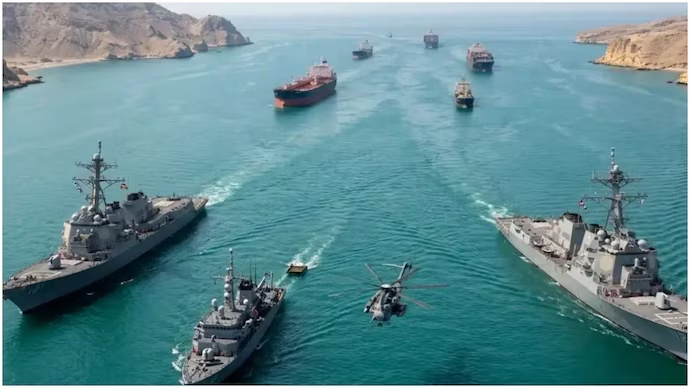


The Strait of Hormuz has lapsed back into a closed, high‑risk corridor after two merchant vessels reported being fired upon while trying to cross the waterway on Saturday, according to three maritime security and shipping sources. The incident, which prompted both ships to turn back, came within hours of Iran re‑imposing strict military control over the strait, marking a dramatic reversal of a brief window of relatively open navigation.
Fire brushed path to the chokepoint
The two vessels were hit by gunfire in the bottleneck waters between Qeshm and Larak islands, the narrow gateway through which roughly one‑fifth of global oil trade passes. A container ship was also struck, a maritime security source told Reuters, though it remains unclear whether the bullets caused serious damage. All three ships abandoned the crossing and reversed course, underscoring the renewed risk for commercial traffic attempting to enter the Gulf.
In the same stretch, the Iranian navy was broadcasting a VHF radio warning to incoming vessels:
“Attention all ships, regarding the failure of the US government to fulfil its commitment in the negotiation, Iran declares the Strait of Hormuz completely closed again. No vessel of any type or nationality is allowed to pass through the Strait of Hormuz.”
The message, confirmed by multiple shipping operators, signals that Tehran is no longer allowing even “regulated” transit, despite having announced only hours earlier that the strait was partially open for tankers and commercial ships following negotiations linked to the broader ceasefire and US‑Iran talks.
From brief opening to re‑closure
The reopened phase had already looked fragile. Earlier on Saturday, maritime tracking datashowed a convoy of eight tankers moving through the strait—the first significant wave of commercial traffic since the US‑Israel war on Iran began seven weeks ago. Yet the window of relative ease lasted less than a day. The armed forces’ subsequent statement said control over the strait had reverted to “strict management” by the Iranian military, accusing Washington of continued “piracy” under the cover of a naval blockade on Iranian ports.
A spokesperson added that limited, regulated passage for oil tankers and other vessels had been granted “in good faith” after talks, but that this temporary easing was now rolled back due to US actions. The pattern—brief opening, followed by crackdown—has left many flags and ship owners unwilling to risk exposure in such a volatile zone.
Indian and regional ships forced to retreat
Maritime data and tanker‑tracking platforms show that Indian‑flagged vessels were among those forced to turn back. One of the ships identified as an Indian‑flagged very large crude carrier (VLCC) was reportedly transporting nearly 2 million barrels of Iraqi crude when it aborted its attempt to transit the strait. Vessel‑tracking firm TankerTrackers.com and Indian media reports indicate that multiple Indian and Greek tankers reversed course in the Persian Gulf upon seeing the danger signs, further disrupting the flow of energy supplies to Asian markets.
Iran’s joint military command declared in a statement that the strait’s return to tight military oversight was a direct response to the US naval blockade, while Supreme Leader Mojtaba Khamenei issued a defiant message on Telegram, asserting that Iran’s navy stood ready to deliver “new bitter defeats” to its adversaries. That rhetoric reinforces the perception that the strait is being used as a lever of pressure rather than purely a commercial route, raising fears of a protracted, weaponised blockade.
US stance and global uncertainty
At the same time, President Donald Trump in Washington has suggested a breakthrough in Tehran is near, telling reporters he has “some pretty good news” about Iran linked to ongoing negotiations and a possible peace framework. He also warned, however, that hostilities could resume if a deal is not sealed before the current two‑week ceasefire expires on Wednesday, 22 April.
There has been no immediate public comment from US officials on the latest Hormuz firing or Iran’s formal re‑closure, but the tightening security environment has traders on edge. With the strait once again contested and shots fired at civil shipping, the price of crude, already hovering near $95 a barrel, may see fresh volatility if the standoff drags on. For global energy markets, the message is clear: a vital artery of seaborne oil trade has slipped back into a high‑risk, militarised zone, and another temporary “opening” may not be enough to restore confidence.