




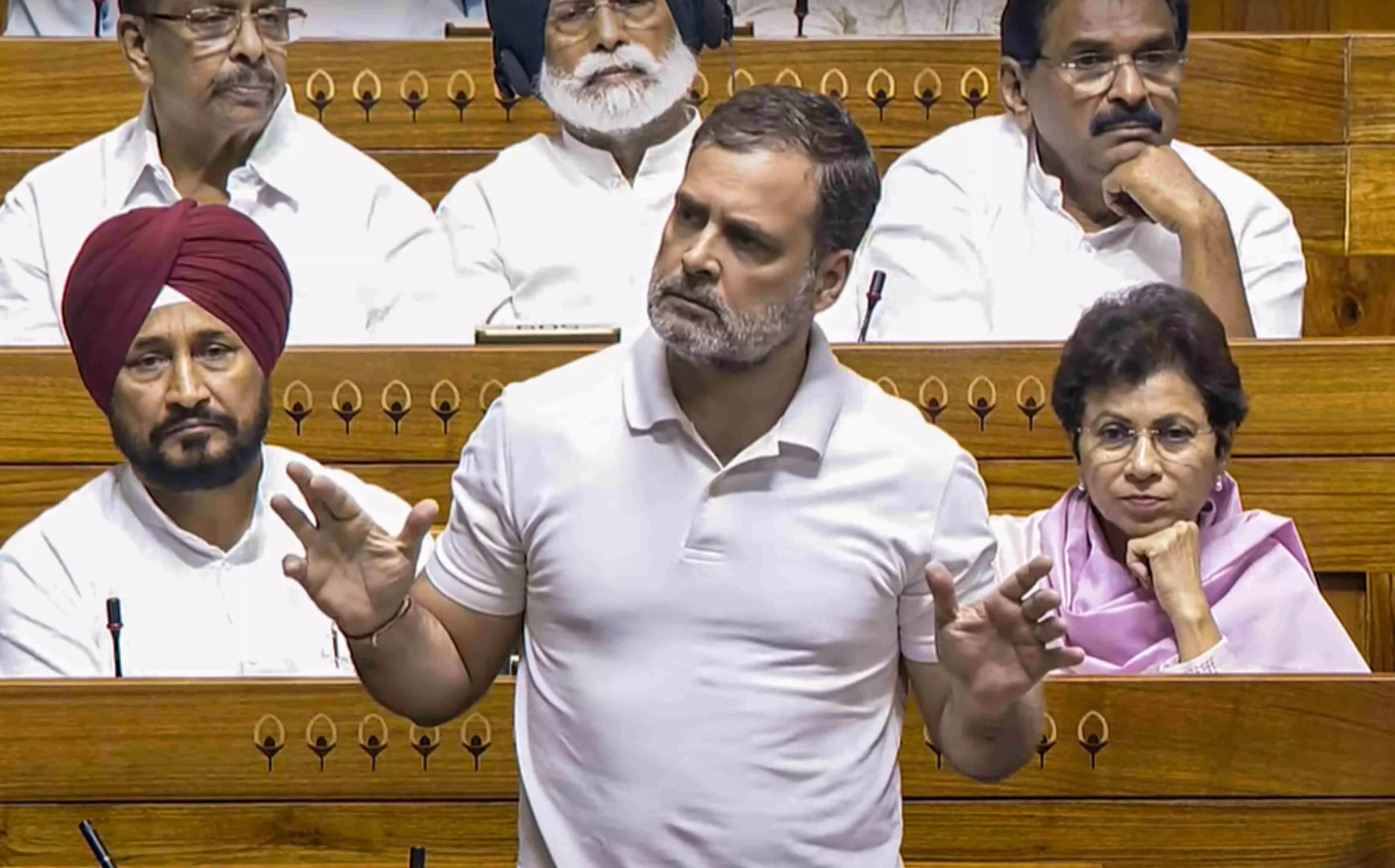


The Lucknow bench of the Allahabad High Court has put on hold its earlier order directing registration of an FIR against Congress MP Rahul Gandhi in the alleged dual citizenship case, choosing instead to first hear both sides on the legal requirement of prior notice to the accused. The bench, presided over by Justice Subhash Vidyarthi, had orally ruled on Friday that prima facie cognisable offences appeared to have been committed and had allowed the Uttar Pradesh government to either probe the matter or hand it over to a central agency. However, before formally signing the dictated order, the court discovered a full‑bench precedent that mandates issuance of notice to the proposed accused, which had not been raised by any counsel during the earlier hearing.
Because of this, the bench has now restrained the FIR direction and has posted the case for a fresh hearing on April 20, 2026. The court observed that no final order should be passed without giving the prospective accused an opportunity to present his case. The stay effectively pauses the operation of the earlier directive and gives Rahul Gandhi’s legal team time to file written submissions and contest the allegations. The shift also underscores the judiciary’s emphasis on following due‑procedure standards, even in politically sensitive matters.
The controversy is based on a petition filed by Karnataka‑based BJP worker S Vignesh Shishir, who alleges that Rahul Gandhi was a British citizen and incorporated a UK‑based company, M/s Backops Ltd, in August 2003, declaring his nationality as British. Shishir claims that Gandhi’s annual returns filed in October 2005 and October 2006 again listed his nationality as British, and that the firm was dissolved in February 2009 with the same nationality noted. He has sought an FIR under the Bharatiya Nyaya Sanhita, Official Secrets Act, Foreigners Act and Passport Act, alleging concealment of foreign citizenship and possible disqualification from holding office.
During Friday’s hearing, Deputy Solicitor General of India S B Pandey produced Centre records relating to the citizenship angle, while government advocate V K Singh told the court that the material on record prima facie disclosed cognisable offences and warranted a proper investigation. The bench’s earlier oral order therefore leaned towards treating the allegations as serious. Its current decision to defer the FIR, however, reflects a recalibration of the legal‑process question, turning the case into a debate on both substance and procedure rather than just politics. The April 20 hearing will now test how the court balances these two dimensions before deciding whether an FIR against Rahul Gandhi can ultimately proceed.