




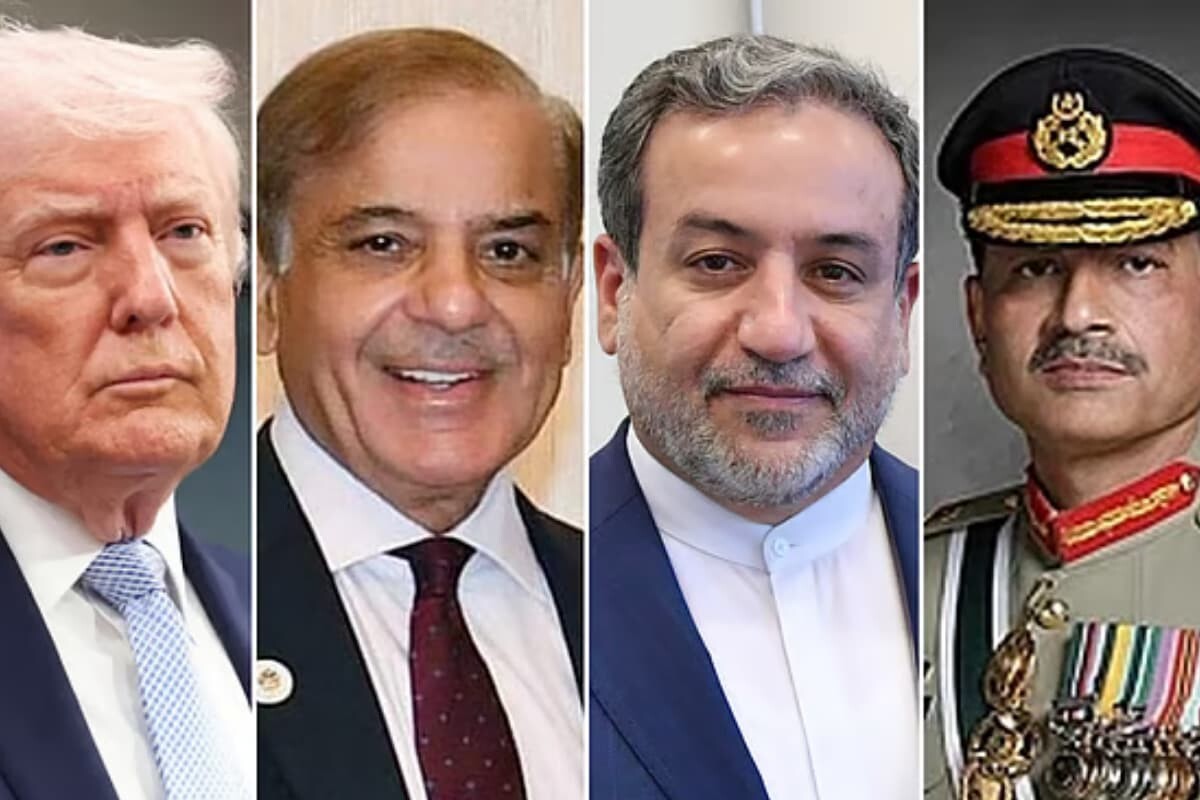


The United States and Iran are quietly trying to extend a two‑week ceasefire that was due to expire on 22 April, even as Pakistan’s army chief Field Marshal Asim Munir arrived in Tehranto keep the fragile diplomatic track alive. The Biden White House, while avoiding a formal announcement, is signaling that it remains “very much engaged” in negotiations, even as both sides read the situation from different angles.
White House press secretary Karoline Leavitt denied on Wednesday that Washington had “formally” requested an extension of the ceasefire, but stressed that the US is still deeply involved in the process. She said a second round of talks is “very likely” to be held in Islamabad, adding that the White House feels “good about the prospects of a deal” just days after the first round in Pakistan failed to deliver a breakthrough. “Nothing is official until you hear it from us here at the White House,” she said.
Pakistan has now thrown its full weight behind the diplomacy, with Munir leading a high‑level delegation to Tehran to carry a message from Washington and coordinate the logistics for a next phase of US‑Iran negotiations. The team included interior minister Mohsin Naqvi and other senior officials, underscoring Islamabad’s ambition to act as the main intermediary between the two adversaries.
On the same day, Prime Minister Shehbaz Sharif left on a four‑day tour to Saudi Arabia, Qatar and Turkey, seeking to rally regional support for a peace agreement and to align multiple capitals behind the ceasefire and de‑escalation framework.
Ceasefire and preconditions
Tehran appears more cautious. Iranian officials say they want an end to Israeli attacks on Lebanon as a key condition for another round of negotiations with the US. The air and ground operations by Israel into south Lebanon, especially around Hezbollah’s stronghold of Bint Jbeil, have continued openly, with Defence Forces chief Lt Gen Eyal Zamir vowing to turn the area south of the Litani River into a “Hezbollah kill zone.”
Israeli Prime Minister Benjamin Netanyahu insisted in a video statement that his forces are pressing ahead. “Our forces continue to strike Hezbollah, we are about to conquer Bint Jbeil,” he said. “In parallel, yesterday I gave instructions to the IDF to continue thickening the security zone.” Still, two Lebanese officials privately told Reuters that they expect a ceasefire with Israelcould be announced “soon,” though they offered no details.
Blockade, sanctions and the oil market
Beyond the battle lines, the economic front remains tense. The US has imposed a naval blockade on Iranian ports, claiming it has turned back nine ships, including the Chinese‑owned tanker Rich Starry, which tried to cross the Strait of Hormuz. The US has placed that vessel under sanctions, warning of secondary financial penalties on any entity that ships Iranian oil or holds Iranian funds.
Treasury Secretary Scott Bessent described this as the “financial equivalent” of the bombing campaign, saying the US is ready to hit banks and countries that deal with Iran’s energy sector. Iranian military chief Ali Abdollahi has warned that Tehran will respond by blocking exports and imports across the Gulf region, including shipping in the Gulf, Gulf of Oman, and Red Sea, if the US blockade persists. “Iran will act with strength to defend its national sovereignty and its interests,” he said.
Still, the rhetoric hasn’t deterred China, which has repeatedly denied sending weapons to Iran. President Xi Jinping is said to have told Donald Trump he would not supply arms, even as reports, including one in the Financial Times, suggest Tehran’s Revolutionary Guard has used a Chinese‑built spy satellite to target US bases in the region.
Trump’s predictions and the price of oil
President Donald Trump, who launched the war alongside Netanyahu, continues to predict a swift end. In conversations with ABC News’ Jonathan Karl, he said the conflict could be over “in two days” – either because the US decides to withdraw after punishing Iran’s military, or because Washington and Tehran reach a deal. “I think a deal is preferable because then they can rebuild,” Trump added. In another interview with Fox News, he said the war could be over “very soon,” which he expects will drive down oil prices.
On Wednesday, crude hovered near $95 a barrel, reflecting trader uncertainty about whether the ceasefire or diplomatic talks will hold. The stakes in Islamabad, Tehran, Washington and Beirut are no longer just about battlefield control, but about how long the world has to live with the risk of a snapback into full‑blown conflict.