



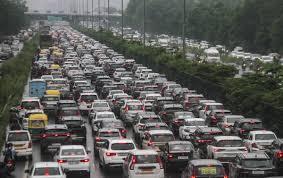


In a major push to tackle Delhi-NCR’s persistent air pollution crisis, Prime Minister Narendra Modi on Wednesday announced a Rs 9,585 crore scheme focused on phasing out older, high-emission vehicles and accelerating the shift to cleaner mobility.
The two-year initiative, funded through the National Capital Region Planning Board under the Ministry of Housing and Urban Affairs, will be implemented by the Ministries of Road Transport and Highways and Petroleum and Natural Gas, in coordination with Delhi, Haryana, Rajasthan and Uttar Pradesh governments.
The scheme targets over 2.07 lakh vehicle owners, including nearly 1.91 lakh trucks and more than 16,000 buses—segments identified as disproportionate contributors to pollution despite their smaller share in total vehicles.
Focus on High-Emission Vehicles
The policy zeroes in on BS-IV and older vehicles, encouraging owners to scrap or replace them with BS-VI or electric alternatives. BS-III and older vehicles must be scrapped, while BS-IV vehicles can either be scrapped or relocated outside the NCR.
The move is backed by a 2018 ARAI-TERI study, which found that the transport sector contributes 14% of PM2.5 emissions, 40% of carbon monoxide, and 63% of nitrogen oxides in the region. Notably, trucks and buses alone account for 36% of PM2.5 emissions while making up just 3% of the fleet.
Incentives to Drive Transition
To ease the transition, the Centre is offering a 5% interest subsidy on vehicle loans for five years, monthly fuel vouchers of up to Rs 4,800, and additional incentives for electric vehicle purchases. State governments will complement this with registration fee waivers and up to 100% motor vehicle tax exemption.
Automobile manufacturers are also expected to provide an 8% discount on eligible vehicles, while pending liabilities on scrapped vehicles will be waived—making the shift financially viable for operators.
Centralised Monitoring Mechanism
An Empowered Committee led by the Cabinet Secretary will oversee implementation, supported by senior officials from NITI Aayog and key ministries, along with state representatives. At the ground level, district administrations will handle execution and monitoring.
A fully digital portal will anchor the scheme, enabling real-time tracking of eligibility, subsidy disbursal, and emissions impact, with benefits extending up to five years from the purchase of new vehicles.
The government is betting on cleaner fleets to deliver measurable air quality gains in one of India’s most polluted regions. The success of the scheme, however, will hinge on enforcement, adoption rates, and coordination across multiple states.