



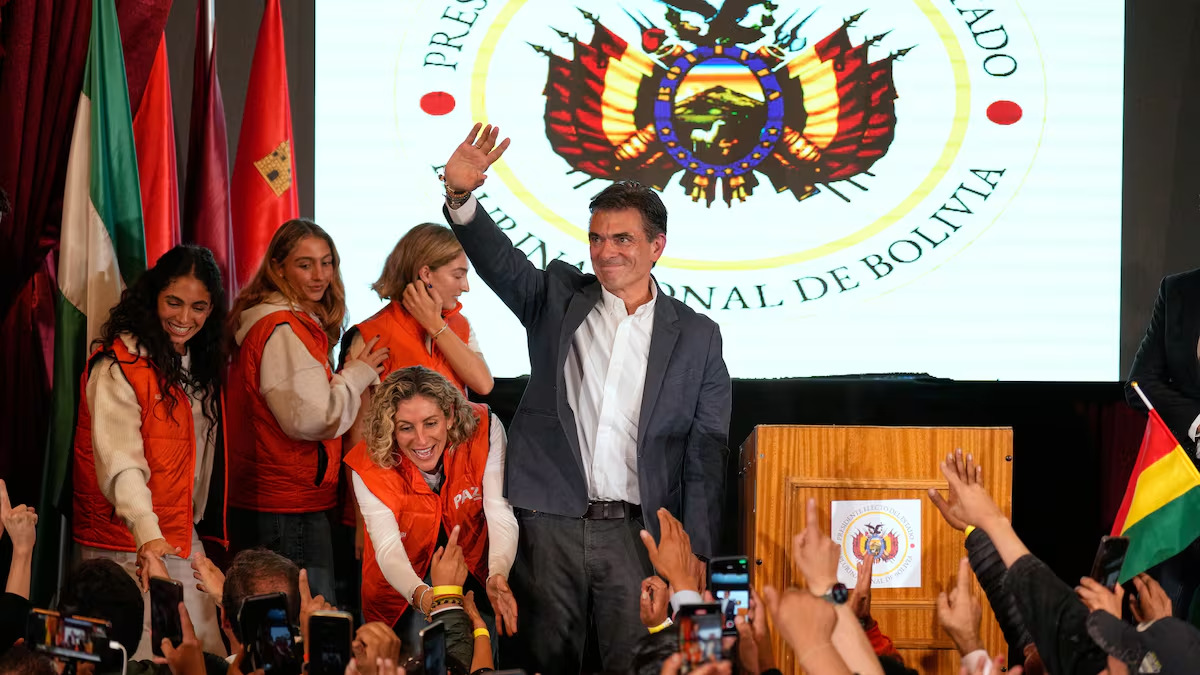


President of Bolivia Rodrigo Paz declared a state of emergency on Saturday after almost 50 days of anti-government protests over rising living costs and economic hardship.
The protests included demonstrations, road blockades and supply disruptions leading to shortages of food, fuel, and medicines across the country. Protesters affiliated with workers’ unions and farmers’ groups have been demanding Paz’s resignation since he introduced cuts to long-standing fuel subsidies in early May. The President justified his decision as a measure to reduce the fiscal deficit amid a worsening dollar shortage and discussions with the International Monetary Fund (IMF).
Despite the government of Bolivia subsequently repealing controversial land reforms and introducing measures to stabilise fuel prices, protesters continued to accuse Paz’s administration of failing to address rising living costs, fuel shortages, inflation, and economic hardship.
Paz addressed the nation on Saturday in a televised broadcast, declaring that the emergency measures were necessary to restore normalcy and reopen key transport routes.
“I have arranged for the implementation of the State of Exception to free the country’s roads,” he said “Bolivians cannot continue to be hostages of blockades that prevent working, studying, receiving medical attention, supplying themselves, and bringing sustenance to their homes.”
According to Reuters news agency, a declaration of a state of emergency in the country allows a broader deployment of military to clear blockades and restore order across the nation.
The crisis in Bolivia intensified despite an agreement to ease the tensions between the government and the country’s main labour union, the Bolivian Workers’ Confederation (COB), on Friday.
Former President Evo Morales also backed the protests, calliing it a response to economic hardship and political persecution. Morales’ supporters also organised road blockades across key transport routes in the country. The move blocked several trucks, disrupted supplies of food, fuel, and medicine, and prevented patients from reaching hospitals.
Authorities said the protests had led to the deaths of at least three people.