




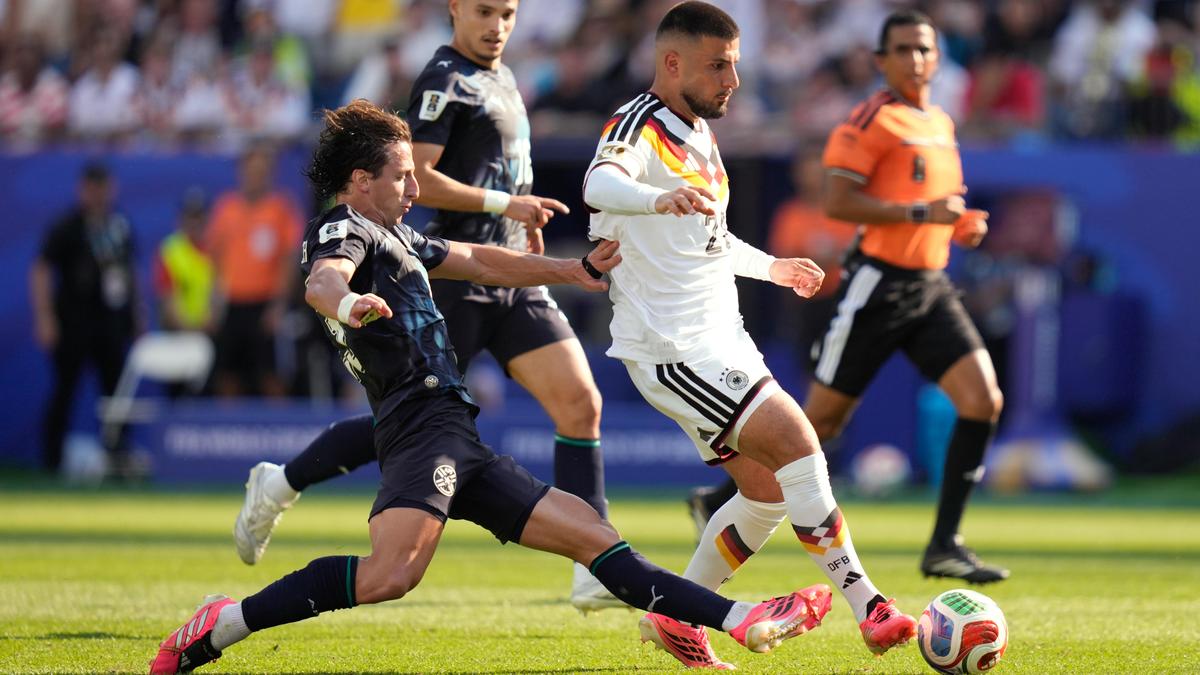


Germany’s FIFA World Cup 2026 campaign came to a heartbreaking end after a dramatic Round of 32 defeat to Paraguay, but it wasn’t just the result that grabbed headlines. A controversial VAR intervention during extra time has become one of the tournament’s most talked-about moments, with fans, pundits, and former officials questioning whether Germany were unfairly denied what could have been the winning goal.
After battling back from a goal down and dominating large spells of the knockout clash, Germany thought they had completed the turnaround when defender Jonathan Tah headed home in extra time. However, celebrations were cut short as the Video Assistant Referee (VAR) stepped in, ultimately changing the course of the match.
How the Controversy Unfolded
The Round of 32 encounter had already produced plenty of drama before the decisive VAR moment.
Paraguay took the lead through Julio Enciso, putting early pressure on Germany. Kai Havertz responded in the second half with a well-taken equaliser to make it 1-1, a scoreline that remained unchanged after 90 minutes and forced the contest into extra time.
Germany believed they had found the breakthrough when Jonathan Tah rose highest inside the penalty area to head the ball into the net, giving his side what appeared to be a 2-1 lead.
But before play restarted, the VAR team alerted Moroccan referee Jalal Jayed to a possible foul in the build-up. After reviewing the footage on the pitch-side monitor, Jayed ruled that Germany defender Waldemar Anton had illegally impeded Paraguay goalkeeper Orlando Gill inside the six-yard box before Tah’s header. The goal was immediately disallowed, leaving German players stunned.
Why Experts Disagreed With the Decision
The incident quickly divided opinion, but several high-profile football experts believed the contact was simply too minimal to justify overturning the goal.
Former England captain Alan Shearer, who was on commentary duty for the BBC, described the decision as “very, very soft.”
According to Shearer, slight physical contact is inevitable during set-pieces, especially when more than a dozen players are crowding the penalty area. He argued that while Anton did make contact with goalkeeper Orlando Gill, it wasn’t enough to prevent him from challenging for the ball. Shearer suggested the goalkeeper went down too easily and insisted he would have allowed the goal to stand.
Former FIFA World Cup final assistant referee Darren Cann shared a similar view. Although he admitted referees often protect goalkeepers in crowded situations, he also felt the incident involved only minimal contact and could easily have gone the other way.
Their comments have fuelled widespread debate over VAR’s interpretation of physical challenges and whether the technology is becoming overly influential in decisive knockout matches.
Penalty Shootout Seals Germany’s Fate
Despite the disappointment of seeing Tah’s goal ruled out, Germany still had an opportunity to reach the Round of 16 through a penalty shootout.
Historically, Germany have been regarded as one of football’s strongest teams from the penalty spot, making them favourites once the match remained tied at 1-1.
Instead, the shootout produced another shock.
Kai Havertz, Nick Woltemade, and Jonathan Tah all failed to convert their penalties, while Paraguay kept their composure despite missing two spot-kicks of their own.
The South American side eventually secured a dramatic 4-3 victory on penalties, completing one of the biggest upsets of the FIFA World Cup 2026 and booking their place in the Round of 16.
A Defining Moment of the Tournament
Germany’s elimination will likely be remembered as much for the controversial VAR call as for the result itself. While the officials deemed Waldemar Anton’s challenge on Orlando Gill sufficient to disallow Jonathan Tah’s goal, many former players and referees remain unconvinced.
Whether viewed as correct application of the laws or an overly harsh interpretation, the incident has reignited the global debate over VAR’s role in football’s biggest matches. For Germany, however, the controversy offers little consolation after an early and unexpected World Cup exit.