




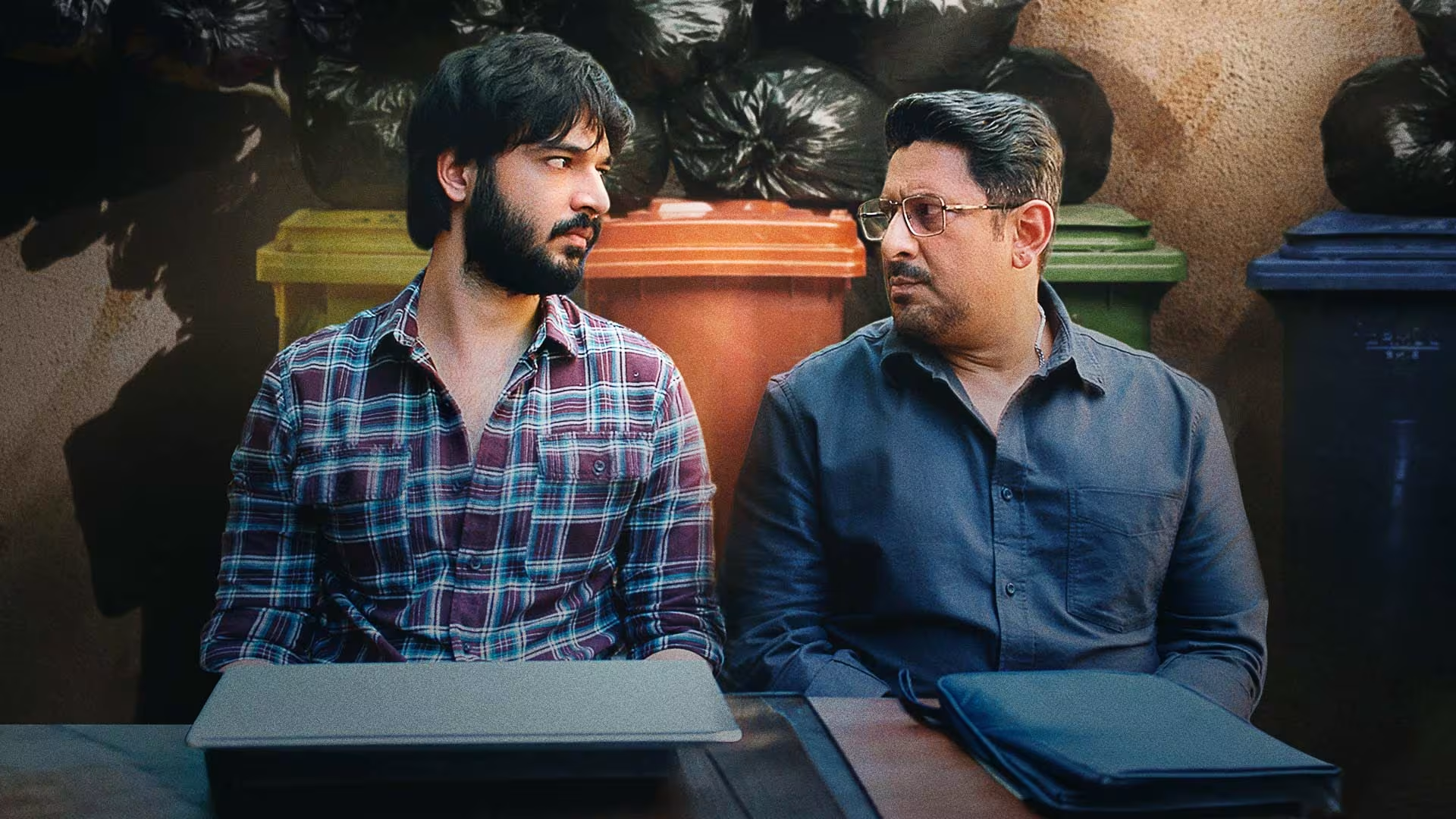


Rajkumar Hirani is recognized for storylines that strike a mix between humor, passion and social critique. 3 Idiots, PK and Dunki are films that make you laugh, think and, frequently, weep. In his first OTT project, he teams up with Pritam and Pedro to try to bring his characteristic mix to the internet arena, but with a severe twist: cybercrime. The online series, which begins streaming from July 3 on JioHotstar, is directed by Avinash Arun and also stars Arshad Warsi, Vikrant Massey, Boman Irani and Mona Singh. It is the acting debut of Hirani’s son Vir Hirani.
The idea, Hirani said, came during the lockdown in 2020 when he had gotten a call from the Mumbai Cyber Cell requesting him to do a film about cybercrime. That question was the seed for the series: a scenario where hackers don’t only drain your bank account, but control lives, relationships and even physical safety. It’s a striking, contemporary theme on paper. Pritam and Pedro are part of that promise, but also part of its worst disappointment on screen.
The Story: Hacked Lives, Rapid Fire
The series is about two different worlds.” Pritam is a young and digitally smart guy who gets into the midst of a big cybercrime case. Pedro is an experienced cyber police officer, and he is forced to take on the responsibility of investigating the crime, and defending vulnerable persons trapped in its web. The story alternates between both views, revealing the weaponisation of personal data, the vulnerability of youngsters, and the potential real-world consequences of a single internet misstep.
As a thriller it’s certainly quick. The editing is precise, scenes snap fast into each new confrontation and the tone remains discomforting. There are moments of suspense of a hacker hacking a victim’s phone, a youngster being tricked online, a hacker using personal information to blackmail someone. The series aims to demonstrate that cybercrime is not only about making money anymore, it can ruin reputations, shatter relationships and in extreme situations, cause bodily injury.
But this rapidity is a weakness. The plot is generally a succession of high-intensity events sewn together rather than a completely fleshed-out narrative. Characters are introduced with minimal backstory, conflicts are handled fast, emotional arcs are referenced but never completed. Pritam and Pedro are interesting on paper but underdeveloped themselves. The series doesn’t give space for their relationships, anxieties or motives to breathe, making the stakes more narrative mechanical than human experiences.
Signature Hirani Touch Where It Works, Where It Dips
One of the highlights of the series is its endeavor to keep the unique style of Hirani – blending fun with serious themes. There are moments of levity particularly in the interplay between the cops, the techies and regular individuals, which save the series from being a dismal sermon about cybercrime. Anyone who has watched a Hirani film knows all about irony, when people laugh at virus alerts or teenagers assume they are “too smart” for hackers.
But the hilarity can occasionally jar with the gravity of the issue. “If a scene is really intense, like a child being manipulated online, a sudden comedic moment can feel jarring, and it can weaken the emotional impact. The series doesn’t always know when to take a breath, reflect or let the viewer digest what they have just witnessed. And this inconsistency is what makes Pritam and Pedro seem less like a Hirani picture and more like a quick moving thriller with comedy sprinkled throughout.
Acting and Characters: Good Acting, Thin Characters
Arshad Warsi portrays the seasoned cyber police officer, Pedro, and does what he usually does well, bringing warmth, gravity and a grounded presence to the screen. His performance is one of the cornerstones of the series, but the part doesn’t provide him enough depth to properly explore. He’s an operator but not a mystery; he’s a policeman but not a tortured soul.
Vikrant Massey’s involvement is big, but also understated. He brings energy and authenticity to the series, although his character is often pushed to the side by the urgency of the story. Vir Hirani is eager as Pritam and does his best but the writing does not give his character enough time to mature. He is presented as a young victim of cybercrime and at the end he is a partner in its solution. The change feels hasty, not earned.
Boman Irani and Mona Singh give the series weight yet their characters are not fleshed out. They belong to the story’s broader ecology, but the series doesn’t care about their particular adventures. It’s a show in which the storyline advances quicker than the individuals in it.
Themes and Realism: Eye-Opener, but Not Profound
Education is the most essential thing Pritam and Pedro strives to achieve. It wants people to know that cyber crime is not just about stolen money but stolen identities, relationships and dignity. It shows how youngsters may be exposed if they spend too much time online, how hackers utilize personal data to mislead individuals and how one mistake can lead to massive consequences.”
In this respect, the series is a partial success. It does make you think about your digital habits, passwords and online presence.” It’s a wake-up call for parents and teens alike. But it’s more a wake-up call than a discussion. It informs you what’s wrong, but not the larger questions: why do people fall for scams? Why do they turn deaf ears? ### What Psychological Weaknesses Do Hackers Target?
The Final Verdict: Fast but Shallow
Pritam and Pedro may be summed up as: increase speed, decrease depth. It’s a short thriller and the issue is relevant, but it doesn’t go deep enough into the characters, the emotions, or the societal concerns it highlights. For Hirani fans, there’s a combination of familiar humor and newfound seriousness, but it doesn’t have the emotional punch of previous movies. It may do the trick for people who want a fast-paced cybercrime thriller, but it won’t linger long after you’ve finished it.
Pritam & Pedro is a fair OTT debut for Rajkumar Hirani, but not a great one in the end. It is a warning, not a narrative. It is a message, not a voyage. And in a world where dangers are real, that’s a problem.”