




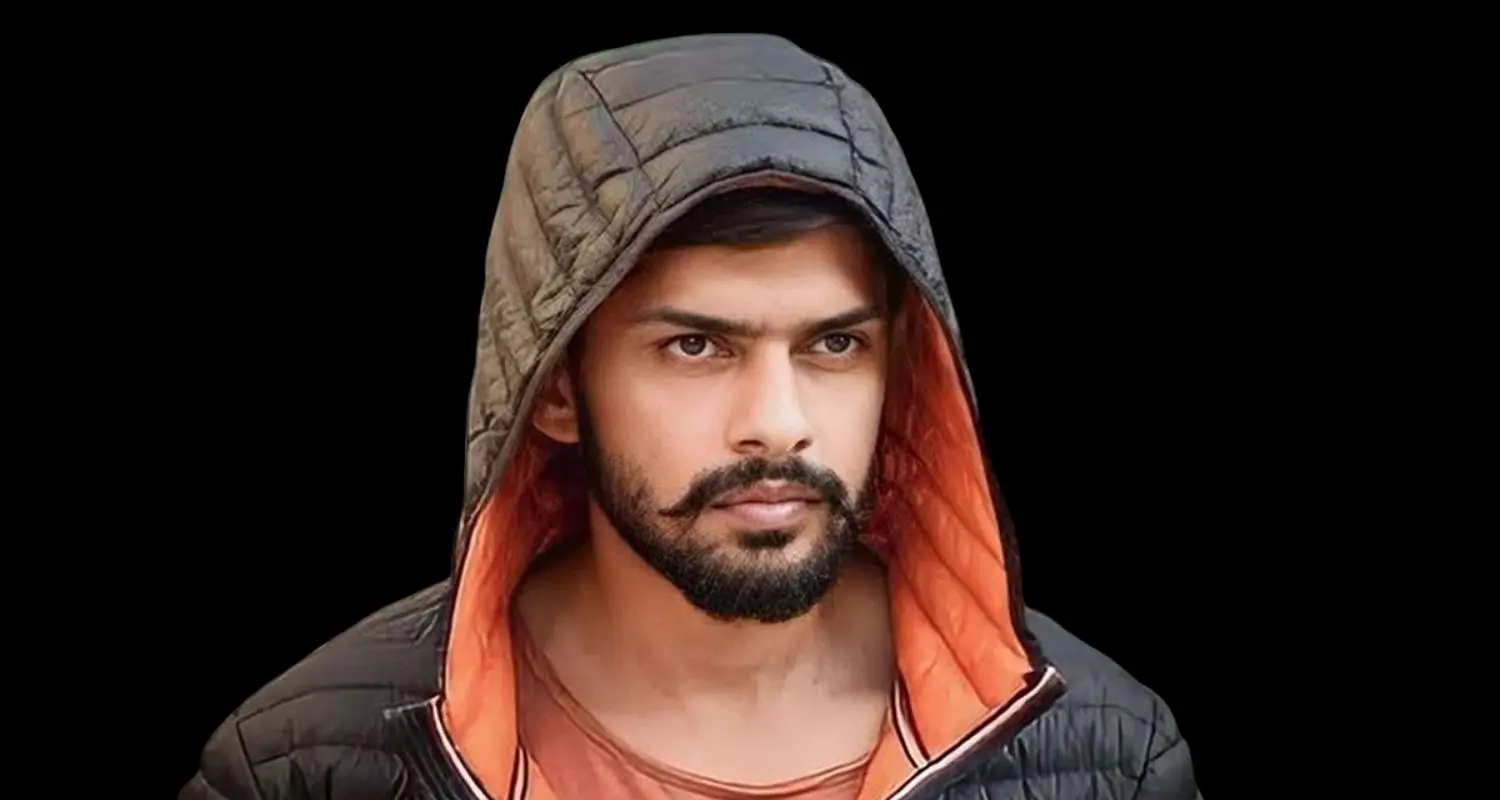


A viral social media post linked to the Lawrence Bishnoi network has claimed the alleged killing of Haryana gangster Bhanu Rana in California, United States, but official confirmation of the incident remains pending. The message, circulated through accounts believed to be connected to the Bishnoi‑linked ecosystem, has triggered alarm about the growing international footprint of Indian organised crime even as its authenticity remains unverified.
Claim: “Traitor” eliminated abroad
The post asserts that the attackers had previously announced plans to eliminate Bhanu Rana, branding him a “traitor” and accusing him of sharing information with rival criminal networks. The language is explicitly threatening: the message warns that anyone working against the country will be hunted down “wherever they hide” and urges those supporting the nation’s enemies to stay alert because “death can come anytime.”
In the criminal‑world narrative built around such messaging, the claim functions as both a statement of capability and a deterrence signal. By framing Rana as a traitor, the group attempts to justify the killing ideologically rather than simply as part of a rivalry, and by posting it publicly, it underlines its capacity to act far beyond India’s borders.
No official confirmation yet
Despite the bold claim, the alleged killing has not been independently verified. A youth from Karnal now living in California has reportedly said there has been no local confirmation of such an incident, casting doubt on the accuracy of the gang‑linked post. Residents and local contacts in California, as per preliminary reports, have not reported a high‑profile shooting of an Indian‑origin gang figure that matches Rana’s profile, though law‑enforcement agencies in the US have not yet issued a public statement.
Indian authorities, for their part, say that any confirmation regarding Rana’s status will depend on information from US law‑enforcement or consular sources and on the outcome of further investigation. The gap between the fiery social‑media narrative and the absence of official corroboration highlights the risk of treating such posts as fact, especially when they are designed to project reach and power as much as to inform.
Who was Bhanu Rana?
An influential gangster from Karnal district, Haryana, Bhanu Rana’s criminal record dates back to 2015, when his name first appeared in court and police records linked to assault cases. In 2018, he was booked for illegal possession of arms and involvement in violent clashes, which marked the beginning of his formal association with organised crime modules.
Over the years, Rana allegedly became involved in extortion cases targeting traders, jewellers, and immigration‑related businesses, adding an economic‑coercion layer to his reputation. Multiple firing and shootout incidents between 2020 and 2022 further cemented his image as a key player in Haryana’s violent gang ecosystem. Police officials say Rana’s shifting alliances made him a constant point of tension in the state’s underworld.
From Bishnoi ally to alleged rival
According to investigating officers, Rana was earlier linked to the Bishnoi‑labelled network but later distanced himself and reportedly joined rival criminal groups. This shift in alignment likely turned him into a high‑value target for those seeking to enforce discipline or retaliate for perceived betrayal. The rivalry between Bishnoi‑affiliated cells and their opponents has long spilled over into threats, social‑media trolling, and actual shootings, even within India.
In 2023, Rana is believed to have fled to the US using allegedly forged documents, attempting to place oceanic distance between himself and the reach of Indian law enforcement and rival gangs. However, the viral claim suggests that, in the world of organised crime, geography may not be a guarantee of safety. The narrative is consistent with a broader pattern: as gangs grow more transnational, local disputes increasingly seek global outlets.
Arms, associates, and international reach
Haryana’s Special Task Force (STF) has also pursued Rana’s associates in India as part of a wider crackdown on the same network. In June 2025, the STF reportedly apprehended some of his aides in possession of hand grenades, exposing links to a broader arms‑supply chain that may connect to gang networks in Punjab and beyond. Those seizures underline a long‑running concern: that local disputes supported by sophisticated weaponry can escalate into large‑scale law‑and‑order crises.
The latest claim about his killing in California underscores a more troubling trend: Indian‑origin organised crime increasingly operating, or at least claiming to operate, on foreign soil. If confirmed, it would add another chapter to the story of transnational gang warfare, where WhatsApp chats, encrypted messages, and social‑media theatrics precede or accompany real‑world violence far from the “home” turf.
What lies ahead? Verification and law enforcement
For now, the situation remains in limbo between gang‑propaganda theatre and evidence‑based confirmation. Indian investigators are likely to wait for formal information from US authorities—about any shooting, any autopsy, any extradition‑linked details—before treating the claim as fact. Until then, the post must be read not as a finished verdict, but as part of the ongoing information‑warfare waged between rival gangs and between gangs and the state.
If the killing is substantiated, it will mark a significant validation of the claim that India’s gangs can project power across borders, even as it raises questions about intelligence‑sharing, visa‑fraud monitoring, and the limits of digital policing. If the claim is debunked, it will still capture a crucial reality: that in the age of social media, ** rumours can travel faster than bullets**, and can be just as dangerous for public order and for the perception of security.