




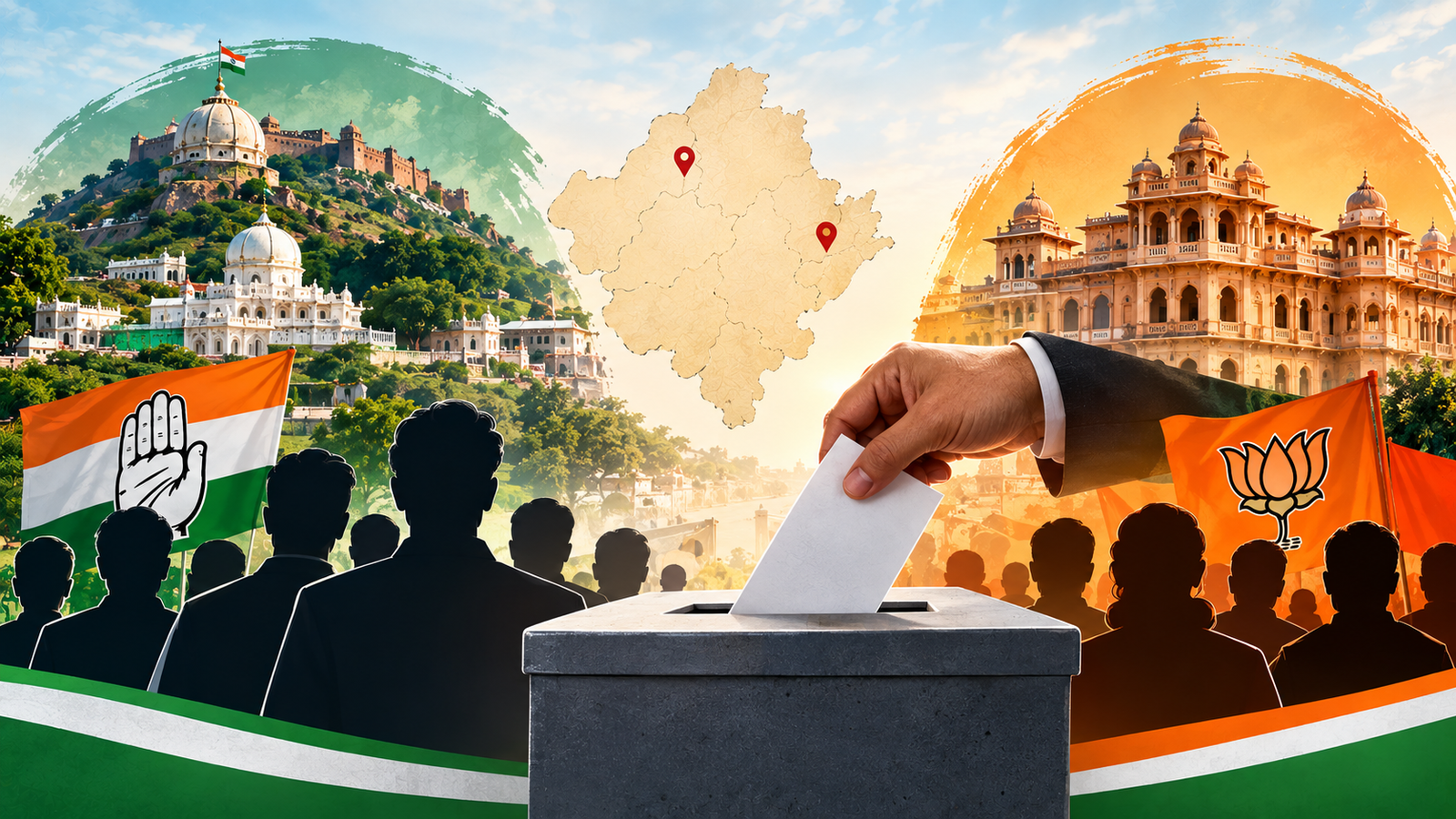


Rajasthan’s Ajmer and Pali Municipal Corporation mayoral elections delivered major political upsets on Monday, with the BJP capturing the mayor’s post in both cities despite Congress emerging as the single-largest party in the ward elections.
Congress had won more councillor seats than the BJP in both municipal corporations. However, the BJP secured support from Independent councillors and benefited from divisions in the Congress camp during the indirect mayoral polls.
Ajmer: BJP Candidate Wins With 43 Votes
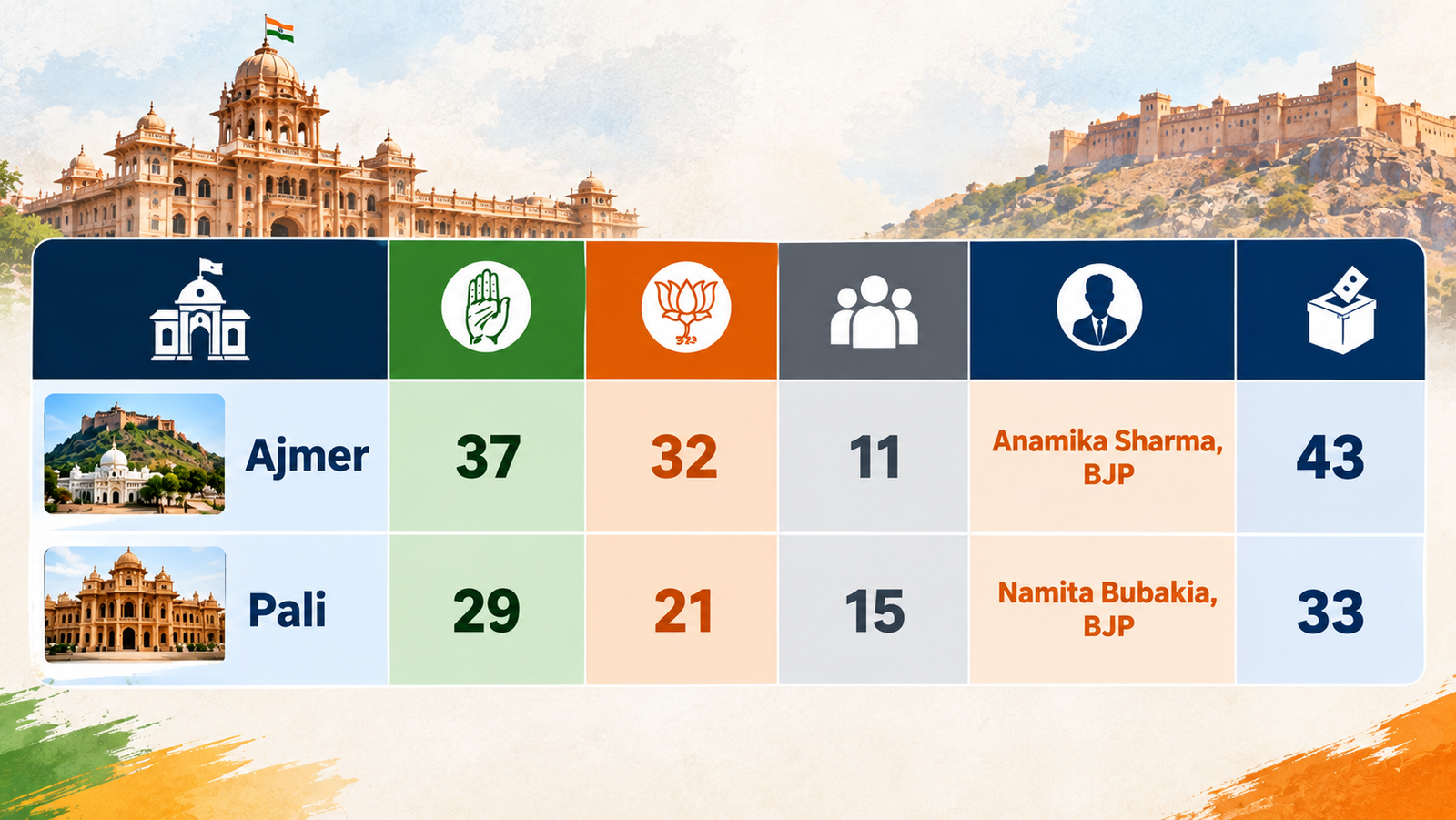
In the 80-member Ajmer Municipal Corporation, Congress had won 37 wards, while the BJP secured 32 seats. Eleven Independent councillors were also elected. The majority mark in the corporation was 41.
Congress was just four seats short of the majority figure and was expected to seek support from Independent councillors to form the municipal board. However, the mayoral election produced a different result.
BJP candidate Anamika Sharma secured 43 votes to win the mayor’s post, while Congress candidate Kiran Garhwal received 37 votes.
The numbers show that the BJP received support beyond its 32 elected councillors. With 43 votes in the mayoral election, the party appeared to have secured the backing of all 11 Independent councillors. Congress, meanwhile, received votes equal to the number of councillors it had won in the ward election.
Anamika Sharma’s victory gave the BJP control of the Ajmer Municipal Corporation, even though Congress had emerged as the largest party in the ward polls.
Pali: Congress Split Gives BJP an Opening
A similar political reversal was witnessed in Pali. In the 65-member Pali Municipal Corporation, Congress had won 29 wards, BJP 21 and Independents 15. The majority mark was 33.
Congress required only four more votes to reach the majority figure. But in the mayoral election, BJP candidate Namita Bubakia secured 33 votes and was elected mayor.
Independent candidate Rajbala Hingad received 29 votes, while official Congress candidate Sumitra Jain managed only three votes.
The result highlighted a major division within the Congress camp. Rajbala Hingad, who contested as an Independent, received the support of a large section of Congress councillors, resulting in the official Congress nominee receiving only three votes.
The BJP, which had 21 councillors after the ward elections, reached the majority figure of 33 with support from 12 additional councillors.
Independents Change the Equation
The results in Ajmer and Pali underlined the decisive role played by Independent councillors in Rajasthan’s civic elections. Neither Congress nor BJP had secured an outright majority in either corporation after the ward results, making post-poll alliances and internal unity crucial.
The twin results are being viewed as a setback for Congress, which had hoped its higher number of councillors would translate into control of the municipal boards. Instead, the BJP succeeded in gaining the support needed to secure both mayoral posts.
While BJP’s win in Ajmer was driven by the backing of Independent councillors, the Pali result was shaped by Congress’s internal split and the presence of an Independent candidate supported by a section of its elected councillors.