




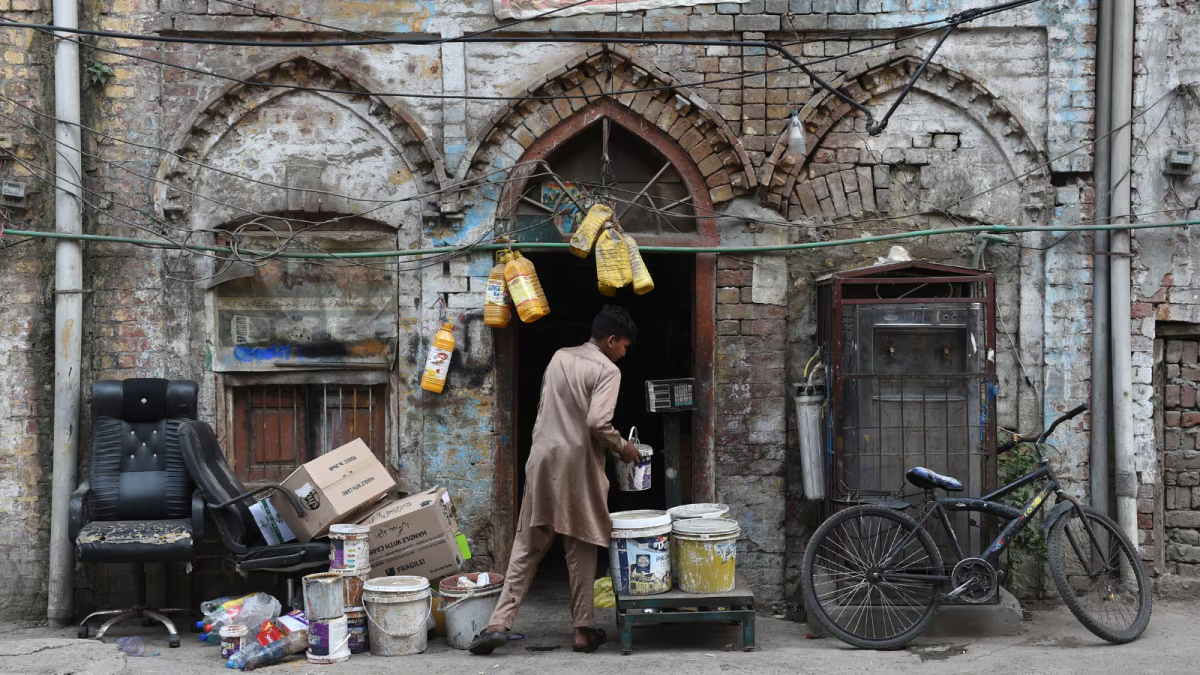


The government of Pakistan’s Punjab deferred the decision to restore the pre-partition names of several roads and localities in Lahore after backlash from critics and “extremists” on social media.
The Lahore Heritage Areas Revival (LHAR), headed by former Prime Minister Nawaz Sharif and backed by Punjab Chief Minister Maryam Nawaz, had approved the proposal on March 16 with the aim of preserving the city’s cultural identity and heritage. The project was cleared by the Punjab Cabinet in May.
However, the decision sparked criticism from several social media vloggers and extremists, forcing the authorities to defer the project.
Lahore Deputy Commissioner Captain (Retired) Muhammad Ali Ijaz told Pakistani newspaper Dawn on Monday that “no such decision has been taken as yet”.
According to PTI news agency, citing official sources, criticism from “extremist elements” and vloggers on social media accusing the government of reviving “Hindu and Sikh” names prompted the authorities to put off the decision.
The source told PTI, “As the critics gave the government’s decision a religious colour, the Maryam Nawaz administration has gone on the back foot and deferred the decision to avert backlash.”
The proposal involved reverting the names of several roads and landmarks in the city to its colonial or pre-partition names, such as Islampura back to Krishan Nagar, Maulana Zafar Ali Khan Chowk to Lakshmi Chowk, Babri Masjid Chowk to Jain Mandir Road, Fatima Jinnah Road to Queen’s Road and so on.
Despite official name changes by different governments in Pakistan, many of the colonial and pre-partition era names continued to be instilled in public memory.
Karachi-based Historian Yaqoob Khan Bangash told The Indian Express that Lahore was exempt from the “ideological migration” that occurred in cities like Karachi after the partition. Bangash said many migrants to Lahore were working-class refugees who blended into the city’s existing social fabric rather than reshaping its cultural identity. Therefore, the old elite of Lahore maintained pride in the city’s multicultural and multi-religious past.
PTI reported that the LHAR arranged a meeting consisting of historians, scholars, architects, urban planners, and other relevant figures to review the proposal in response to the criticism.