




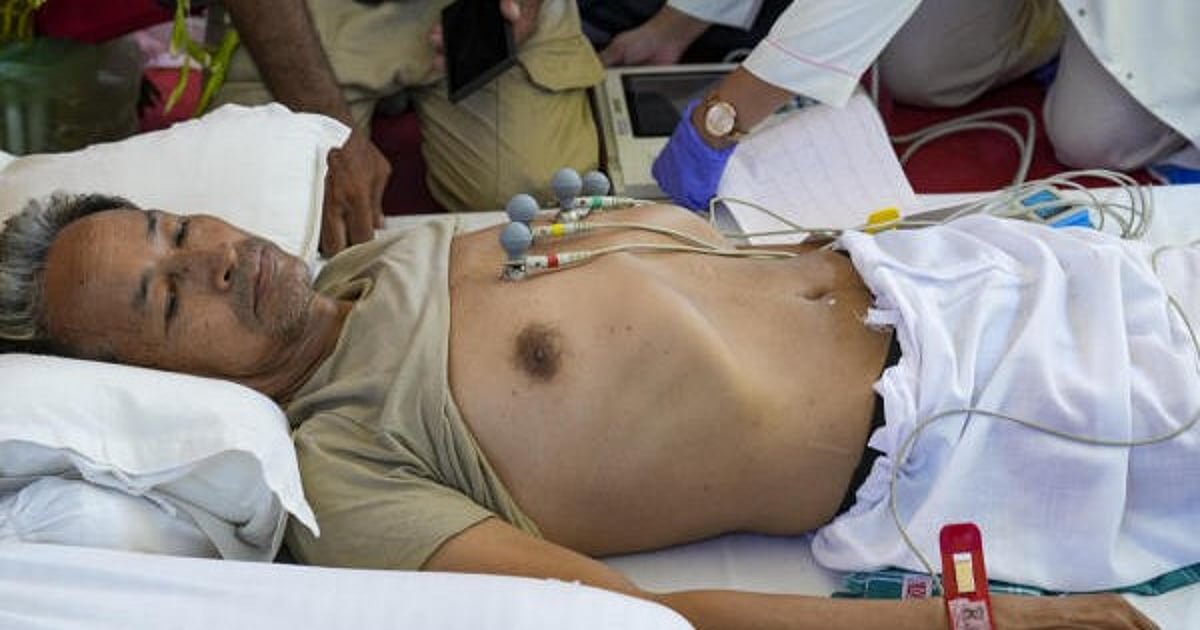


Climate activist and educator Sonam Wangchuk has reaffirmed his determination to continue his indefinite hunger strike despite growing concerns over his deteriorating health. As his fast entered its 20th day at Delhi’s Jantar Mantar, Wangchuk appealed to supporters to join the planned “Chalo Sansad” march on July 20, while the Delhi High Court prepared to hear a separate petition challenging alleged police surveillance of protesters.
Wangchuk, who began his hunger strike on June 28, is leading the protest alongside members of the Cockroach Janta Party (CJP) and several student organizations. The demonstrators are demanding accountability over the NEET-UG paper leak controversy, reforms in the education system, and the resignation of Union Education Minister Dharmendra Pradhan.
Addressing supporters gathered at Jantar Mantar, Wangchuk made an emotional yet light-hearted appeal for maximum participation in the planned march to Parliament, which coincides with the opening day of Parliament’s Monsoon Session.
“I will stay alive till July 20 at any cost. If you don’t come and July 20 is not successful, I will come back as a ghost,” he said, drawing both laughter and applause from the crowd despite the seriousness of the situation.
The activist’s health, however, has become an increasing cause for concern. Doctors monitoring his condition have reported that Wangchuk has lost more than nine kilograms since the beginning of the fast. Medical assessments indicate elevated uric acid and ketone levels, suggesting that his body has begun breaking down muscle tissue for energy due to prolonged fasting.
According to the medical team, the continued deterioration raises the risk of severe complications, including possible organ damage, if the hunger strike continues without intervention.
Several political leaders have urged Wangchuk to end his fast, citing concerns over his health. Among those who have appealed to him are Arvind Kejriwal, Dimple Yadav, and Pawan Khera, all of whom have expressed support for his demands while requesting that he prioritize his well-being. Amid the growing health concerns, the Delhi High Court has directed authorities to monitor Wangchuk’s condition on a daily basis and ensure immediate medical assistance whenever required.
Meanwhile, the ongoing protest has also sparked a legal battle over allegations of excessive police surveillance at Jantar Mantar. The Delhi High Court is scheduled to hear an urgent Public Interest Litigation (PIL) filed by former Jawaharlal Nehru University Students’ Union president Aishe Ghosh. The petition challenges what it describes as “continuous, indiscriminate and intrusive” monitoring of protesters by Delhi Police.
According to the PIL, police have installed a permanent surveillance tower within the protest area and have been carrying out round-the-clock photography and videography of demonstrators, including while they are resting, eating or receiving medical treatment.
The petition further alleges that some police personnel have used these recordings to intimidate student protesters by threatening to send the footage to their parents, guardians or educational institutions.
The plea also raises concerns over the privacy and dignity of women protesters. It claims that even during heavy rainfall, when several women were drenched and seeking shelter, police personnel continued photographing and filming them, describing the practice as a serious invasion of personal privacy.
The petition urges the High Court to declare blanket surveillance at peaceful protest sites unconstitutional. It also seeks an immediate halt to mass photography and videography unless authorities can demonstrate a specific, real and imminent threat to public order.
With Wangchuk’s health worsening, the planned Parliament march approaching and the High Court set to examine allegations surrounding police surveillance, July 20 is shaping up to be a crucial day for both the protest movement and the legal questions surrounding the right to peaceful dissent.