




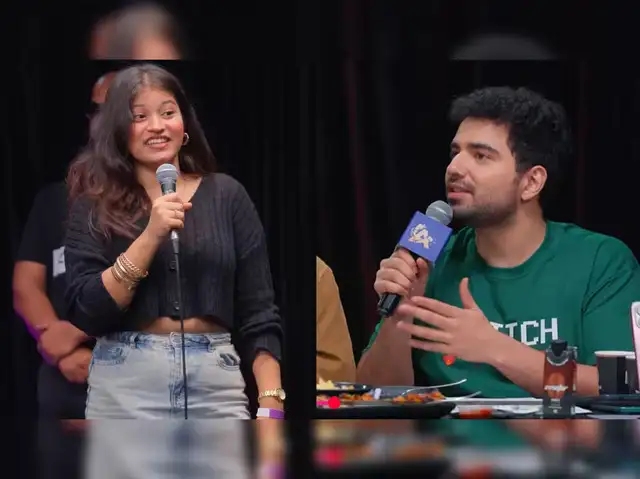


A single audition on India’s Got Latent has ignited one of the internet’s biggest debates, blurring the line between comedy, shock value, and social responsibility. Sakshi Jha, a young content creator and teacher from Bihar, became the center of nationwide discussion after introducing herself as a “man-hater” and making a series of provocative remarks that left both the judges and viewers stunned.
During her audition, Sakshi declared that she enjoyed “wrecking men’s egos” and claimed her perspective came from what she described as “generational trauma.” When asked about her relationship with the men in her family, she said she disliked not only her father but also her grandfather and brother. The conversation grew more controversial when the judging panel referred to a statement from her application form in which she allegedly wrote that her life goal was to “drink alcohol and beat her husband with a belt.”
Instead of dismissing the remark as a joke, Sakshi stood by it, insisting she was serious. However, she also said she hoped to marry a “good man” someday—someone who would blindly follow his wife. Host Samay Raina questioned the contradiction of wanting a husband only to mistreat him, but Sakshi brushed it aside, calling it “a Gen Z thing.”
The reaction inside the studio was unprecedented. Judges Samay Raina, Tanmay Bhat, Vishal Dadlani, Raghu Ram, and Yashraj Mehra unanimously awarded her performance zero out of ten. According to the show, it was the first time every judge had given a contestant the lowest possible score. When the audience was asked for its opinion, chants of “Zero” echoed across the venue. Despite the overwhelming rejection, Sakshi confidently rated her own performance an eight out of ten.
One of the most discussed moments came when judge Raghu Ram challenged Sakshi’s repeated references to feminism. He emphasized that hatred toward men should not be confused with feminism, drawing a distinction between advocating gender equality and promoting hostility toward an entire gender. His remark quickly became one of the most widely shared clips from the episode.
Soon after the episode premiered on YouTube and Netflix, social media platforms were flooded with reactions. Many users criticized Sakshi’s comments as an example of “pseudo-feminism” or “toxic feminism.” A common argument raised online was the perceived double standard. Several users claimed that if a male contestant had publicly spoken about wanting to assault his future wife, the backlash would likely have been far more severe, with possible legal consequences rather than being treated as comedy.
At the same time, a smaller section of viewers argued that Sakshi was performing an exaggerated online persona designed purely for attention. They pointed to her social media branding, including the phrase “Patriarchy’s worst nightmare,” suggesting that her comments were intentionally provocative rather than genuine beliefs.
The controversy soon extended beyond entertainment. Reports began circulating that Sakshi had allegedly been suspended from her teaching position in Bihar because of the viral episode. However, these claims remain unverified. While several entertainment portals and social media accounts carried the story, there has been no official confirmation from the Bihar Education Department regarding any disciplinary action.
As criticism intensified, Samay Raina urged people not to cross the line between criticism and personal attacks. Through Instagram Stories, he requested viewers to remain kind, reminding them that contestants often say outrageous things on India’s Got Latent for entertainment. He encouraged men to respond with compassion rather than hatred, saying that the situation was an opportunity to show that “men are amazing people too.”
Sakshi also briefly addressed the controversy on Instagram, posting a short message that read, “Indians and the art of hating. Love and only love to everyone.”
The incident has once again raised larger questions about where audiences should draw the line between satire and harmful speech. While comedy often thrives on exaggeration and controversy, public figures and content creators also face growing scrutiny over the messages they choose to amplify. Whether Sakshi’s audition was genuine, satirical, or simply an attempt to go viral, it has sparked a broader conversation about accountability, gender discourse, and the responsibilities that come with a public platform.