




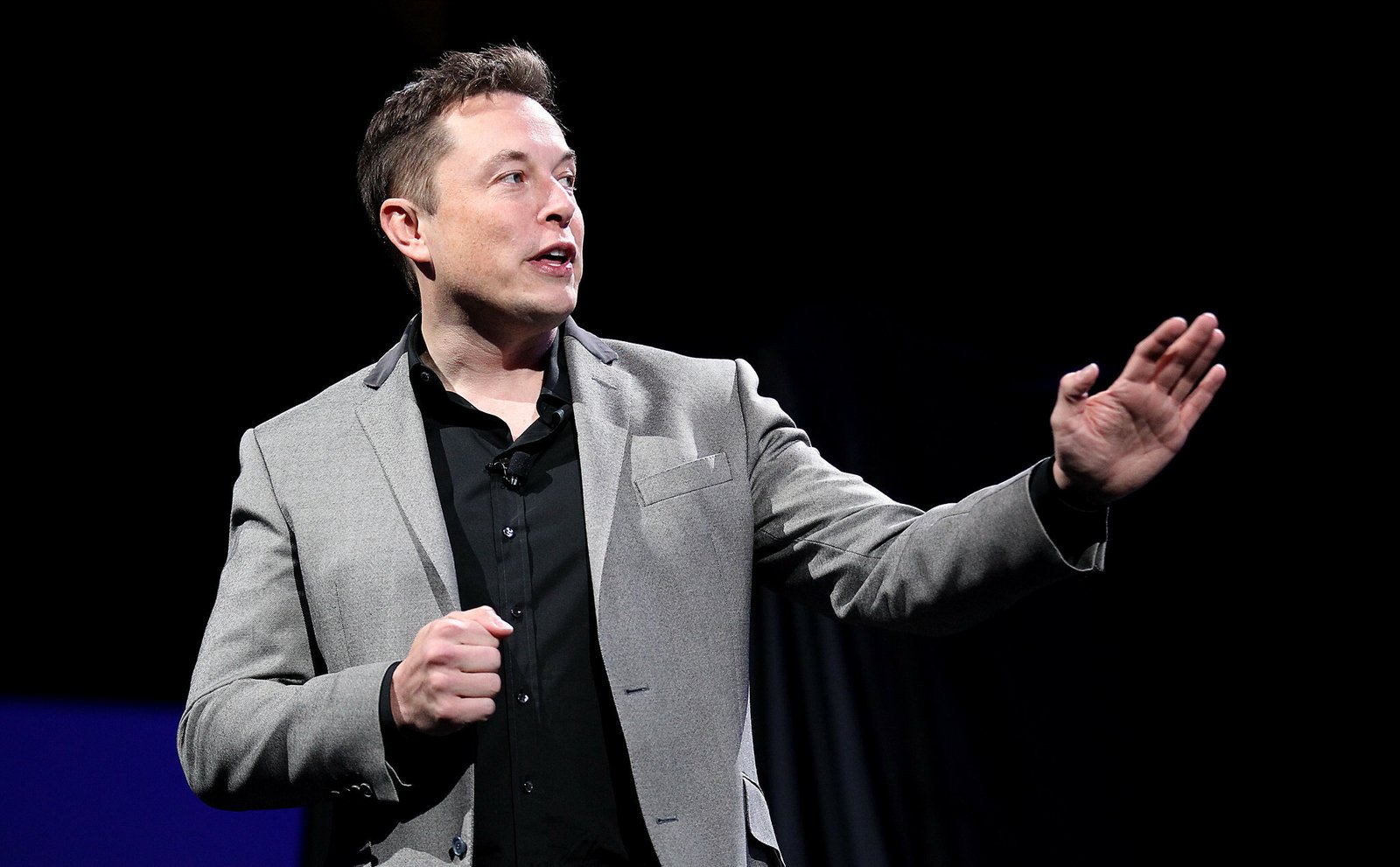


Starlink’s delayed commercial launch in India has triggered a political and business controversy, with Elon Musk accusing powerful business interests of obstructing competition. The government denies discrimination, but the prolonged wait raises questions about regulatory transparency, Reliance Jio’s market position and India’s approach to foreign technology companies.
India wants to become a global technology powerhouse, attract foreign investment and expand digital connectivity. Yet, the prolonged delay in launching Elon Musk’s Starlink satellite internet service has created an uncomfortable question for the Narendra Modi government: is India applying its regulatory framework fairly, or are powerful domestic business interests benefiting from the slow approval process?
The question has gained fresh attention in October 2026 after Musk publicly accused unnamed business interests of blocking Starlink’s entry to preserve their market dominance. His criticism has put the spotlight on Mukesh Ambani’s Reliance Jio, India’s largest mobile telecommunications operator, and revived concerns about whether political influence can affect competition in strategically important industries. However, the allegations remain unproven, and the government has rejected claims of discriminatory treatment. <Cite refs={[“turn498585news13″,”turn734802news1”]}/>
Starlink’s India Entry: Why Is the Launch Still Delayed?
Starlink, operated by Musk’s SpaceX, aims to provide broadband connectivity through a network of low-Earth-orbit satellites. The service could be particularly useful in remote villages, mountainous regions, border areas and locations where laying fibre-optic cables is expensive or technically difficult.
Starlink has spent years preparing to enter India. It secured a Global Mobile Personal Communications by Satellite (GMPCS) licence from the Department of Telecommunications in June 2025 and obtained relevant authorisation from India’s space regulator. It has also established distribution partnerships with Reliance Jio and Bharti Airtel. Nevertheless, commercial operations remain pending while the company awaits outstanding regulatory requirements, including security clearances and spectrum assignment. <Cite refs={[“turn734802search0″,”turn734802search16″,”turn734802search9”]}/>
The delay has become a flashpoint because Starlink’s licence is not, by itself, permission to begin commercial service. The government requires satellite operators to satisfy security and technical conditions before spectrum can be assigned.
The critical question is not whether India should regulate satellite internet. It should. The question is whether the remaining requirements are clearly defined, applied consistently and completed within a reasonable timeframe.
Is Jio the Real Beneficiary of Starlink’s Delayed Entry?
Reliance Jio has transformed India’s telecommunications industry through affordable mobile data, widespread network coverage and aggressive competition. Its position in the market gives it a substantial commercial interest in the future of broadband connectivity.
Starlink could introduce a different model of internet access. Instead of depending entirely on mobile towers or fibre-optic infrastructure, it can connect customers through satellite terminals. This could create additional options for businesses, households and institutions in areas with limited terrestrial connectivity.
However, satellite broadband is not necessarily a direct substitute for Jio’s mobile services. Starlink requires specialised equipment and may be significantly more expensive than conventional broadband or mobile data plans. Its strongest initial market could therefore include remote businesses, enterprise customers, infrastructure operators and households that lack reliable alternatives.
Even so, competition could gradually expand if equipment costs decline and the service becomes more accessible.
This creates a legitimate public-interest question: could delays in allowing a new technology provider to operate reduce consumer choice and protect established commercial advantages?
Musk has suggested that powerful business interests are preventing Starlink from entering India to preserve monopolistic control. His comments have intensified scrutiny of the relationship between major corporations and government policy. But no publicly established evidence proves that Ambani personally instructed officials to delay Starlink or that the Modi government deliberately withheld approvals to protect Jio. <Cite refs={[“turn498585news13″,”turn734802news15”]}/>
A responsible assessment must distinguish between a potential conflict of commercial interests and evidence of government wrongdoing.
The Modi Government’s Defence: Security and Equal Treatment
The government has rejected allegations that India’s satellite internet approval process is biased. Telecom Minister Jyotiraditya Scindia has maintained that India does not permit monopolies in any sector.
The government has also said that Starlink, Jio Satellite Communications and Bharti-backed Eutelsat OneWeb are at broadly similar stages of the regulatory process, with security assessments and spectrum-related requirements still to be completed. Airtel chairman Sunil Bharti Mittal has similarly said that OneWeb is awaiting approvals. <Cite refs={[“turn498585news13″,”turn734802news10”]}/>
There are legitimate reasons for regulatory scrutiny. Satellite networks operate across borders, and authorities must consider lawful interception, domestic traffic routing, network security and compliance with Indian law. The recovery of Starlink equipment during Indian law-enforcement and security operations in 2024 also demonstrated why authorities may seek safeguards around the use of satellite communications. <Cite refs={[“turn734802news14″,”turn734802search9”]}/>
But legitimate security requirements should not become an open-ended administrative process. If a company has outstanding deficiencies, the government should communicate them clearly. If the company meets the prescribed standards, the next steps should follow a transparent and predictable timeline.
Equal treatment does not mean ignoring security risks. It means applying the same rules consistently, irrespective of a company’s nationality, market position or political connections.
Tesla’s India Experience Raises Another Question
The Starlink dispute also recalls Musk’s long-running effort to enter India’s electric vehicle market through Tesla.
For years, Tesla objected to India’s high import duties on fully assembled electric cars and sought more favourable market-access conditions. The government, meanwhile, emphasised domestic manufacturing and investment rather than allowing foreign automakers to rely exclusively on imported vehicles.
In March 2024, India announced an electric-vehicle policy offering reduced import duties to eligible manufacturers committing at least $500 million in investment and establishing domestic manufacturing within three years. The policy was designed to attract global manufacturers while supporting local production. <Cite refs={[“turn498585search0″,”turn734802search13”]}/>
Tesla eventually launched its first Indian showroom in Mumbai in July 2025, selling imported vehicles at prices substantially higher than those in some other markets. Its entry therefore took years, but it was not permanently blocked. <Cite refs={[“turn498585news19″,”turn498585search6”]}/>
Critics may argue that India’s high duties and manufacturing conditions made entry unnecessarily difficult for a company seeking to test demand before committing to a factory. Supporters of the policy would counter that India has a legitimate interest in attracting investment, developing domestic manufacturing and creating jobs.
The comparison is relevant, but the two cases are not identical. Tesla’s dispute centred heavily on import tariffs and manufacturing commitments. Starlink’s outstanding requirements involve satellite spectrum, security and telecommunications regulation. Treating every delay as evidence of the same political motive would go beyond the available facts.
Why Regulatory Uncertainty Could Hurt India’s Technology Ambitions
India competes globally for investment in artificial intelligence, electric vehicles, telecommunications, semiconductors and advanced infrastructure. Foreign companies considering the country need to understand not only the market opportunity but also the conditions under which they can operate.
A slow or unpredictable approval process can raise costs, postpone investment and weaken confidence. It can also make it harder for consumers and businesses to access new technology.
The solution is not to grant every foreign company automatic entry. National security, consumer protection, competition and domestic economic interests all matter. Instead, the government should establish transparent standards, publish realistic approval timelines where possible and explain the reasons for significant delays.
In Starlink’s case, a clear public account of the outstanding requirements and the steps needed to satisfy them would help address concerns about unequal treatment without compromising security.
Competition authorities and policymakers should also assess the broader market structure. The objective should be to prevent unfair exclusion, not to assume that every established Indian company is acting improperly or that every foreign entrant automatically benefits consumers.
Conclusion: India Must Put Consumers and Fair Competition First
The Starlink controversy has become more than a disagreement between two billionaires. It is a test of how India balances national security, domestic business interests and the need to welcome new technology.
The Modi government has denied favouritism, and the available evidence does not establish that it is deliberately protecting Mukesh Ambani or Jio by blocking Starlink. Yet, prolonged delays deserve scrutiny, particularly when the rules and outstanding requirements are not sufficiently clear to the public.
India should not weaken its security standards to satisfy Elon Musk. Equally, it should not allow regulation to become an indefinite barrier to legitimate competition.
If Starlink satisfies the applicable requirements, it should receive a timely and transparent decision. If it does not, the government should explain what remains unresolved.
Ultimately, the question is not whether Musk, Ambani or any other billionaire wins a public argument. It is whether Indian consumers receive more choices, businesses gain access to better connectivity and the country’s technology policies operate transparently.
India’s digital future should be determined by fair rules and public interest—not by the perceived influence of any single billionaire or corporation.