




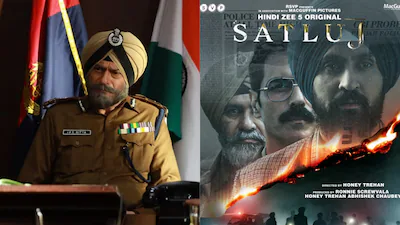


The sudden removal of Satluj from streaming platform ZEE5 has sparked a fresh debate over censorship, artistic freedom, and the future of politically sensitive cinema in India. Veteran actor Kanwaljit Singh, who plays a senior police officer in the film, has now spoken out strongly against the decision, questioning whether freedom of expression is truly protected when films tackling difficult historical subjects struggle to reach audiences.
Originally developed as Ghallughara and later renamed Punjab ’95, the film stars Diljit Dosanjh as renowned human rights activist Jaswant Singh Khalra, whose investigations into alleged extrajudicial killings and illegal mass cremations during Punjab’s militancy era remain one of the most sensitive chapters in India’s modern history.
A Film That Faced Years of Roadblocks
Satluj had already endured a long and difficult journey before its digital release. The makers reportedly spent nearly four years battling certification issues with the Central Board of Film Certification (CBFC), which allegedly sought more than 100 cuts before granting approval.
Instead of waiting indefinitely, the filmmakers opted to release the movie directly on OTT under the title Satluj. However, the celebration was short-lived. Within just 48 hours of its premiere, ZEE5 removed the film from its Indian catalogue, citing “current developments” and concerns surrounding certification requirements. The unexpected takedown immediately reignited discussions around censorship and whether films dealing with politically sensitive topics are being subjected to different standards.
Kanwaljit Singh Questions Freedom of Expression
Reacting to the controversy, Kanwaljit Singh did not hold back. The veteran actor questioned the state of free speech in the country, saying he genuinely wanted to understand what freedom of expression means if films can disappear so suddenly.
According to Singh, removing a film does not erase public curiosity. Instead, it often creates even greater interest among viewers. He pointed out that many people had already downloaded the film during the brief period it was available online, meaning the decision had failed to stop audiences from accessing it. Instead, he argued, the biggest loss falls on the filmmakers and producers, who bear the financial consequences after investing years of effort into bringing such stories to the screen.
Clarifying His Character in the Film
Kanwaljit Singh also addressed speculation surrounding his role. Since he portrays a senior police official during Punjab’s insurgency period, several viewers assumed the character represented former Punjab Director General of Police KPS Gill.
The actor clarified that this was not the case. He explained that his role was not based on any single individual but was created through extensive research into multiple police officers from that era. He also consulted a retired police chief to better understand the mindset and responsibilities of law enforcement during that turbulent period.
Filmmakers Raise Questions Over Censorship
The controversy has also drawn strong reactions from the film’s creative team. Co-writer Niren Bhatt criticised the certification process, alleging that the makers experienced years of silence and delays without receiving clear communication from authorities. He described the prolonged wait as frustrating and questioned why a biographical film about a human rights activist encountered such obstacles.
Bhatt also pointed to what he viewed as inconsistencies in censorship, arguing that several politically sensitive films have received theatrical releases, while Satluj faced repeated hurdles despite presenting a historical narrative.
A Debate Bigger Than One Film
The removal of Satluj has transformed the film into the centre of a much larger conversation about creative freedom in India. Supporters believe filmmakers should have the space to explore complex historical events without excessive restrictions, while others argue that sensitive subjects require careful handling in the interest of public order.
For many, however, the controversy has become less about the film itself and more about the broader question of whether artists can freely tell stories rooted in India’s history. Kanwaljit Singh’s outspoken remarks have only intensified that debate, ensuring that discussions surrounding Satluj continue even after its disappearance from streaming platforms.