




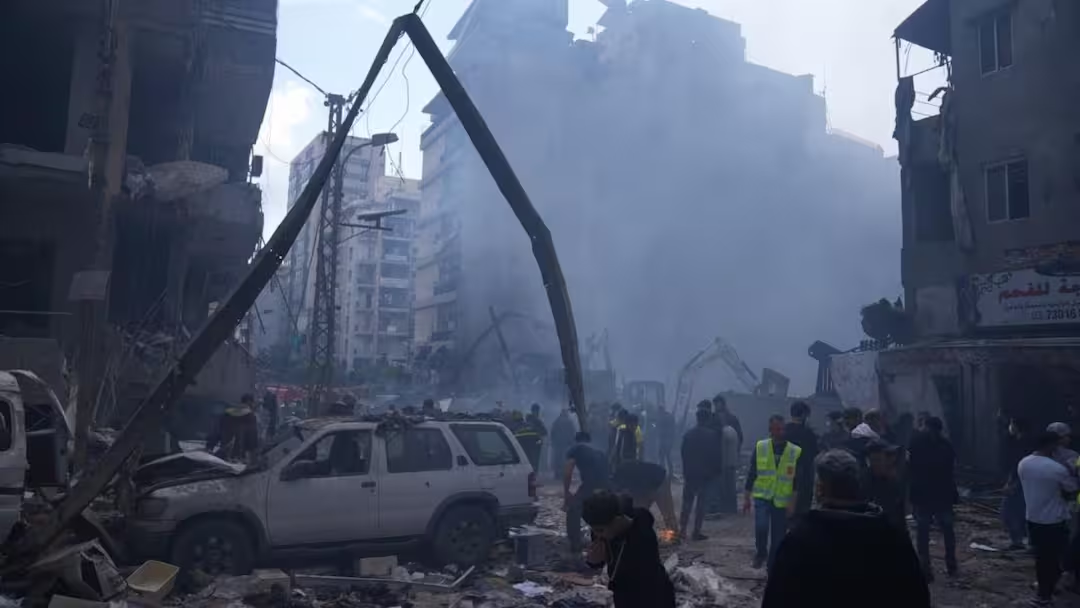


The fragile calm in Lebanon has been shattered by a fresh surge in hostilities, with intensified Israeli air strikes followed by retaliatory rocket fire from southern Lebanon, raising fears of a wider regional escalation. The outbreak comes despite recent diplomatic efforts and a tentative ceasefire framework tied to ongoing US‑Iran talks. The United Nations and humanitarian agencies have warned that civilians are once again paying the heaviest price, as casualties rise and large swathes of Beirut and southern Lebanon suffer devastating damage.
UN calls for restraint and de‑escalation
Jeanine Hennis‑Plasschaert, the UN’s special coordinator for Lebanon, issued an urgent appeal for restraint, warning that continued strikes will only deepen the crisis. In a statement on X, she said the latest Israeli attacks have dashed growing hopes for peace and stressed that neither side can achieve victory through military means alone. She called on Israel and Hezbollah to halt hostilities immediately and to return fully to political and diplomatic channels.
Hennis‑Plasschaert’s office has repeatedly highlighted the expanding civilian toll, with entire neighbourhoods in Beirut and the south reduced to rubble. The UN has urged both parties to respect international humanitarian law and protect non‑combatants, while pressing Beirut and Jerusalem to preserve the slender ceasefire space still left.
Strikes and rockets: chain of escalation
Reports indicate that rockets were launched from southern Lebanon within hours of Israel conducting its largest wave of airstrikes since 2 March 2026, striking multiple locations in Beirut and surrounding areas. The salvos triggered air‑raid sirens in Israeli border towns, including Shtula and parts of the Western Galilee, underscoring the risk of a wider border conflict.
Israeli Defence Minister Israel Katz described the operation as targeting hundreds of Hezbollah fighters, calling it the most significant blow to the group since the September 2024 pager‑factory explosions. He also issued a direct warning to Hezbollah’s leader Naim Qassem, saying “his turn will also come”, signalling that Israel views the group’s top brass as legitimate targets.
Before the new outburst, Hezbollah’s top officials had said they were abiding by a ceasefire arrangement linked to US‑Iran negotiations, raising questions about who broke the truce and why the latest escalation was so sharp and sudden.
Mounting civilian toll and humanitarian crisis
The UN Refugee Agency in Lebanon reported that Israeli bombardments struck multiple districts across Beirut and southern regions, with images and reports of collapsed homes, damaged hospitals, and crowded streets filling with smoke. The agency warned of rising deaths, massive displacement, and severe shortages of basic supplies.
Jan Egeland, Secretary General of the Norwegian Refugee Council, described “horrifying scenes” relayed by field workers, including whole families trapped in debris and limited functioning shelters. He called on both Israel and Hezbollah to cease attacks and urged Israel to withdraw from occupied Lebanese areas in the south. Egeland warned that the current ceasefire, if not firmly entrenched, risked becoming a brief pause before even more intense violence returns.
Regional diplomatic fallout
The escalation has reverberated across the region’s diplomatic corridors. Iran’s Foreign Minister Abbas Araghchi said he raised concerns about Israeli “ceasefire violations” in a call with Pakistan’s army chief Asim Munir, whose government has played a key mediating role in the US‑Iran ceasefire process.
Iran frames the attacks as a breach of the broader truce, while Israel and some Western allies argue that Hezbollah’s rocket fire and border provocations justified the new strikes. The result is a fragile, blame‑game‑driven environment in which every salvo threatens to derail the very diplomacy meant to contain the war.
As the Israel–Hezbollah exchange intensifies and the humanitarian picture in Lebanon darkens, the international community is left struggling to prevent the conflict from spilling further into the wider Middle East—a risk few seem confident they can yet stop.