




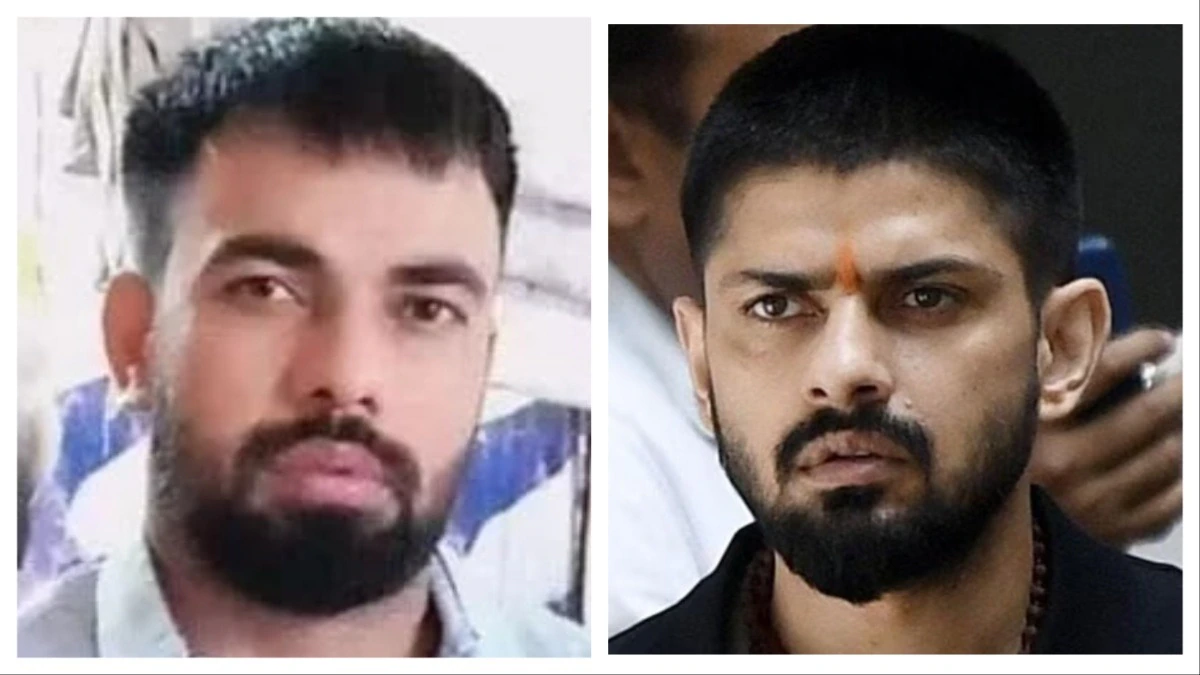


In the complex and often murky world of organized crime, public perception does not always align with legality or morality. Figures who operate outside the law sometimes acquire an aura that resembles heroism, while rival factions are painted as outright villains. This paradox is evident in the way sections of the public and media narratives portray Lawrence Bishnoi and the Bambiha Gang. While both are rooted in criminal ecosystems, the contrasting images built around them raise deeper questions about society, storytelling, and the psychology of power.
Lawrence Bishnoi, currently incarcerated and facing multiple serious charges, has emerged as a controversial figure whose image extends beyond that of a typical gangster. For some, he symbolizes defiance, loyalty, and a rigid personal code. His name often surfaces in connection with high-profile incidents, yet his persona is not just built on crime—it is built on narrative. Supporters or sympathizers, particularly on social media, tend to frame him as someone who stands by his principles, protects his community, and does not betray allies. This selective perception contributes to his “hero-like” image.
On the other hand, the Bambiha Gang is frequently depicted as ruthless, opportunistic, and driven purely by violence and revenge. Their operations, often marked by brutal executions and gang rivalries, reinforce the image of a group that thrives on chaos rather than code. In the public imagination, they lack the structured identity or ideological framing that some attribute to Bishnoi. As a result, they are easily cast as the “villains” in this narrative.
However, it is crucial to understand that this dichotomy is not necessarily based on objective truth—it is largely shaped by storytelling, media framing, and public sentiment. Crime, in reality, does not operate in black-and-white moral categories. Both Bishnoi and the Bambiha Gang are part of a larger ecosystem where violence, extortion, and illegal activities are central. Yet, perception often overrides facts.
One reason behind Bishnoi’s perceived “heroism” is the concept of identity politics and regional pride. In certain communities, individuals like him are seen as protectors or symbols of resistance against perceived injustice. This is not unique to India; globally, many outlaws have been romanticized when they are seen as challenging authority or defending a cause, even if their methods are unlawful. The human tendency to idolize rebellion plays a significant role here.
Additionally, the role of digital media cannot be ignored. Platforms like Instagram, YouTube, and short-video apps have amplified the myth-making around such figures. Carefully curated content, fan pages, and selective storytelling create a cinematic version of reality. Lawrence Bishnoi is often portrayed in a way that highlights strength, loyalty, and fearlessness, while minimizing or ignoring the consequences of his actions. Meanwhile, rival gangs like Bambiha are reduced to one-dimensional antagonists.
The “hero vs villain” framing also emerges from gang rivalries themselves. In conflicts between criminal groups, each side attempts to control the narrative. Supporters of one faction demonize the other to justify their own actions. Over time, these narratives spill into public discourse, influencing how ordinary people perceive these figures. The Bishnoi vs Bambiha rivalry is not just a criminal conflict—it is also a battle of image and influence.
Another factor is the psychological appeal of power. Individuals who command fear and respect simultaneously often gain a certain fascination. Bishnoi’s ability to allegedly operate networks even from prison adds to his mystique. This perception of control and reach contributes to the idea of him being more than just a criminal—it paints him as a strategist, a leader, and in some narratives, even a “protector.”
In contrast, the Bambiha Gang’s portrayal lacks this layered storytelling. They are primarily associated with violent retaliation and gang warfare, which makes it easier for the public to categorize them as villains. Without a compelling narrative of ideology or discipline, their image remains largely negative.
However, it is important to challenge this romanticization. Viewing any criminal figure as a hero can be dangerous. It normalizes violence, undermines the rule of law, and distorts the values that hold society together. The idea that someone can be both a criminal and a hero is not new, but it requires critical examination. Admiration built on selective narratives often ignores victims, legal consequences, and the broader impact of crime on society.
Similarly, labeling one group as purely villainous while elevating another oversimplifies a complex reality. Organized crime does not operate on moral superiority—it operates on power, survival, and control. The differences between groups are often strategic rather than ethical.
In conclusion, the perception of Lawrence Bishnoi as a “hero” and the Bambiha Gang as “villains” is less about reality and more about narrative construction. It reflects how society interprets power, rebellion, and identity rather than an accurate moral judgment. While such opinions may exist and even gain popularity, they should be approached with caution. True heroism lies in contributing positively to society, not in commanding fear or engaging in crime.
The fascination with such figures reveals more about us as a society than about them. It shows how easily narratives can shape perception, turning criminals into icons and conflicts into stories of good versus evil. But beyond the headlines and social media portrayals, the reality remains unchanged—crime, regardless of who commits it, carries consequences that extend far beyond the individuals involved.
*Discalimer: The views and opinions expressed in this article are those of the author and do not necessarily reflect the official stance or position of the company, its management, or its editorial board. The article is intended solely as a personal opinion piece and should not be construed as an endorsement or representation of the company’s views.