




In a democracy, the media is meant to act as a watchdog—holding power accountable, questioning authority, and ensuring that citizens receive balanced and truthful information. But in today’s India, a growing concern is hard to ignore: a significant section of the mainstream media appears increasingly aligned with the ruling BJP, often at the expense of fairness and journalistic integrity.
Turn on prime-time television or scan major headlines, and a pattern begins to emerge. The coverage frequently amplifies the narratives of the central government while sidelining or discrediting opposition voices. Critical questions directed at those in power are often replaced with aggressive scrutiny of opposition leaders, creating a skewed public discourse that favors one side.
This is not merely about editorial choices—it is about the shaping of perception. When media platforms consistently frame political debates in a way that benefits the ruling party, they influence how millions of citizens understand reality. Over time, this erodes the foundational principle of informed decision-making in a democracy.
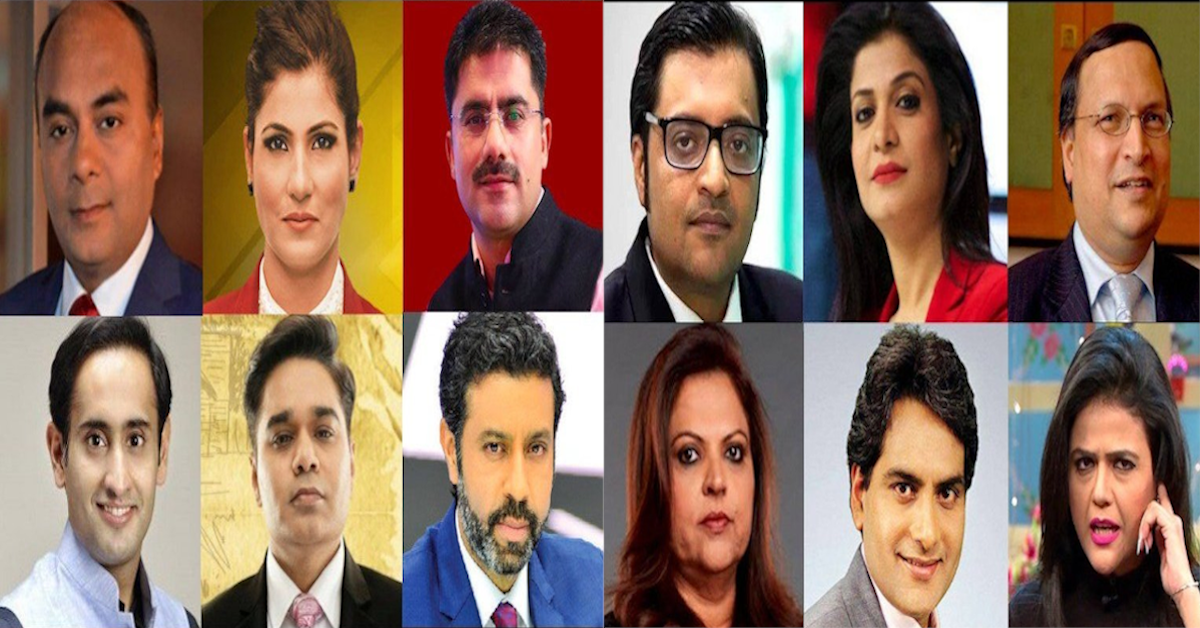
One of the most visible manifestations of this bias is the nature of televised debates. Instead of meaningful discussions on policy, governance, or public welfare, many debates devolve into one-sided confrontations where opposition representatives are outnumbered, interrupted, or portrayed negatively. Anchors, rather than moderating, often take on the role of political actors, steering conversations to reinforce a particular narrative.
Equally troubling is the selective silence on issues that may reflect poorly on the ruling establishment. Controversies, economic challenges, or governance failures sometimes receive limited attention, while comparatively smaller issues involving opposition parties are magnified. This imbalance creates a distorted sense of priorities and accountability.
The reasons behind this perceived tilt are complex—ranging from corporate ownership patterns and advertising dependencies to political pressure and access journalism. However, the impact is straightforward and deeply concerning: a weakening of independent journalism.
It is important to note that not all media outlets follow this pattern. Several independent journalists and platforms continue to uphold rigorous standards and challenge those in power. Yet, their reach is often limited compared to large, mainstream networks that dominate public discourse.
The danger of a partisan media ecosystem is not just political—it is structural. When the media aligns too closely with those in power, it stops serving the public and starts serving authority. In such an environment, dissent is marginalized, critical thinking is discouraged, and democracy itself is diminished.
India’s media must confront this moment with honesty. Credibility, once lost, is difficult to regain. The responsibility lies not just with journalists and editors, but also with media owners and regulators to ensure that the press remains free, fair, and fearless.
Because when the watchdog stops questioning power, democracy begins to lose its voice.