




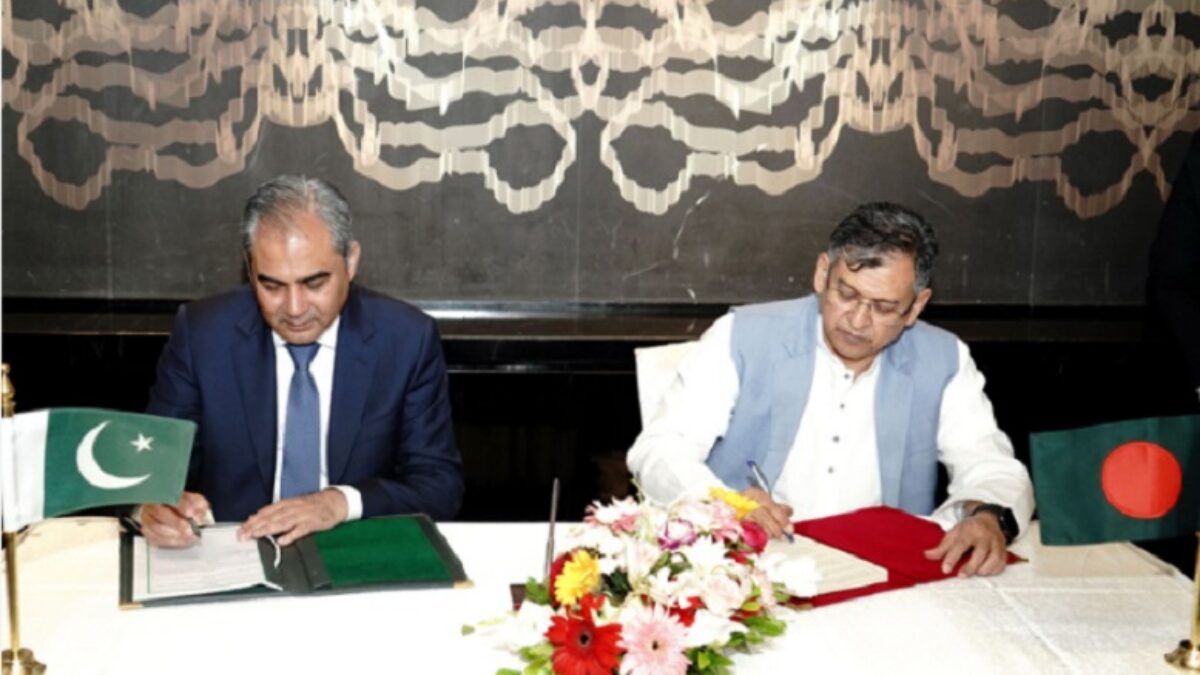


Pakistan and Bangladesh signed an agreement on Friday, enabling intelligence-sharing and operational coordination mechanisms that could potentially shift the regional security dynamics in South Asia. The deal marks the first public bilateral security cooperation framework between the two nations since the ousting of Sheikh Hasina in 2024. Bangladesh Home Minister Salahuddin Ahmed and Pakistan Interior Minister Syed Mohsin Raza Naqvi signed the Memorandum of Understanding in Dhaka.
The agreement is deemed to be an anti-narcotics and anti-trafficking pact, containing provisions such as routine law-enforcement cooperation, confidential information exchange, operational coordination, secure communication mechanisms, and joint investigations between the two countries.
The agreement highlights information exchange between Bangladesh’s Department of Narcotics Control and Pakistan’s Anti-Narcotics Force, covering intelligence-sharing on trafficking networks, smuggling routes, organised crime syndicates, and operational methods.
Pakistan and Bangladesh have been taking steps to strengthen bilateral relations over the years since the fall of Sheikh Hasina’s government. Besides a significant revival in trade and connectivity between the nations, Bangladesh had also sent its senior officials to undego training at the Civil Services Academy in Lahore, in its first structured training programme for senior Bangladeshi bureaucrats in Pakistan since the early 1970s.
The Sunday Guardian had reported on December 2025 that Bangladesh and Pakistan were quietly rebuilding defence and intelligence ties, with military-level exchanges and security cooperation discussions taking place. The outlet had also published a report on November that Pakistan’s ISI had restarted operational networks in Bangladesh after Hasina’s exit.
Bangladesh was also reportedly exploring Pakistani defence platforms, including discussions regarding the use of JF-17 fighter aircraft.
The new MoU casts a shadow of doubt on India’s relationship with Bangladesh, which was previously India’s closest security partner in eastern South Asia under the Hasina regime. Indian defence establishments would be keeping a close eye on the agreement to ensure national security.