




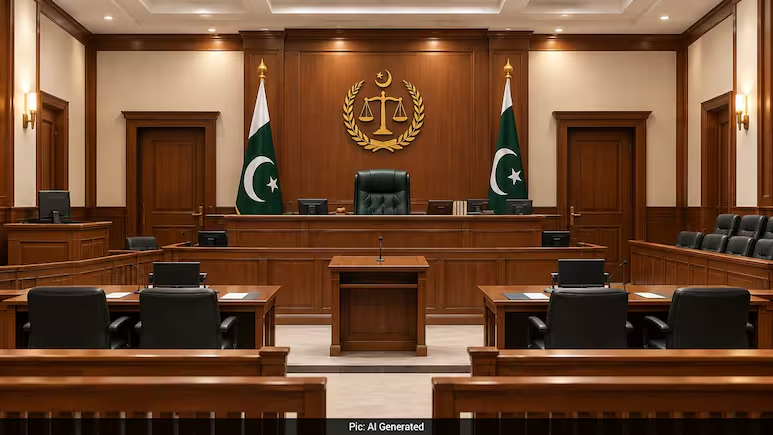


Pakistan News: A lawyer allegedly set his courtroom seat on fire at the Sindh High Court’s Hyderabad Circuit Bench in Pakistan on Thursday after a judge declined to deliver a judgment that had reportedly been reserved for nearly 11 months in a civil land dispute case.
The incident took place in Hyderabad after Justice Jawad Akbar Sawana said he would not pronounce the reserved judgment in a case concerning a land dispute in Nawabshah. Sikander Bhatti, who was representing one of the parties, allegedly set his official courtroom seat on fire following the announcement, according to officials.
The incident has drawn attention to mounting frustration among lawyers and litigants over prolonged delays in the disposal of cases in Pakistan’s judicial system.
Lawyer Loses Patience Over Pending Judgment
Hyderabad High Court Bar Association President Ayaz Tunio said the judgment had remained pending for approximately 11 months, adding that Bhatti had finally lost his patience during Thursday’s proceedings.
Tunio said the bar association would conduct an inquiry into the incident. He also claimed that several judgments reserved by Justice Sawana had remained pending for months, leaving litigants frustrated as they awaited decisions in their cases.
A court source said Bhatti was particularly agitated because the dispute involved his own family and concerned land in Nawabshah. The matter had reportedly been pending for several years.
The alleged act of setting the courtroom seat on fire followed the judge’s announcement that he would not deliver the reserved judgment. Further details regarding the extent of the damage and any immediate legal action against the lawyer were not available.
Lawyers Had Raised Concerns Over Delays
According to Tunio, lawyers had met Justice Sawana in his chambers in recent days and requested that he consider pronouncing judgments reserved in several cases.
The incident has brought renewed attention to concerns over judicial delays and the backlog of cases in Pakistan. Prolonged proceedings can leave litigants waiting for years for decisions, particularly in civil disputes involving land, property and family interests.
For those involved in such cases, delays can create uncertainty over property rights, financial arrangements and the resolution of long-standing disputes.
However, the reasons behind the delay in the specific case involving Bhatti were not independently established in the available information.
Incident Highlights Concerns Over Judicial Backlog
Pakistan’s legal system has faced recurring concerns over the accumulation of pending cases and the time required to resolve disputes. Thursday’s incident has brought these issues into focus, highlighting the frustration that can emerge when litigants wait for extended periods for judgments.
Tensions have also been reported in recent months between lawyers’ organisations and Sindh police over various issues, resulting in protests and clashes.
The courtroom incident, however, centred on a reportedly delayed judgment in a civil land dispute.
The Hyderabad High Court Bar Association has announced an inquiry into the matter. Further details are awaited regarding the findings of the inquiry and any action that may follow.
The episode underscores the importance of timely judicial decisions, effective case management and established procedures for addressing grievances within the legal system, while ensuring that disputes are resolved through lawful and peaceful means.