




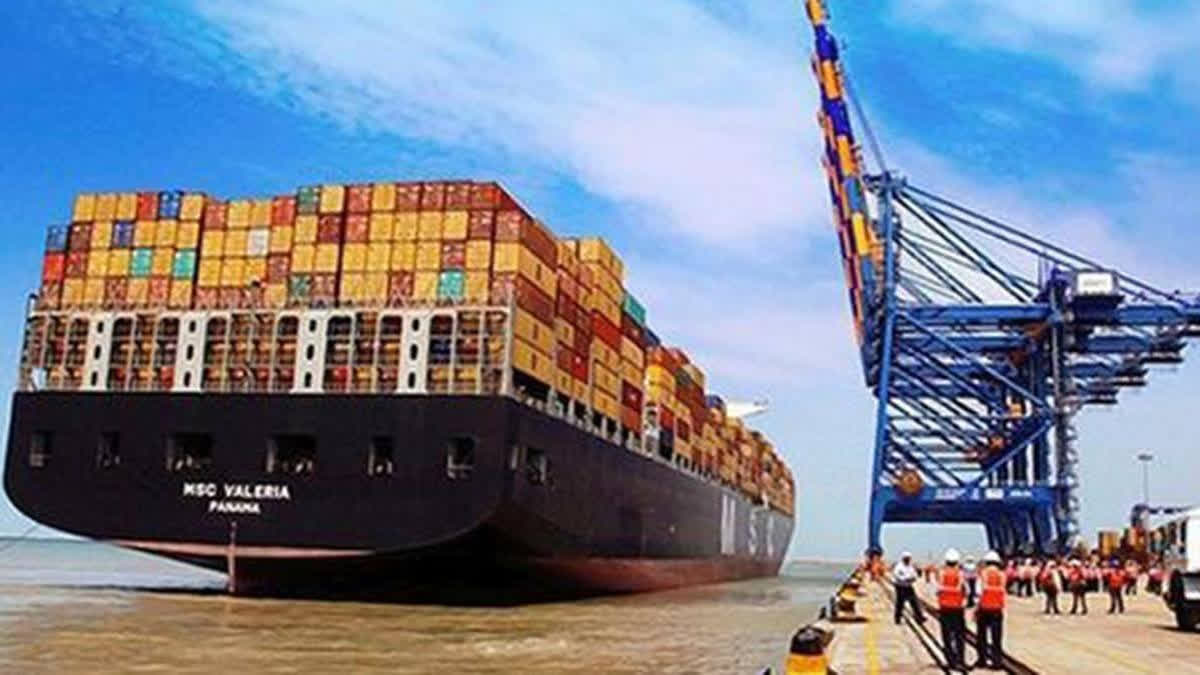


Pakistan opened six road transit routes for goods traveling to Iran as many containers remain stranded at Karachi Port amid the United States blockade of Iranian ports and ships through the Strait of Hormuz.
The blockade had left more than 3,000 containers meant for Iran stuck at Karachi port for several days as vessels were unable to collect the cargo. War-risk insurance premium rose drastically from around 0.12% of the vessel’s value before the conflict to about 5%, making shipping to the region too expensive for many operators.
The Ministry of Commerce issued the Transit of Goods through Territory of Pakistan Order 2026 on April 25. It allows goods from third countries to be transported through Pakistan and delivered to Iran by road.
The routes link Pakistan’s main ports, Karachi, Port Qasim, and Gwadar, with two Iranian border crossings, Gabd and Taftan, passing through Balochistan via Turbat, Panjgur, Khuzdar, Quetta, and Dalbandin. According to officials, the shortest route is the Gwadar-Gabd corridor that reduces travel time to the Iranian border to between two and three hours, compared to the 16-18 hours it takes from Karachi to the Iranian border.
Federal Minister for Commerce Jam Kamal Khan called the move “a significant step toward promoting regional trade and enhancing Pakistan’s role as a key trade corridor.” Iran is yet to comment on the initiative.
The order, however, does not apply to Indian-origin goods due to a separate Commerce Ministry order from May 2025 that bans the transit of goods from India through Pakistan by any means.
The new trade routes also indicate a shift away from Afghanistan, with both countries engaging in clashes since October 2025.
“Kabul has been diversifying away from Pakistan towards Iran and Central Asia, but this move flips the equation. Pakistan can now bypass Afghanistan entirely for westbound trade. The impact on Kabul’s transit relevance and revenue is strategic, not immediate – but it is real,” Iftikhar Firdous, co-founder of The Khorasan Diary, told Al Jazeera.
He added, “This corridor also reduces Pakistan’s reliance on longer maritime routes through the Gulf. Geopolitics, security, and infrastructure will ultimately determine which corridors dominate, but it places Pakistan as the main overland gateway for China-backed trade routes into West Asia and beyond.”