




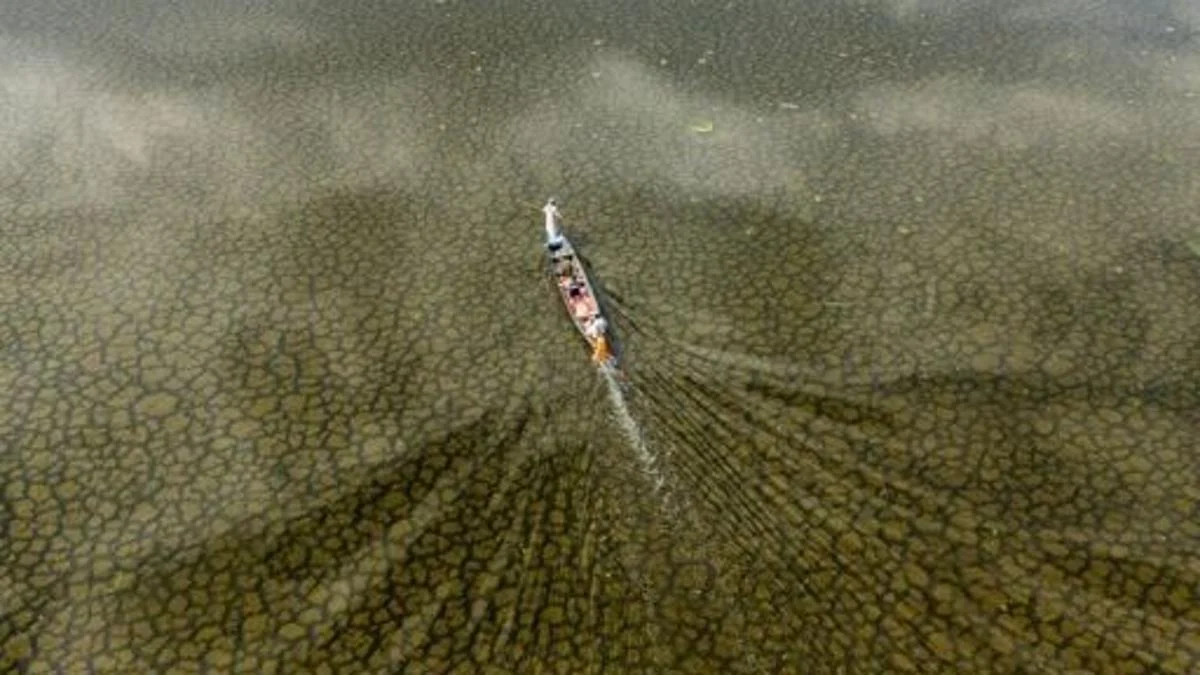


After years of drought, much-awaited rain is bringing life back to the ancient ecosystem of the Huwaizah Marshes in the Maysan province of southern Iraq. Water has returned to the once dried out wetlands, with fishing boats gliding and buffaloes grazing on patches of greenery.
The legendary Huwaizah Marshes are part of the Mesopotamian wetlands, cosidered to be one of the world’s greatest cradle-of-civilisation landscapes. The marshes, sitting between the Tigris and Euphrates rivers, have been inhabited for over 5,000 years, since the time of the Sumerian and Babylonian era. They support rich biodiversity, including migratory birds, fish, and water buffalo. Marsh buffalo milk is also an iconic part of Iraqi cuisine.
Climate change and upstream dams in neighbouring countries had resulted in a severe drought throughout the years, damaging the marshes that were believed to be the home of the biblical Garden of Eden. The rainy spells during the winter have brought hope to residents, historians, and ecologists alike in restoring an integral part of Iraq’s legacy.
Fisherman Kazem Kasid told the Agence France-Presse (AFP) news agency, “life will return, along with the fish and livestock, and people will feel that their homeland and future have been restored.”
“My message to the people living here: this is your land, this is your home… and it will remain so for generations to come,” he added.
Iraq’s Water Ministry informed that the reservoirs on the Tigris River are almost full and that it expects water levels in the Euphrates to rise in the future if Syria releases water from its dams.
Activist Ahmed Saleh Neema noted that the marsh had not seen this much water in years and added that 85% of the wetlands are currently submerged, although the water depth still needed to rise.
“It is good. It means that the marshes will not dry this summer,” said Neema.