




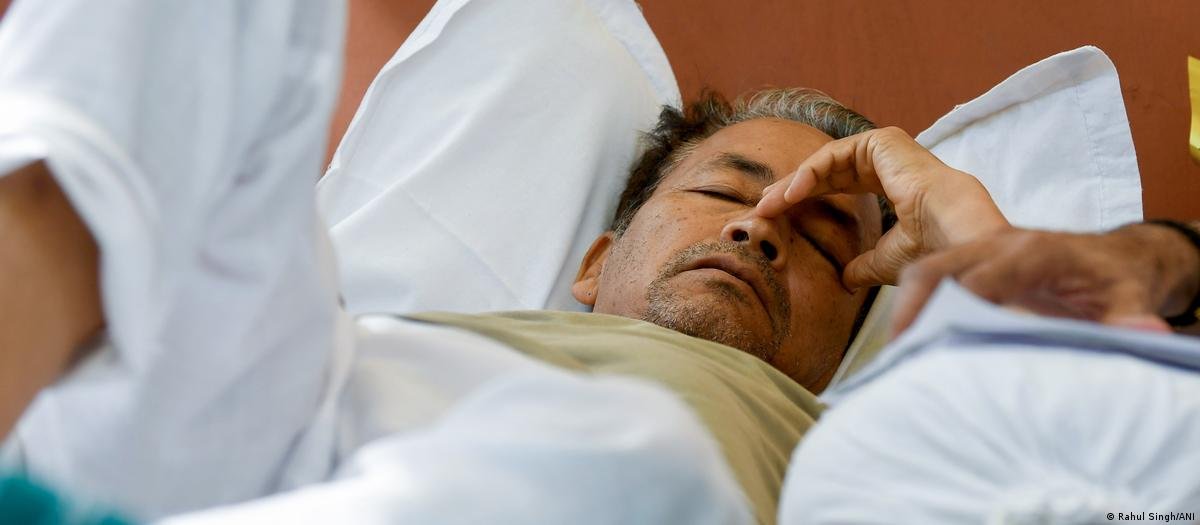


Climate activist and education reformer Sonam Wangchuk has been admitted to Delhi’s Safdarjung Hospital after completing 21 days of an indefinite hunger strike, with doctors confirming that he has become significantly weak due to prolonged fasting and dehydration. While his condition is currently stable, medical experts have stressed that he requires continuous observation and treatment to prevent further health complications.
The latest health update comes amid growing concern over Wangchuk’s deteriorating physical condition and follows days of legal intervention, public appeals, and mounting political tension surrounding his protest.
According to hospital officials, Wangchuk remains conscious and his vital signs are stable. However, the prolonged lack of food and fluids has severely weakened his body, prompting doctors to keep him under close medical supervision. The hospital stated that continuous monitoring is necessary to restore his vital body parameters safely and avoid complications associated with extended fasting.
Shifted to Hospital Following High Court Direction
Wangchuk was shifted from the Jantar Mantar protest site to Safdarjung Hospital by Delhi Police after medical experts warned that his health had reached a critical stage. The move also came in compliance with a recent Delhi High Court directive, which instructed authorities to ensure regular medical monitoring of the activist.
The court had observed that every citizen’s life is precious and directed the government to take all necessary measures to safeguard Wangchuk’s health. Acting on medical advice, police escorted him to the hospital for emergency care despite resistance from supporters at the protest venue.
Health Parameters Raise Alarm
Before being taken to the hospital, doctors monitoring Wangchuk reported worrying health indicators that reflected the physical toll of his 21-day fast. His weight had reportedly dropped to 56.55 kilograms after losing another 350 grams within just 24 hours. Overall, he is believed to have lost nearly one-fifth of his body weight since beginning the hunger strike.
Medical reports also showed his blood sugar at 70 mg/dL, placing it at the lower end of the normal range, while his blood pressure was recorded at 108/68 mmHg and his pulse rate at 72 beats per minute. Although these vitals remained stable, doctors warned that prolonged starvation and dehydration could quickly lead to serious complications, including organ damage.
Family Raises Concerns Over Medical Treatment
Following Wangchuk’s admission, his wife, Gitanjali J. Angmo, issued a public statement requesting that no oral or intravenous treatment be administered without the consent of the family or the independent medical team that had been supervising his health throughout the hunger strike. Her statement reflected the family’s concern over maintaining transparency regarding his medical care while he remains under government supervision.
Protest Site Witnesses Tension
The activist’s removal from Jantar Mantar triggered tense scenes between protesters and police. Supporters alleged that plainclothes officers arrived posing as medical personnel before taking Wangchuk into custody for hospitalization.
The situation escalated briefly as police cleared the protest site, with several supporters reportedly detained during the operation. Security was significantly increased around the area following the incident.
The Demand Behind the Fast
Wangchuk launched the indefinite hunger strike to press for accountability in India’s education system. His primary demand is the resignation of Union Education Minister Dharmendra Pradhan over allegations of examination irregularities, particularly those linked to the NEET paper leak controversy.
The activist has argued that the future of millions of students deserves urgent attention and has repeatedly called for greater transparency and accountability in the conduct of competitive examinations.
Just hours before being hospitalised, Wangchuk released a video message saying that although his body had weakened considerably, his determination remained strong. He questioned why the country’s political establishment appeared more responsive to political crises than to issues affecting students and the education system.
As Wangchuk continues receiving treatment at Safdarjung Hospital, attention now turns to whether dialogue between the government and the activist’s supporters can bring an end to the standoff. With concerns over his health intensifying, the coming days are expected to be crucial both medically and politically.