




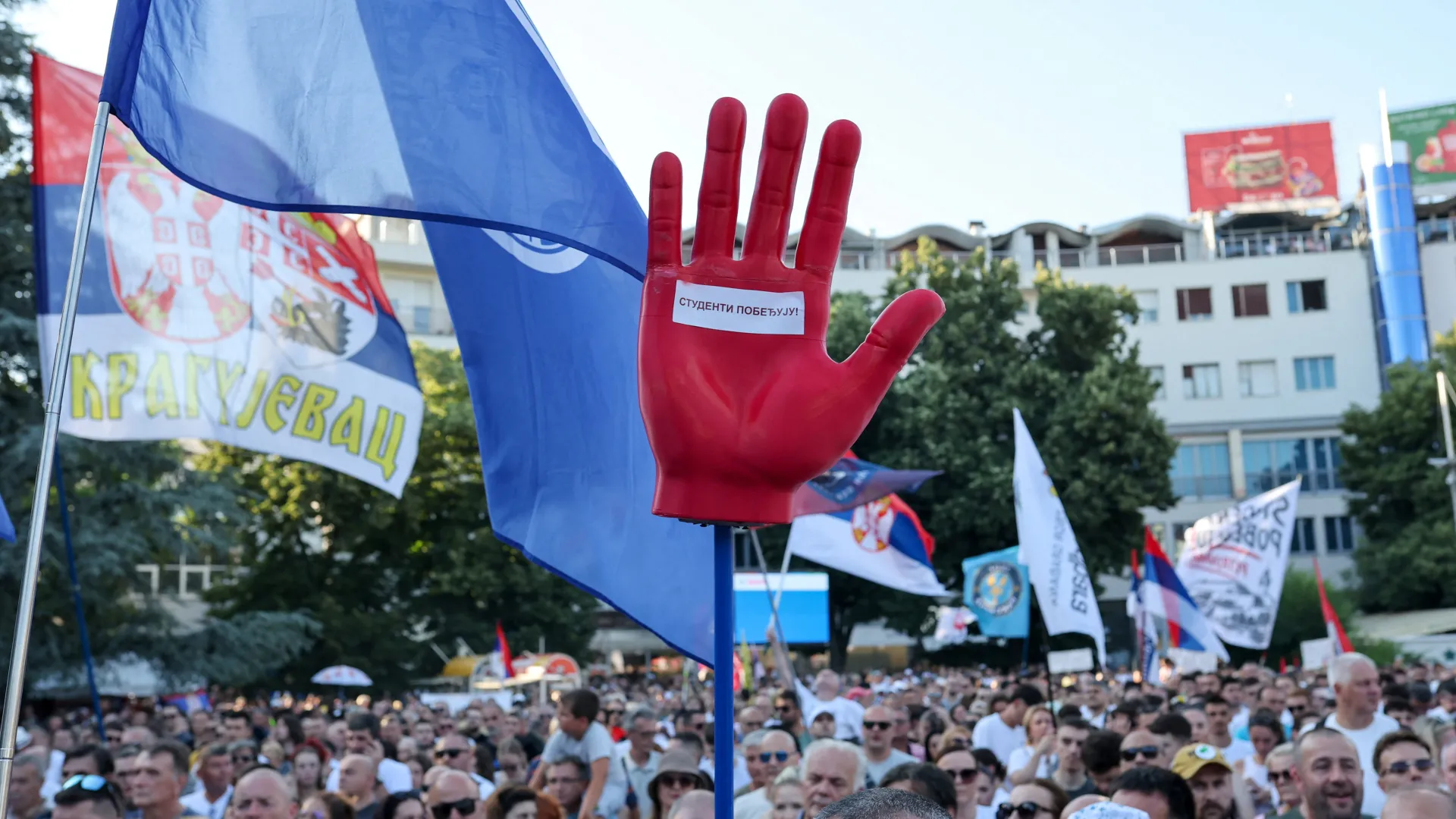


Thousands of protestors took to the streets in downtown Serbia on Sunday, in a new show of popular discontent after President Aleksandar Vucic indicated he would resign “within weeks”. The dramatic announcement came after more than a year of student-led rallies. The protests brought out masses to towns and cities beyond the capital and showed how the movement has grown to become part of national politics from academic hubs.
The demonstrations were triggered by the collapse of a railway station canopy in Novi Sad in November 2024 that killed 16 people. The tragedy has become a rallying cry for students’ frustrations about alleged widespread corruption and insufficient control in construction and more broadly government mismanagement. Accountability, safer infrastructure and an end to what they call the ingrained impunity of political elites are the demands of demonstrators.
In Kraljevo, some 170 kilometres south of Belgrade, professor Nemanja Karovic — an outspoken backer of the movement — addressed the assembly: “The students are winning,” a theme that mirrored increasing morale as protests stretched beyond university cities. The protests’ longevity has kept the pressure on Vucic’s administration and the governing Serbian Progressive Party (SNS) and led the president to take a rare conciliatory public position.
At a pro-government gathering Saturday, Vucic startled supporters by announcing he would remain president “for only a couple more weeks” and that he wanted to quit, without specifying when elections may be held or the mechanics of his departure. He said he will still support the SNS in next elections. Serbia’s election legislation bars Vucic from running for president again since he is in his second term, but political experts and opposition politicians say he might attempt to retake authority by coming back as prime minister, a position he previously held from 2014 to 2017.
Vucic’s declaration is a partial success for protesters, who want criminal inquiries into individuals responsible for the Novi Sad accident and institutional changes to avoid similar disasters. Critics also cite Vucic’s record of consolidating power and wonder if a departure would lead to meaningful political reform or just a reshuffle, with Vucic pulling the strings from behind the scenes.
In the weeks ahead, it will be a test of whether the movement can translate street energy into tangible institutional change. Key considerations include the timing and fairness of any snap elections, foreign and local pressure on the SNS and if opposition parties can consolidate behind genuine alternatives. For now, students and civic groups are still in the streets, framing their campaign as a fight for safety, transparency and a reconfigured political order in Serbia.