






The United States and Iranian forces reportedly clashed in the Gulf region as Washington awaits Tehran’s response to end the ongoing conflict that started in February 28. Despite the attacks, U.S President Donald Trump claimed that the month-long ceasefire, enforced on April 7, was still in place.
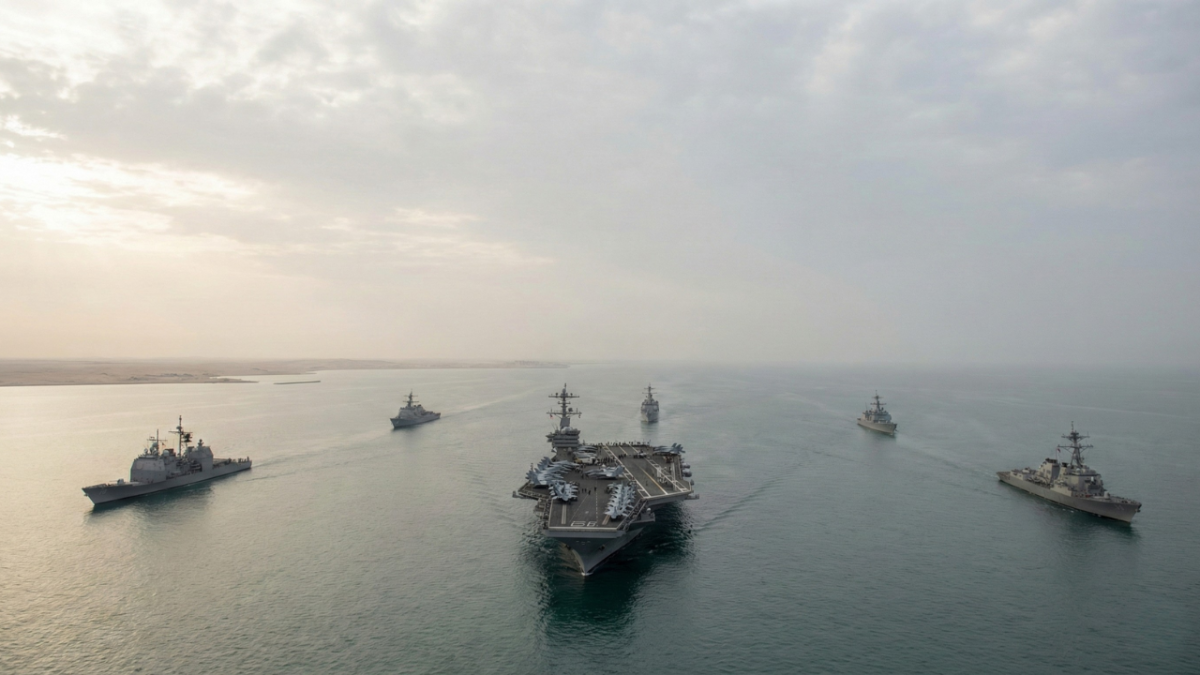
Trump said on Thursday that three U.S Navy destroyers were attacked near the Strait of Hormuz.
He wrote on Truth Social, “Three World Class American Destroyers just transited, very successfully, out of the Strait of Hormuz, under fire. There was no damage done to the three Destroyers, but great damage done to the Iranian attackers.”
Trump later spoke with reporters, asserting that the ceasefire was still in effect.
“They trifled with us today. We blew them away,” he said.
Iran’s top joint military command, however, accused the U.S of violating the ceasefire by targeting an Iranian oil vessel and another ship, and alleged Washington of carrying out air attacks on civilian areas on Qeshm Island in the Strait of Hormuz and adjacent coastal areas. The military said it retaliated by attacking U.S military ships east of the strait and south of the port of Chabahar.
A spokesperson for Iran’s Khatam al-Anbiya Central Headquarters claimed the Iranian forced caused “significant damage” to the vessels, which was disputed by the U.S Central Command (CENTCOM).
Iran’s Press TV later reported that the situation on the Iranian islands and coastal cities near the strait was back to normal.
The clashes impacted oil prices on Friday, with Bent crude rising above $100 a barrel. Stock prices also retreated after strong gains in the week due to rising hopes for a resolution to the conflict.
Head of equity research at State Street Markets Marija Veitmane said, “Despite ongoing hostilities and still-elevated oil prices, markets are pricing a limited duration.”
The ongoing war has also impacted around 20 oil refineries in the Gulf, as they either got struck by drones or have shut down as precautionary measures.