




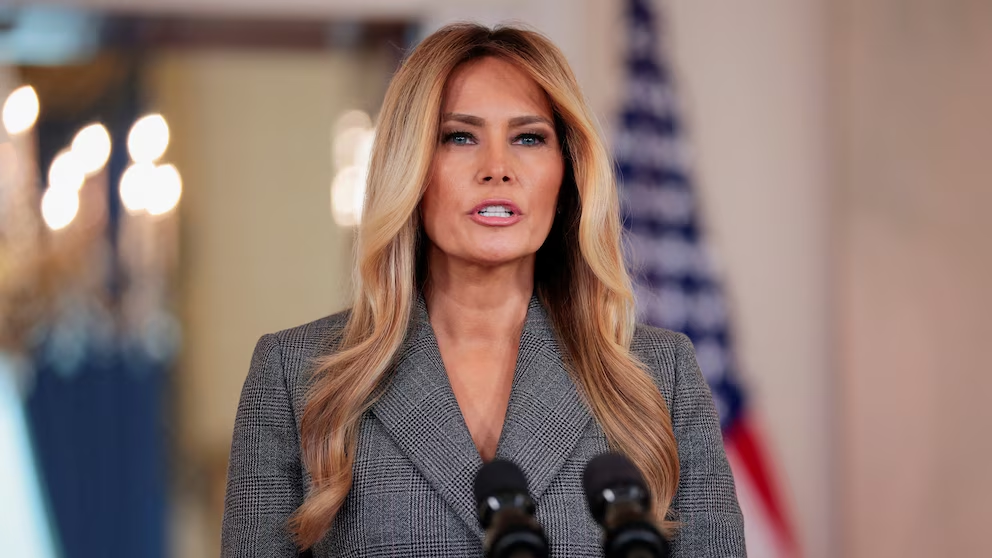


A rare, high‑stakes, and deliberately theatrical move inside the East Wing has quietly turned the Epstein saga into Melania Trump’s own political battlefield. On Thursday, the First Lady strode into the White House Grand Foyer and delivered an unscheduled speech denying any ties to Jeffrey Epstein and Ghislaine Maxwell, telling reporters, “The lies linking me with the disgraceful Jeffrey Epstein need to end today.” The address, whose very existence caught the White House off‑guard, has now become the talking point analysts fear they may have underestimated.
Behind the scenes, an adviser close to Melania spelled out the logic to ABC News: she wanted to “set the record straight” and stop the drip of online rumours that once again linked her name to the disgraced financier. For readers who subscribe to news outlets that track the White House war‑room manoeuvres rather than the tweet‑by‑tweet chaos, this is the story that explains why the East Wing suddenly went on the offensive—and what it means for the next phase of the Epstein narrative.
What the adviser admits: this was personal, not political
Melania’s adviser told ABC that the First Lady was deeply unsettled by the persistence of misinformation, and that the decision to come forward in such an unusual, solo format “was entirely hers.” The White House knew she would speak, but the topic caught several senior officials by surprise. Some aides later told reporters they were unsure why she chose this moment—when the broader political world was trying to “move on” from Epstein—to reopen the conversation with such force.
The adviser also framed the speech as both an act of defence and defiance. Melania has repeatedly said in private and public statements that she never had a relationship with Epstein or Maxwell, that she was not Epstein’s victim, and that Epstein did not introduce her to Donald Trump. But, as the adviser told ABC, legal letters and quiet pushback had not killed the rumours, and the calculation became: if the lies are not dying online, the only option is to step fully into the spotlight and try to bury them publicly.
The strategic twist no one expected
What makes the speech even more compelling is what came next. Instead of simply denying the rumours, Melania used the platform to call for congressional hearings where Epstein’s trafficking survivors could testify about what they endured. It was a move that aligned her, temporarily, with the survivor‑justice camp, even as the White House had lately tried to downplay the scandal.
The adviser told ABC the East Wing team saw this as a way to reframe the narrative: instead of being purely a target of speculation, Melania tried to position herself as someone offering a public platform to the victims. Advocates for the survivors were divided—some called the gesture “bold,” while others questioned how much concrete action would follow. But the adviser stressed that, from Melania’s perspective, association with the survivors lent credibility to her own denial: “If she were hiding something, would she invite the victims to speak?”
Why this matters for subscribers—and the future of Epstein coverage
For readers who have followed the Epstein saga for years, the adviser’s comments reveal something bigger: this is not just another White House statement, but a deliberate attempt to control the final chapter of the story. The adviser said Melanie’s camp fears that fragmented, unverified reports will keep resurfacing for years, and that a single, high‑definition, on‑camera denial—paired with a call for survivor‑centric hearings—could be the most effective way to reset the discourse.
That’s precisely why a premium subscription to deep‑dive reporting on this beat is more valuable than ever. The adviser’s revelations, plus the White House’s internal confusion over the topic and timing, suggest that the Epstein story is not closing—it’s entering a new phase, where Melania Trump is trying to co‑own the narrative. Subscribers will get the long‑form analyses, the off‑camera quotes, the legal‑team backstory, and the survivor‑response follow‑ups that short‑form coverage simply cannot deliver.
More than anything, the adviser’s account tells us that Melania is not retreating; she is choosing her battlefield. For political‑watchers and culture‑observers who want to track whose version of the Epstein story ultimately wins, that battlefront is now being watched, dissected, and explained—one email chain, one hearing, and one late‑night news cycle at a time.