




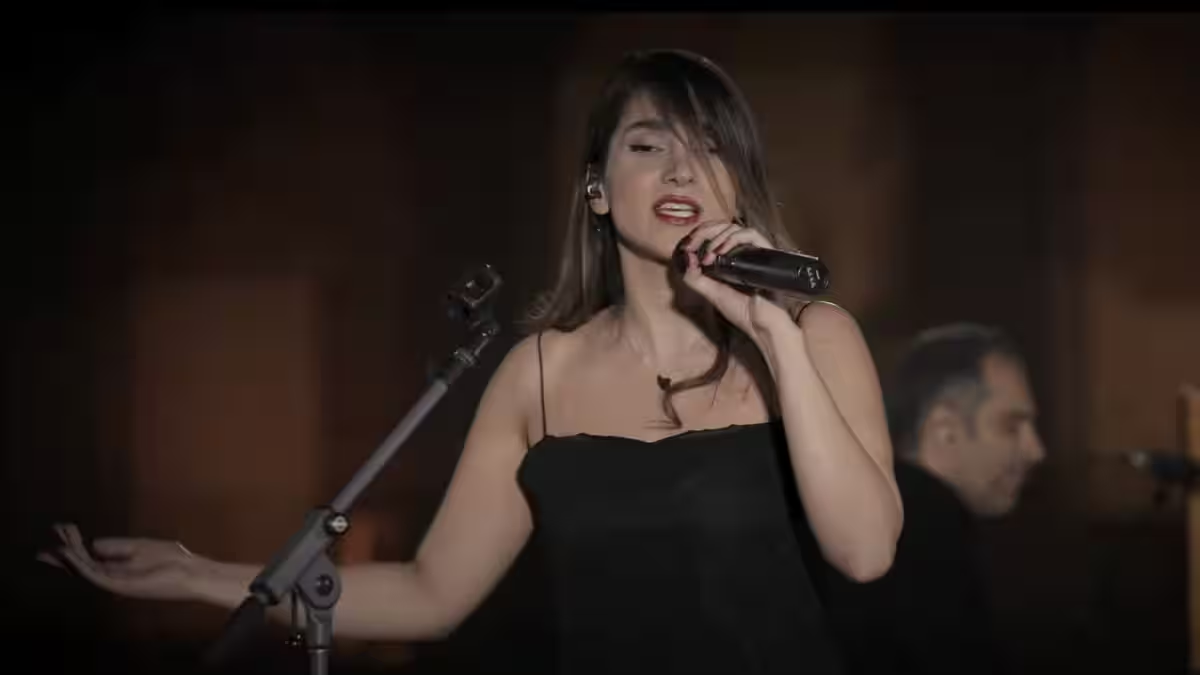


A criminal court in the Qom province of Iran sentenced singer Parastoo Ahmadi and eight members of a production team, including musicians, to 74 lashes for performing in a livestreamed concert on her Youtube channel in 2024, where she was shown singing without a hijab.
Court documents reveal that the court sentenced the artists to flogging, a two-year ban on leaving the country, and a two-year ban on engaging in artistic activities. The charges include offending public decency through the production and publication of “vulgar and immoral content” online.
Ahmadi performed the patriotic song Az Khoone Javanane Vatan (From the Blood of the Youth of the Homeland) in a viral livestreamed performance in December 2024. Authorities detained her briefly along with fellow-musicians shortly after the release of the performance. They also filed a formal case over the publication of the video, which currently sits at nearly three million views on her official channel.
Rights groups and activists have come forward in support of Ahmadi, criticising the Iranian regime for its treatment of women and artists.
Moein Khazaeli, a human rights lawyer at Dadban, which is a legal counselling centre for Iranian activists, called the sentencing a “form of torture”.
“Singing, performing music and producing or disseminating musical works by women are not criminalised under Iranian criminal law. Consequently, such activities cannot reasonably be construed as the ‘production, distribution or publication of obscene content,” said Khazaeli.
“The imposition of a flogging sentence against artists, civil society activists or other citizens is not merely a matter of domestic criminal law. It also raises serious concerns regarding states’ international obligations to prohibit torture and safeguard human dignity,” he said “For this reason, numerous human rights organisations consider flogging not a legitimate form of punishment, but rather a form of torture and inhuman treatment.”
Iranian actor Setareh Maleki, who is currently in exile after starring in Mohammad Rasoulof’s Oscar-nominated movie The Seed of the Sacred Fig, espressed solidarity with the singer.
She told the Guardian news outlet, “Knowing all the consequences she would have to face, she still refused to give up her right, as a woman, to live, to sing and to be heard. Iranian women never stop fighting against tyranny, not even for a moment, and that is truly remarkable.”
“For an Iranian artist who refuses to comply with censorship inside Iran, the daily routine is a form of resistance,” she added.