




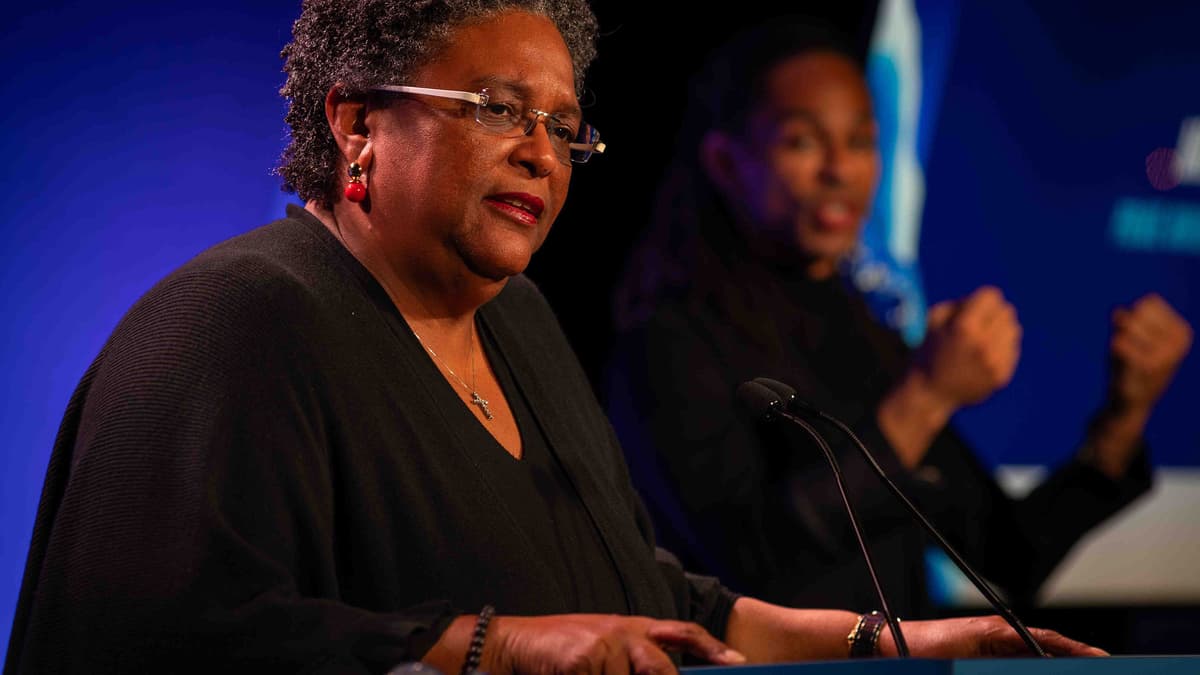


Prime Minister of Barbados, Mia Mottley, announced a new manifesto from Caribbean leaders asserting the “moral, ethical, and legal case” for reparations over damage caused by centuries of enslavement.
Mottley spoke at a conference in Ghana after the United Nations adopted a historic resolution declaring the African slave trade as the gravest crime against humanity.
The manifesto provides an update to the Caribbean Community (Caricom) 10-point plan for reparation from former colonial powers and introduces new issues including the disproportionate impact of slavery on girls and women.
The plan calls for compensation for gender-based violence and cited data that found “women represented approximately 30% of the estimated 20 million Africans forcefully transported across the Atlantic Ocean”. The manifesto also released estimates of 1.2 million enslaved women experiencing sexual violence.
Mottley argued that “the compensation for gender-based violence and assault on family” is “no different from the compensation that has been awarded to other nationalities such as the Japanese”.
The Guardian news outlet reported that the plan asserted that climate justice and slavery reparations were “inextricably linked” and advocated the need for a plan to support indigenous people from the Caribbean, who were subjected to genocides by the European colonisers.
The document demands monetary compensation as well as a full and formal apology from Britain and other European countries, along with education and training.
“Caricom demands monetary compensation as reparations from enslaving nations, monarchies, churches, institutions, corporations and families, for loss of life and uncompensated labour, loss of liberty, personal injury, mental pain and anguish and gender-based violence, for the victims of Indigenous genocide, the transatlantic trafficking of enslaved Africans and chattel enslavement of Africans, which constitute grave crimes against humanity,” said the draft.
Carribean governments have been repeatedly demanding recognition of the lasting legacy of colonialism and enslavement, and for reparative justice from former colonisers since 2013.
The United Nations had passed a resoultion in March this year, describing chattel slavery as the gravest crime against humanity. A majority of 123 nations voted in favour of the resolution, with the United States, Argentina, and Israel voting against it. The United Kingdom, Canada, Australia, Japan, and all European Union member states had abstained from voting.