




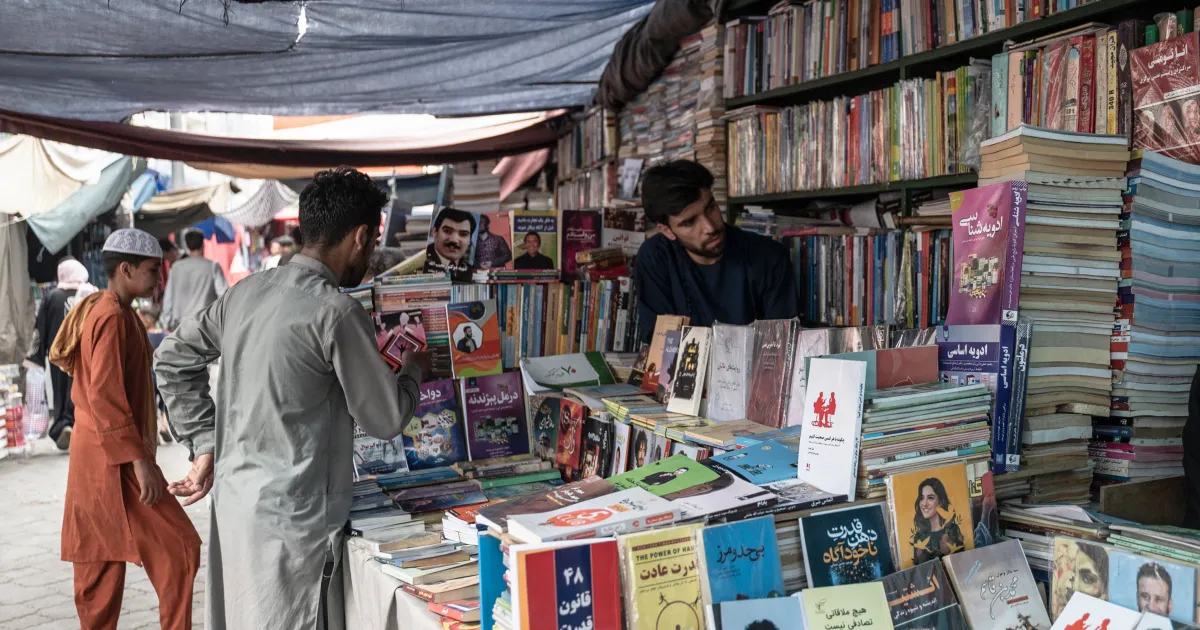


A report published on Hasht-e-Subh Daily stated that Afghanistan is experiencing a sharp decline in reading culture, especially among the youth, citing sources from residents and observers. Deteriorating economic conditions, unemployment, educational and cultural restrictions under the Taliban, and growing disillusionment about the future have been identified as key factors contributing to the phenomenon. They also called out excessive use of internet and lack of support from schools, universities, and media to encourage reading.
Libraries and bookstores that were once bustling with young readers are now empty, closed, or repurposed for other uses. Many bookstores turned into grocery shops, a sad sign of the growing decline of the status of the books in the country
Many believed reading had lost its practical value due to limited job opportunities and reduced freedom after the Taliban takeover in 2021. Therefore, it no longer held much meaning in their daily life.
Other responders pointed towards poverty, lack of access to quality libraries, and the disappearance of reading programs and literary gatherings as key elements affecting the reading habits of the population. Some residents highlighted the restrictions imposed on books and cultural materials, subsequently reducing access to scientific and intellectual resources.
Another point of view has also come to attention, suggesting that reading has increased for some young people as a coping mechanism to deal with the hardships during the Taliban regime.
The World Population Review website reports that Afghanistan ranks at the bottom of the global list when it comes to reading levels. As per their data, citizens average only around 2.56 books per year and spend roughly 58 hours on reading as an activity. The United States is in first place in the list with its citizens averaging 17 books per year.
Residents hoped for a revival in the reading culture of the country, emphasising its role in intellectual development of the younger generation, strenghtening social cohesion, and preserving the country’s cultural identity.