




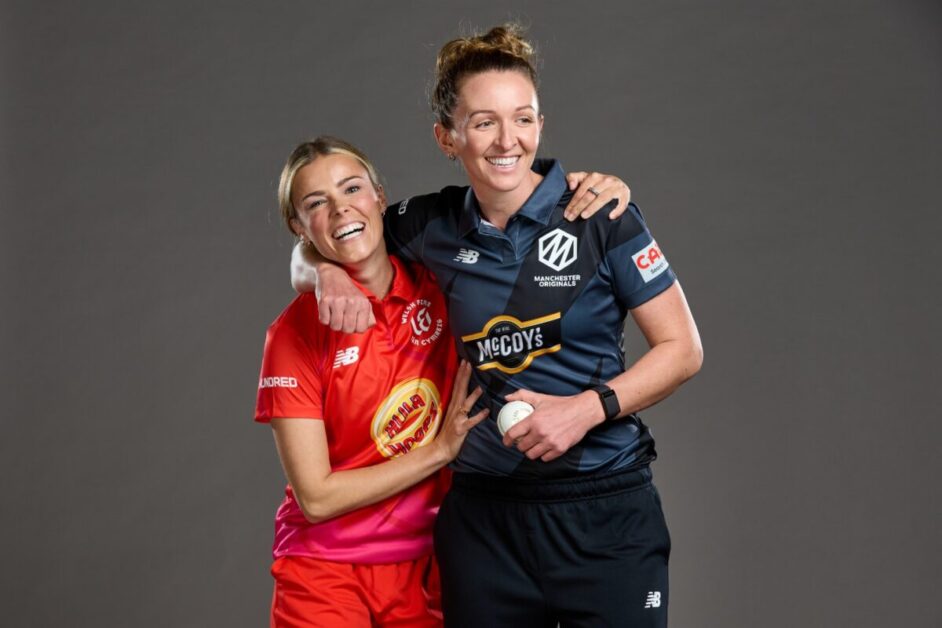


The ICC Women’s T20 World Cup 2026 has been overshadowed by an unexpected controversy after England cricketers Kate Cross and Alex Hartley faced severe online abuse and death threats for questioning one of the tournament’s scheduling rules.
The debate began when the England duo discussed the ICC’s playing conditions on their podcast, No Balls: The Cricket Podcast. They highlighted a rule stating that if India qualified for the semi-finals, they would automatically be placed in the first semi-final, irrespective of whether they finished first or second in their group.
Reacting to the regulation, Cross described the arrangement as “ridiculous” and “absolutely mental,” arguing that the knockout bracket of a global tournament should not be designed around the qualification of a single team. Hartley echoed the sentiment, saying similar scheduling practices had been seen in men’s and women’s ICC events over the years.
Their comments quickly went viral on social media, but many users misunderstood the criticism as an attack on the Indian women’s cricket team rather than on the ICC’s tournament policy. The misunderstanding soon escalated into widespread online abuse.
Cross later revealed that she was flooded with hateful messages across social media. An Instagram post that would usually receive only a handful of comments suddenly attracted hundreds, many of them containing abusive language and even death threats. The incident prompted Hartley to seek an official explanation from the International Cricket Council (ICC) regarding the controversial rule.
In response, the ICC clarified that the scheduling decision was not intended to favour India. According to the governing body, the arrangement was introduced purely for commercial and logistical reasons, helping maximise global television audiences while also ensuring better attendance at venues in the United Kingdom.
The ICC stated that the scheduling policy was designed to optimise worldwide viewership and local spectatorship, rather than provide any sporting advantage to a particular team.
Following the clarification, both Cross and Hartley addressed the controversy in a fresh episode of their podcast. They stressed that their criticism had always been directed at the tournament’s administrative structure and never at the Indian team or its players.
Cross explained that there had been considerable confusion over her remarks, adding that she had not criticised India’s cricket team. Instead, she maintained that no international tournament should have its knockout schedule determined around the possible qualification of one nation.
Ironically, the debate became irrelevant before the semi-finals even began. India, led by Harmanpreet Kaur, failed to qualify for the knockout stage after suffering defeat to defending champions Australia in their final group-stage match. As a result, the special scheduling clause was never applied, and the tournament proceeded according to its standard semi-final format.
Australia booked the first place in the final with a victory over the West Indies, while England and South Africa are now set to battle for the remaining spot in the championship match. Although the scheduling controversy ultimately had no impact on the tournament, it has sparked a wider conversation about transparency in ICC event planning and highlighted the growing problem of online abuse directed at professional athletes for expressing opinions on the sport.