




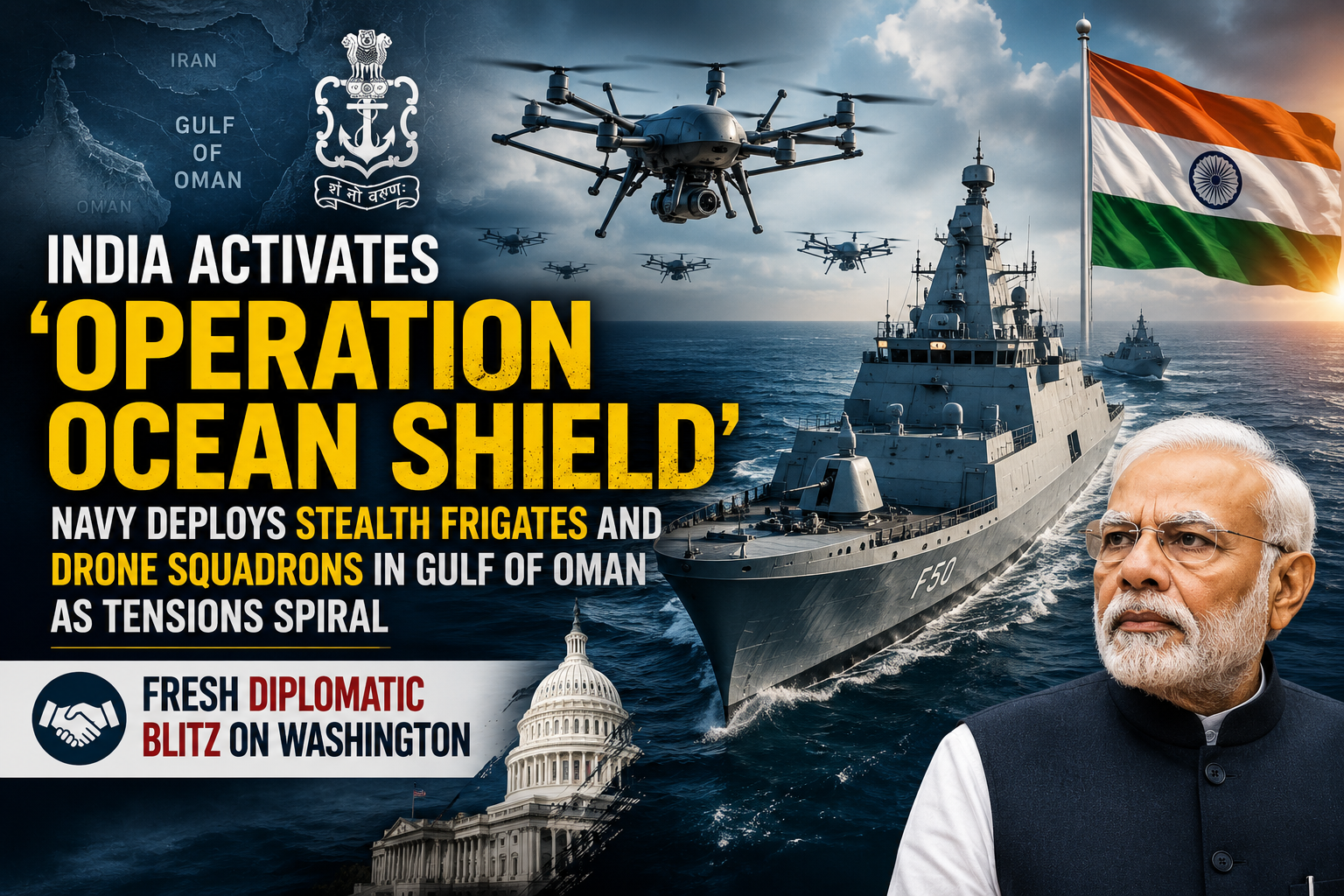


In a decisive and largely unpublicised move, the Indian Navy has launched a high-stakes maritime protection mission codenamed ‘Operation Ocean Shield’, rushing advanced stealth frigates, long-range maritime patrol aircraft, and armed drone squadrons into the Gulf of Oman following the string of US strikes on Indian-crewed tankers this week.
Highly placed defence and foreign ministry sources told this correspondent that at least three frontline warships, including a Talwar-class stealth frigate equipped with cutting-edge anti-ship missiles and electronic warfare suites, have been repositioned overnight to create a protective corridor for Indian seafarers and vessels transiting the volatile Strait of Hormuz corridor. This marks India’s most assertive naval posture in the region in recent years, aimed at safeguarding the lives of over 10,000 Indian mariners currently operating in these waters.
The trigger: Three separate US strikes in under four days on merchant tankers — Marivex, Settebello, and Jalveer — carrying predominantly Indian crews. While the US cites enforcement of its blockade against Iranian oil shipments, New Delhi views the repeated use of lethal force on civilian vessels as “unacceptable escalation” that endangers innocent lives and global energy flows. Three Indian seafarers lost their lives in the Settebello incident, with others rescued amid dramatic distress calls.
Behind-the-Scenes Manoeuvres
Diplomatic Escalation: External Affairs Minister S. Jaishankar is understood to have personally engaged senior US officials, including Secretary of State Marco Rubio, stressing that “Indian blood cannot become collateral in someone else’s blockade.” Multiple rounds of demarches have been issued, and the US Chargé d’Affaires was summoned yet again late yesterday. India is also quietly coordinating with Oman, which has played a crucial role in rescue operations.
Navy’s Proactive Shield: Sources confirm that Indian assets are now providing real-time intelligence, escort support where feasible, and emergency evacuation readiness. Unmanned aerial vehicles (UAVs) have been deployed for persistent surveillance, a first in such distant operations. The focus is on “deterrence through presence” without direct confrontation.
Economic and Human Cost: Shipping companies in Mumbai and Kandla are reporting sharp spikes in insurance costs and crew reluctance. India’s energy security is at stake, as a significant portion of its crude imports pass through this chokepoint. The government has issued fresh advisories urging Indian-flagged and crewed vessels to exercise extreme caution and report positions regularly.
Opposition leaders have demanded an all-party meeting and a detailed briefing in Parliament, questioning whether enough was done proactively to shield Indian nationals. Meanwhile, seafarer unions are calling for mandatory insurance enhancements and faster repatriation protocols.
This unfolding crisis tests India’s delicate balancing act between its strategic partnership with the US and its vital energy and diaspora interests in the Gulf. Government sources insist that while India remains committed to peaceful navigation and rule-based order at sea, it will not hesitate to take all necessary steps to protect its citizens and economic lifelines.
The story is fast-evolving, with potential for further naval movements and high-level diplomatic breakthroughs in the coming hours. Indian channels are expected to track this round-the-clock, blending human stories of the affected families with hard-hitting analysis on India’s rising maritime footprint.