




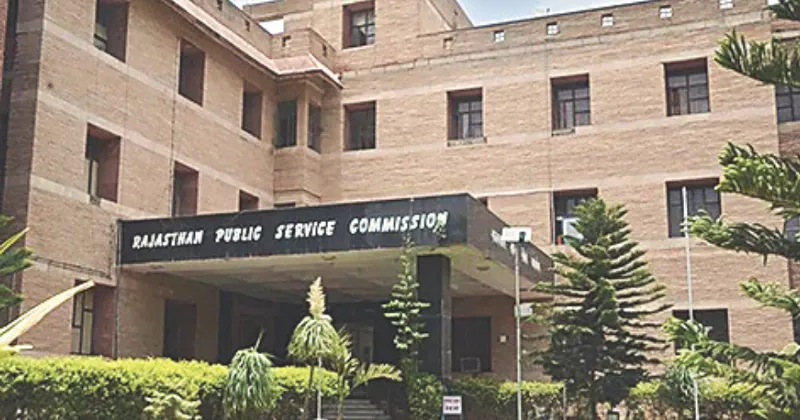


The question dominating Rajasthan’s political and administrative corridors is clear: who will emerge as the next Chairman of the Rajasthan Public Service Commission (RPSC)? The uncertainty has intensified as incumbent Chairman UR Sahoo prepares to retire this Friday upon reaching the mandatory age of 62.
Sahoo’s Remarkable One-Year Stewardship
A 1988-batch IPS officer, Sahoo assumed charge of the constitutional body in June 2025 at a critical juncture. The Commission was then preparing to conduct several high-stakes recruitment examinations while recovering from considerable turbulence during the tenures of former chairmen Sanjay Shrotriya (2022) and Kailash Chand Meena.
Administrative circles widely credit Sahoo with bringing stability, discipline, and renewed credibility to the Commission. His extensive administrative experience as former Rajasthan DGP helped restore confidence in the institution at a time when the RPSC faced significant scrutiny. While challenges remain and further reforms are still needed, observers believe Sahoo succeeded in putting the Commission back on a more stable footing.
Speculation on Sahoo’s Next Assignment
Interestingly, discussions have intensified even before Sahoo’s RPSC retirement regarding his future role. Growing speculation suggests the state government may consider him for the post of State Chief Information Commissioner. However, during a press briefing on Thursday, Sahoo provided no clear indication regarding any future responsibility.
The process for appointing the next State Chief Information Commissioner is already underway. Approximately 25 applications have been received, including those from retired IPS officer Ravi Prakash Meharda, retired IAS officer Shubhra Singh, and Urmila Rajoria. The final decision will be taken by a committee headed by the Chief Minister, with formal orders issued by the Governor.
The Sharma Government’s Appointive Challenge
The search for Sahoo’s successor has become a significant challenge for the Bhajan Lal Sharma government. Administrative observers highlight that the pool of suitable candidates from IAS and IPS ranks appears limited. Notably, appointing an IPS officer for the third consecutive term could itself become a subject of debate.
Among serving IAS officers, only a handful of names are being discussed. Current Additional Chief Secretary Anand Kumar is often mentioned as a possible option, contingent on his willingness to take up an assignment in Ajmer.
Temporary vs. Regular Appointment Debate
The government also retains the option of appointing one of the existing Commission members as acting chairman temporarily. Following previous retirements, the senior-most member has historically been given interim charge. However, many believe such a temporary arrangement may not serve the Commission’s long-term interests. Given the institution’s importance and the recruitment processes it oversees—including the RAS examinations and thousands of government posts—growing opinion favors a quick regular appointment.
Expectations for Transparent Selection
Whatever decision emerges, strong expectations prevail that the selection process must be guided by transparency, merit, and institutional credibility. The RPSC’s reputation, partially restored under Sahoo’s stewardship, hinges on this critical appointment as the Commission continues conducting recruitment examinations vital to Rajasthan’s administrative future.
The Sharma government now faces the pressure of making a decision that will shape the constitutional body’s trajectory for years ahead.