




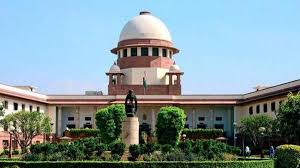


After nearly six decades of courtroom battles that stretched across four generations of one family, the Supreme Court has finally brought an end to a long-running land dispute in Uttarakhand’s Haridwar district. In a landmark judgment, the apex court upheld the validity of a registered sale deed executed in 1957, putting to rest a legal battle that had outlived several generations and even the judges who eventually decided it.
The dispute revolved around 15.5 bighas of agricultural land in Narsipur Kalan village, Haridwar. The property was purchased through a registered sale deed dated June 4, 1957, by the predecessors of appellant Sarafat Ali, who were minors at the time. Their father completed the transaction on their behalf, and the family maintained that they had remained in possession of the land ever since.
The legal battle formally began years later as the family sought official recognition of its ownership. In 1984, the land was mutated in their favour after one of the original sellers withdrew objections. During consolidation proceedings in 1991, the family applied for recognition as Bhumidhar (landowners under Uttar Pradesh land laws). Although the Consolidation Officer initially accepted their claim and a compromise in 1993 appeared to settle the matter, fresh objections from other co-tenure holders reopened the case.
In 1999, the Consolidation Officer ruled against the family, holding that the sale deed had not been properly proved and that it violated provisions of the Uttar Pradesh Zamindari Abolition and Land Reforms Act. The decision was later upheld by appellate authorities, revisional authorities and eventually the Uttarakhand High Court, leaving the family with no option but to approach the Supreme Court.
A Bench comprising Justices Prashant Kumar Mishra and N.V. Anjaria carefully examined the case and found that the lower courts had committed a serious error in rejecting the sale deed. The Supreme Court observed that the objections raised against the document were based only on minor discrepancies relating to the address of an attesting witness and not on any allegation of forgery, fraud, coercion or impersonation. The judges noted that a registered sale deed carries a legal presumption of validity and cannot be discarded merely because of insignificant inconsistencies.
The court also pointed out that the respondents had failed to effectively challenge the family’s continuous possession of the land over the decades. In its judgment, the Supreme Court set aside the decisions of the lower authorities and restored the validity of the 1957 sale deed, finally ending a dispute that had continued for almost 70 years.
The verdict is more than just a property dispute settled. It serves as a reminder of the enormous time some civil cases spend in India’s judicial system and the emotional and financial burden carried by families waiting for justice. For Sarafat Ali’s family, the judgment marks the end of a legal journey that began before many of its present members were even born, finally bringing closure after 59 years of litigation across four generations.