




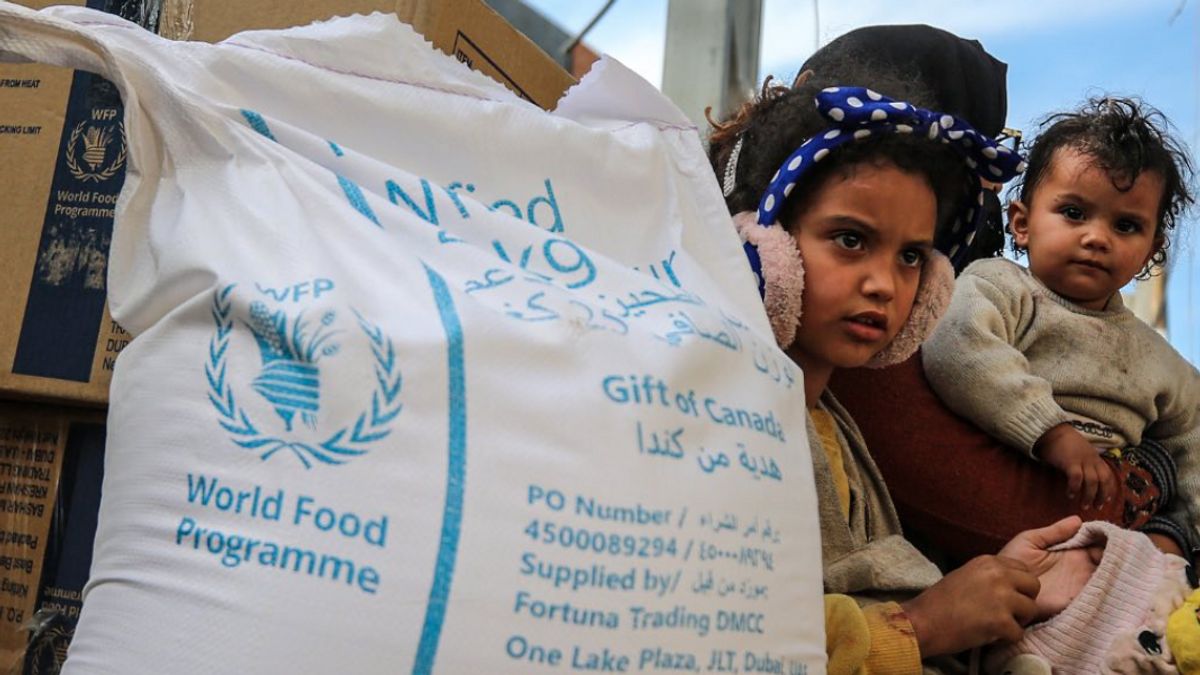


The United Nations World Food Programme (WFP) published an analysis on Friday, warning that the ongoing war between the United States and Iran was putting millions of people at risk of hunger. WFP said the conflict’s influence on oil prices has “profound implications” for global food security. It cautioned that 45 million people would face acute food shortages if oil price continued at $100 a barrel by the end of June. The agency first made the estimation in March.
“While globally food prices – as measured by the Food and Agriculture Organization (FAO) Price index – only have seen a slight increase so far, substantial food price rises are already being felt in fragile countries,” said the analysis.
It further added, “The findings indicate that the crisis is generating significant spillovers, particularly through fuel, food price and income shocks and trade disruptions. As these factors interact with preexisting vulnerabilities they quickly translate into visible impacts on food security and livelihoods.”
The current conflict between the United States and Iran, which led to a blockade on the economically critical maritime passage the Strait of Hormuz, has triggered a global energy crisis. Around 20% of the world’s oil passed through the channel before the U.S-Israel joint operation against Iran on February 28.
WFP named Afghanistan, Somalia, and Sri Lanka as the most affected and reported that the countries faced increased pressure due to higher fuel costs, food price spikes, income losses and disrupted trade.
The agency predicted an estimate of 6.5 million people in Somalia, which is almost a third of the population, to face severe hunger in 2026, along with 17.4 million people in Afghanistan.
Somalia and Afghanistan rely heavily on imported energy and food.
The report estimated that up to 1.3 million people in Sri Lanka could be at risk of not meeting their basic food needs if the war continued.
WFP also informed that the agency would be serving 1.5 million fewer people than originally planned for 2026 due to the global humanitarian system facing a “double squeeze” amid rising delivery costs, leading to coverage gaps.
“If the conflict continues for six months, more than 9 million people could lose assistance, driven by a combination of higher operational costs and rising local food prices,” it said.