




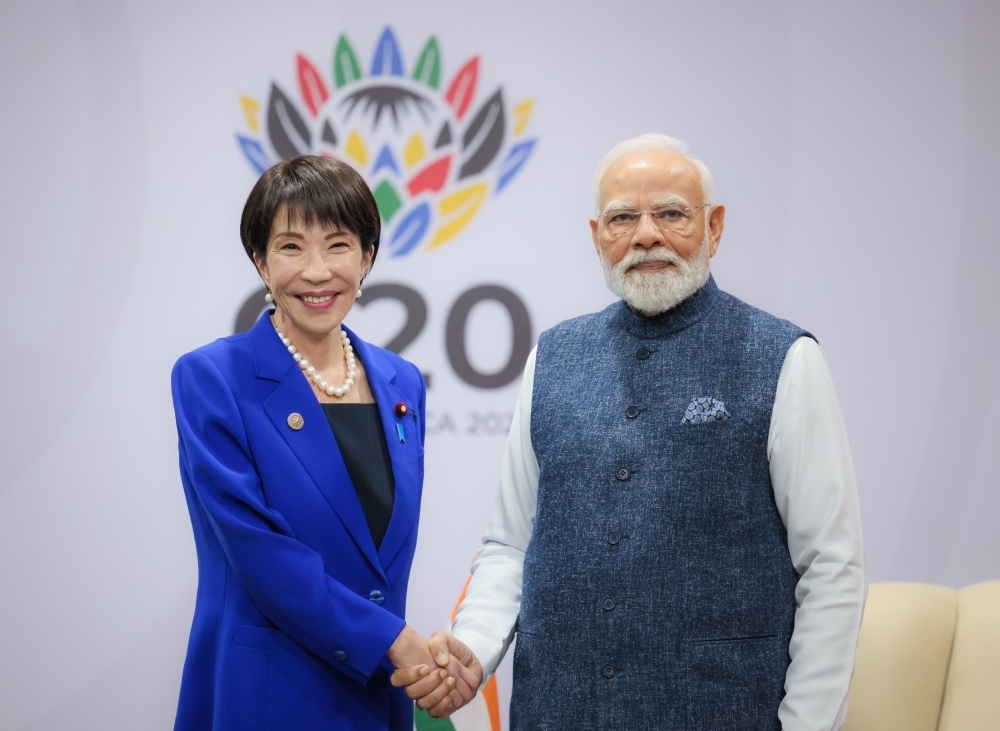


The upcoming 16th India–Japan Annual Summit, scheduled from July 1 to July 3 in New Delhi, is shaping up to be one of the most consequential diplomatic meetings between the two Asian giants in recent years. The visit is especially significant as it marks Japanese Prime Minister Sanae Takaichi’s first official trip to India following her historic landslide electoral victory earlier this year.
Originally under consideration to be hosted in Guwahati, Assam, the summit was ultimately shifted to New Delhi to ensure seamless coordination for the dense three-day agenda involving high-level strategic, economic, and security discussions.
At the heart of the talks lies Japan’s long-standing commitment of approximately 10 trillion yen (over $65 billion USD)in investments across India, forming the backbone of a rapidly expanding India–Japan Special Strategic and Global Partnership.
A Partnership Entering a New Strategic Phase
The India–Japan relationship has evolved far beyond traditional diplomatic engagement. What began as infrastructure-led cooperation has now transformed into a multi-layered alliance encompassing economic security, frontier technologies, clean energy, and Indo-Pacific defence coordination.
The 2026 summit is expected to review progress across all major initiatives while setting new roadmaps for the next decade of collaboration.
High-Tech Revolution: Semiconductors, AI & Digital Future
One of the most critical focus areas is advanced technology cooperation. Both nations are moving aggressively to build resilient semiconductor and digital supply chains amid global geopolitical uncertainties. Japanese technology leaders, including firms such as Tokyo Electron, are expanding their footprint in India’s emerging semiconductor hubs like Dholera Smart City. Discussions are underway to deepen collaboration in chip manufacturing, advanced packaging, testing (OSAT/ATMP), and legacy node fabrication.
Equally important is the evolution of the Digital Partnership 2.0, which prioritizes co-development in cutting-edge fields such as Artificial Intelligence (AI), Large Language Models (LLMs), cybersecurity frameworks, and secure digital public infrastructure. This marks a shift from basic digital cooperation to deep research-driven innovation.
Mega Infrastructure: Bullet Train Remains the Symbol of Trust
Infrastructure continues to serve as the most visible pillar of India–Japan cooperation. The flagship Mumbai-Ahmedabad High-Speed Rail (MAHSR) project remains at the center of discussions. Backed by Japan International Cooperation Agency (JICA), the bullet train corridor is undergoing key engineering reviews, including tunnel completion milestones and construction acceleration strategies. The project, valued at around $21.5 billion, is considered a benchmark for Indo-Japanese engineering collaboration.
In parallel, progress on the Delhi-Mumbai Industrial Corridor (DMIC) is being closely monitored. The corridor aims to develop highly integrated industrial zones, logistics networks, and smart manufacturing hubs that can elevate India’s role in global supply chains.
Clean Energy Push: Green Hydrogen and Net-Zero Goals
Climate cooperation is another major pillar of the summit.
Under the India–Japan Clean Energy Partnership, both countries are aligning their net-zero ambitions with a strong focus on:
- Green hydrogen and green ammonia production and supply chains
- Expansion of next-generation solar technologies
- Decarbonization of heavy industries such as steel and cement
A dedicated “Steel Dialogue” is also evaluating carbon-capture technologies and energy-efficient production methods to modernize India’s rapidly expanding industrial base. These initiatives position India and Japan as key global players in shaping a sustainable energy future.
Northeast India: Strategic Growth Corridor Under Act East Policy
Even though the summit is being held in New Delhi, development in India’s Northeast continues to be a strategic priority. Through the Bay of Bengal Industrial Corridor, Japan is actively investing in infrastructure that enhances connectivity between Assam and neighbouring states with Southeast Asian markets. The long-term goal is to transform the Northeast into a major export and logistics gateway under India’s Act East Policy.
This regional focus also strengthens Japan’s broader Indo-Pacific connectivity vision, linking South Asia with Southeast Asia through integrated economic corridors.
Human Capital Bridge: 50,000 Skilled Professionals Program
Beyond capital and infrastructure, the partnership is increasingly human-centric. A major talent exchange initiative aims to train and deploy around 50,000 skilled Indian professionals in Japan. This program addresses Japan’s demographic and labor shortages while simultaneously providing Indian workers exposure to advanced manufacturing ecosystems, robotics, and high-tech industries. It also strengthens cultural and linguistic understanding between the two nations.
Core Agenda: Defence, Trade, and Global Strategy
The summit between Prime Minister Narendra Modi and Prime Minister Takaichi will focus on three major strategic pillars:
1. Defence & Security Cooperation
Expect intensified discussions on maritime security, joint military exercises, defence technology transfers, and coordination in the Indo-Pacific region. With rising regional tensions, both nations are expected to deepen their security alignment significantly.
2. Trade & Investment Expansion
The leaders will review progress on major infrastructure investments and explore new opportunities in manufacturing, electronics, and clean energy sectors. The $65+ billion investment commitment is expected to see renewed acceleration.
3. Geopolitical Coordination
India and Japan will also align strategies within the Quad framework (India, Japan, US, Australia), focusing on supply chain resilience, regional stability, and balanced economic partnerships in Asia.
A Defining Moment for Asia’s Future
This summit comes after Prime Minister Modi’s visit to Tokyo in August 2025 for the 15th Annual Summit, continuing the tradition of alternating high-level engagements between the two countries.
With rising global uncertainty, shifting supply chains, and rapid technological disruption, the 2026 India–Japan Summit is not just a diplomatic event—it is a blueprint for a new Asian economic and strategic order.